
Associate Professor of Computer Science at University of Notre Dame. Artificial intelligence, natural language processing, formal language theory.
South Bend, IN
Joined September 2012
- Tweets817
- Following592
- Followers1.9K
- Likes529





David Chiang retweeted

The Department of Computer Science & Engineering at
@NotreDame is hiring tenure-track faculty (Assistant, Associate, or Full Professor) in Ethics & Computing 💻☘️
📍 Notre Dame, IN
🗓️ Priority Deadline: Nov 15
🔗 Apply here: apply.interfolio.com/195819

David Chiang retweeted

Congratulations to Professor Will Merrill (@lambdaviking), who received a Coefficient Giving grant to support his project, "From Transformers to Logic, Provably," to decode AI reasoning. Read more about his project: buff.ly/p4n1dT9


David Chiang retweeted

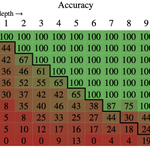
Which state-tracking problems can transformers length generalize on?
Transformers' performance on different finite-state tasks varies drastically, even when the tasks are structurally similar. Now, for the first time, we can precisely predict when length generalization occurs.

I am once again asking, why does @ReviewAcl make authors fill out the author registration form every single cycle?
Why does the form contain information that could be automatically obtained from the author's OpenReview profile?
David Chiang retweeted
This is joint work with Pascal Bergsträßer, @GeorgZetzsche, @davidweichiang, and @anthonywlin to be presented at ICML 2026.
Thu, Jul 9, 2026, 2:30 PM – 4:15 PM
HALL A #1011
Looking forward to seeing everyone there!
Many algorithms (e.g., Turing machine simulations) have been written as transformers using average hard attention. Do these algorithms work with softmax attention? Please visit @pentagonalize, Dana Angluin, and my poster. Sunday 2pm Harbor H-I! aclanthology.org/2026.tacl-1…

David Chiang retweeted

*The Transformer Cookbook*
by @pentagonalize @davidweichiang et al.
A beautiful introduction to "hardcoding" algorithms inside the weights of a transformer (addition, lookup, branching) following the seminal RASP paper (srush.github.io/raspy/).
openreview.net/forum?id=sPsh…

@ReviewAcl Why does every author have to fill out the registration form if they already have an OpenReview profile?
David Chiang retweeted

Most sentence embeddings capture *what* is said, not *how* it is said.
We introduce ✨IDIOLEX ✨: a training framework that captures idiolect using only weak supervision (social proximity + linguistic features), not task labels.
📄 Preprint: arxiv.org/abs/2604.04704
🧵 1/8

David Chiang retweeted
The FLaNN Workshop submission deadline has been extended to Feb 19!
Invited talks + posters (non-archival): expressivity, computation, and learning in neural nets/LLMs. Previous work welcome. Graduate students encouraged to submit!
📍 Yale University
🗓️ May 11-13, 2026

📣 FLaNN 2026 at Yale 🍮
Invited talks+posters (non-archival): expressivity, computation, and learning in neural nets/LLMs
Speakers: Pablo Barceló, David Chiang, Will Merrill, Naomi Saphra, Gail Weiss
Abstracts due Feb 12, 2026
Details: flann.cs.yale.edu/

David Chiang retweeted
Inviting submissions to the first Workshop on Formal Languages and Neural Networks!
We welcome posters dicussing the formal expressivity, computational properties, and learning behavior of neural networks!
Call for posters: flann.cs.yale.edu/cfp.html
Deadline: February 12, 2026
Congratulations to @taguchi_c for finishing 2nd overall and 1st for the best improvement in any single language in the Mozilla Common Voice Spontaneous ASR shared task! codabench.org/competitions/1…
David Chiang retweeted
Announcing the first Workshop on Formal Languages and Neural Networks (FLaNN) 🍮!
We invite the submission of abstracts for posters that discuss the formal expressivity, computational properties, and learning behavior of neural network models, including large language models.

David Chiang retweeted

#johdpapers
New #datapaper out!
📰 "From Paginā to Webpage: On Developing and Documenting a Digitized Latin Collection"
✍️ Stephen Bothwell, Kaitlin Stephan, @gundimueller @davidweichiang
➡️ doi.org/10.5334/johd.397
#Latin #Digitization #TEI #OCR
