

Advisor, Author, Speaker, Entrepreneur Teaching the Power of Pause: a practice for reclaiming your time, attention, and presence.
Melbourne, Australia
Joined March 2009
- Tweets6.6K
- Following20.3K
- Followers23.9K
- Likes52.8K






I've been working on something for the past year that is ready to share.
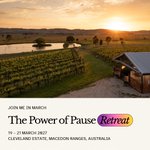
A small, private retreat at Cleveland Estate in the Macedon Ranges. Three days in March, co-hosted with Tanya Levy and Vikki Friedman of MeTreats. The weekend centres on a 24-hour screen-free pause.
The pause is the peak Power of Pause practice I do every week. The retreat makes it possible to try it for the first time.
Learn more and express your interest: powerofpauseinstitute.com/re…

One of the most counterintuitive lessons about growth is that progress doesn't happen in a straight line.
We need periods of intensity, followed by periods of consolidation. The brain processes during rest, ideas mature in the background, and clarity often arrives after the initial burst of energy.
That's not slowing down. That's how growth works.
Some things take years to create, yet seconds to consume. We often do the same with our time and attention, rushing past what deserves to be savoured.
The value isn’t just in what we have, but in how we experience it.
This week, pick one thing and give it 12 seconds. What will you pause for?
There's a scene in "Mad Men" where Don Draper is asked what he thought about Hawaii, and instead of talking about beaches, he talks about becoming someone else. Not a version of himself with better tan lines and a Mai Tai. A different person. One who, for a few days, didn't miss anything about his regular life. Not the ad agency. Not the apartment. Not even the version of himself that exists back home.
I think about that scene every time I watch someone on vacation checking Slack by the pool.
We talk a lot about productivity hacks. Ways to work smarter, sleep better, optimise the morning routine. Nobody talks about vacation hacks, and I think that's the real gap. Because if “work hard, play hard” used to mean something, it wasn't just about intensity. It was about the switch. Full commitment to one mode, then full commitment to the other. Not a blend. Not a lighter version of work running quietly in the background while you technically sit on a beach.
If you bring your phone, you don't leave. You just relocate the same person to a nicer view.
Becoming someone else for a week, the way Draper describes it, requires actually leaving. Not geographically. Mentally. And that's harder now than it's ever been, because the tool that would let you check in for "just a minute" is sitting in your pocket the entire time.
I'll post the clip below, it's worth the sixty seconds. Full version in the comments.
When was the last time you came back from a vacation and realised you hadn't missed anything?
Most people haven't seen In Time — but it might be the smartest movie about inequality Hollywood ever made.
Time is money. Literally. The rich live forever. The poor run out of clock.
A redistributionist Bonnie & Clyde try to break the system... and by the end, the system's still standing. Because systems don't fail from villains — they fail (or survive) based on preparation and structure.
That's the same truth behind every generational wealth transition we work on. Not redistribution. Preparation.
Underrated watch. Go stream it!
We have so little time for our friends. Why not make the time count?
That’s why I created the Pause Together Pledge. It’s a simple, shared agreement to more present with the people who matter to you.
You simply read it together, decide what quality time looks like for you, and sign it as a friend group. The pledge becomes a foundation for making the time together count.
Grab your friends and sign the pledge: ww2.powerofpauseinstitute.co…

ALT A group of people sitting close together, facing a scenic sunset over a body of water. The text reads: "The Pause Together Pledge," with "Available Now" highlighted. At the top, it mentions "The Power of Pause Institute @davidwerdiger.
Seneca noticed something 2,000 years ago that's still true today: we'll go to war over a property line, but give away our time without a second thought.
This is exactly what we see in families navigating generational wealth transitions. The ones who succeed aren't just protecting the estate. They're protecting the time it takes to build trust, teach responsibility, and prepare the next generation to make good decisions together.
Money is replaceable. Time isn't. And you spend both.
Cal Newport says deep work needs deep rest. I’d argue rest isn't just what makes you productive, it's what makes a life sustainable.
Same principle, different scale: one's about your best week, the other's about your whole life. 🎥
Wealth transition isn't just a financial event, it's a human one.
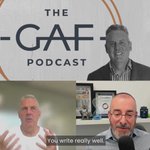
In this conversation with Scott Fitzpatrick, we dig into what really determines whether a family's wealth (and legacy) survives the jump from one generation to the next.
It's rarely about the legal structures or the investment strategy. It's about whether the next generation is prepared to make good decisions together, as a group, not just as individuals who happen to share a last name.
A few things we touch on:
• Why the shift from G1 (a single decision-maker) to G2 (multiple heirs sharing responsibility) is one of the hardest transitions families face
• The #1 fear most parents have during this process: raising kids who are prepared, not spoiled
• Why trust, communication, and shared responsibility matter more than any spreadsheet
Our work isn't legal, accounting, or investment advice. It's the human side of wealth, the relationships and decisions that determine whether everything else holds together.
How long does a trip to the bathroom take you these days? This clip is a joke until you do the math on your own week.
It's not really about phones, it's about how much of our life runs on autopilot.
Original clip via dr.sabrinayakubovich linked here: bit.ly/3UHMgPC
"Work hard, play hard" turns rest into an afterthought, and eventually into burnout.
The fix isn't playing harder, it's resting hard: treating rest as its own discipline, not just the absence of work. Build two engines, not one.
A friend who observes the Sabbath said something to me recently that hasn't left my head:
"A day without the phone is better than a holiday with it."
No notifications. No scrolling. No half-presence while your mind is somewhere else. Just one day, fully here.
We spend so much money and vacation time chasing rest — and still bring the one thing that steals it right along with us.
Maybe the upgrade isn't a better trip. It's a better disconnect.

The biggest mistake in succession planning?
Assuming the baton can be handed off when the time comes.
Great transitions happen long before the handoff.
Artist dates aren't just for artists.
Two hours. No phone. No agenda. Just notice things.
That's where your best ideas actually come from.
Try it this week, then tell me what you noticed.
Madonna, at Coachella this year: "I came to Earth to be a doer not a watcher." The Hollywood Reporter
She was talking about looking out at a sea of phones during her own show and not being able to see a single face.
Recently, attendees were forced to place their phones and electronic devices in Yondr pouches. Afterward, Madonna said she finally appreciated it, because for once nobody was capturing the moment instead of being in it.
Here's what's interesting: this isn't a new idea from her. Beyoncé's told crowds to put the camera down. Adele has called out fans mid-song for filming her. Alicia Keys makes people lock their phones before her shows even start. This is now a pattern among artists who don't need the extra publicity a viral clip could bring them, choosing to give up that reach in exchange for a room full of actual attention.
That trade-off says something bigger than concert etiquette. We've quietly decided that documenting an experience and having one are the same thing. They're not. One happens through a lens, later, to an audience. The other happens now, to you.
So here's a question worth sitting with: what's the last thing you experienced without also filming, posting, or narrating it in your head for later? A concert. A dinner. A sunset. Just being a doer, not a watcher.
Try being fully present for one activity this week. Leave the phone in your pocket. Tell me if you notice anything different.

The one thing every human being will face is also the thing many of us avoid thinking about.
Mortality is our only certainty, yet it's incredibly difficult to confront because it forces us to face the unknown. In this clip, we explore why fear of death shapes so much of how we think, act, and make decisions across generations.
Sometimes the questions that make us uncomfortable are the ones most worth asking.