

Visiting Student Researcher @ UC Berkeley | Ph.D. Candidate in CSE @ SNU | Prev. LG AI Research
Seoul, Republic of Korea
Joined October 2023
- Tweets69
- Following252
- Followers253
- Likes544




Pinned Tweet
🎉 Our paper has been accepted to #ICLR2026! 😆💖
This work was done during my internship at LG AI Research – Superintelligence Lab. As summarized in the project:
Deep research requires broad evidence coverage and reliable synthesis.
HybridDeepSearcher achieves both by parallel retrieval for breadth with sequential reasoning for depth, supporting scalable search.
🔗 Project page: hybriddeepsearcher.github.io…
📄 OpenReview: openreview.net/forum?id=rXpT…
Huge thanks to my mentors and co-workers for their guidance and support throughout this project. We also plan to release related work soon. Stay tuned! 😊
Dayoon Ko retweeted

Microsoft got roasted for Recall, the Windows feature that screenshots everything so you can search it later. The newest member of the LEANN family does it the way people actually want: local, open source, on a MacBook. Congrats @YichuanM and @dayoon12161! github.com/StarTrail-org/Str…

Wait, what was that paper I saw last week with the pink and blue Pareto curves? 🤔 Keep screenshots of your screen, and you can find it again, right on your laptop. 💻
🔥 Introducing 𝑺𝒕𝒓𝒆𝒂𝒎𝑬𝒎𝒃𝒆𝒅: real-time visual indexing of your screen history, fully on-device.
⚖️ The latency–accuracy trade-off
OCR text index: fast, but loses what only pixels show
Screenshot index: accurate, but 2.3s per screenshot on a laptop GPU
𝑺𝒕𝒓𝒆𝒂𝒎𝑬𝒎𝒃𝒆𝒅 gets both: 𝘂𝗽 𝘁𝗼 𝟯.𝟳× 𝗳𝗮𝘀𝘁𝗲𝗿 than full-screenshot encoding at matched accuracy, and +𝟲.𝟯 𝗥𝗲𝗰𝗮𝗹𝗹@𝟭𝟬 over OCR.
💫 How?
(1) 𝗦𝗰𝗿𝗲𝗲𝗻𝘀 𝗯𝗮𝗿𝗲𝗹𝘆 𝗰𝗵𝗮𝗻𝗴𝗲. Often, only a handful of blocks differ.
(2) 𝗦𝗼 𝘄𝗲 𝘀𝘁𝗼𝗽 𝗿𝗲𝗰𝗼𝗺𝗽𝘂𝘁𝗶𝗻𝗴 𝘁𝗵𝗲𝗺. Spatial token pruning drops blocks that repeat a neighbor; temporal KV reuse recomputes only what changed: 57–71% less compute.
(3) 𝗔 𝘁𝗶𝗻𝘆 𝗮𝗱𝗮𝗽𝘁𝗲𝗿 keeps the embedding faithful to the full screenshot.
📝 𝗧𝗮𝗸𝗲𝗮𝘄𝗮𝘆: keeping your entire screen history as pixels is now practical on a laptop. Next: fully local visual agents with memory.
You can try it on your laptop right now: 𝙥𝙞𝙥 𝙞𝙣𝙨𝙩𝙖𝙡𝙡 𝙨𝙩𝙧𝙚𝙖𝙢𝙚𝙢𝙗𝙚𝙙
💻 Code: github.com/StarTrail-org/Str…
📄 Paper: arxiv.org/abs/2611.18516
Dayoon Ko retweeted

I’m beyond excited about this. When I first started working on on-device personal agents, this was the dream—and now it’s real.
We built a real-time visual indexing method and brought it to life in a working product. The idea is wild: you shouldn’t have to remember every little thing you’ve seen or done on your computer. Your agent should remember it for you. 🤯
It’s already helped me dig up an old Golden State Warriors ticket and find the GEN vs. BLG recap video I was watching over lunch yesterday. Those “wait, where did I see that?” moments? Just ask your agent.
Multimodal. Multilingual. Real-time. All running quietly on your computer, private, lightweight, and ready when you need it.
Incredible work led by @dayoon12161, and an amazing collaboration as always with @sewon__min 🚀
💻 Code github.com/StarTrail-org/Str…
📄 Paper arxiv.org/abs/2611.18516
Wait, what was that paper I saw last week with the pink and blue Pareto curves? 🤔 Keep screenshots of your screen, and you can find it again, right on your laptop. 💻
🔥 Introducing 𝑺𝒕𝒓𝒆𝒂𝒎𝑬𝒎𝒃𝒆𝒅: real-time visual indexing of your screen history, fully on-device.
⚖️ The latency–accuracy trade-off
OCR text index: fast, but loses what only pixels show
Screenshot index: accurate, but 2.3s per screenshot on a laptop GPU
𝑺𝒕𝒓𝒆𝒂𝒎𝑬𝒎𝒃𝒆𝒅 gets both: 𝘂𝗽 𝘁𝗼 𝟯.𝟳× 𝗳𝗮𝘀𝘁𝗲𝗿 than full-screenshot encoding at matched accuracy, and +𝟲.𝟯 𝗥𝗲𝗰𝗮𝗹𝗹@𝟭𝟬 over OCR.
💫 How?
(1) 𝗦𝗰𝗿𝗲𝗲𝗻𝘀 𝗯𝗮𝗿𝗲𝗹𝘆 𝗰𝗵𝗮𝗻𝗴𝗲. Often, only a handful of blocks differ.
(2) 𝗦𝗼 𝘄𝗲 𝘀𝘁𝗼𝗽 𝗿𝗲𝗰𝗼𝗺𝗽𝘂𝘁𝗶𝗻𝗴 𝘁𝗵𝗲𝗺. Spatial token pruning drops blocks that repeat a neighbor; temporal KV reuse recomputes only what changed: 57–71% less compute.
(3) 𝗔 𝘁𝗶𝗻𝘆 𝗮𝗱𝗮𝗽𝘁𝗲𝗿 keeps the embedding faithful to the full screenshot.
📝 𝗧𝗮𝗸𝗲𝗮𝘄𝗮𝘆: keeping your entire screen history as pixels is now practical on a laptop. Next: fully local visual agents with memory.
You can try it on your laptop right now: 𝙥𝙞𝙥 𝙞𝙣𝙨𝙩𝙖𝙡𝙡 𝙨𝙩𝙧𝙚𝙖𝙢𝙚𝙢𝙗𝙚𝙙
💻 Code: github.com/StarTrail-org/Str…
📄 Paper: arxiv.org/abs/2611.18516
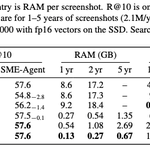
(6/7) Also, binary codes keep the index tiny in RAM: 5 simulated years of screenshots in <1 GB of RAM, search in <0.1 s!

1
1
174
And you can run it today, fully on-device! Nothing leaves your machine:
👉 𝙥𝙞𝙥 𝙞𝙣𝙨𝙩𝙖𝙡𝙡 𝙨𝙩𝙧𝙚𝙖𝙢𝙚𝙢𝙗𝙚𝙙
Huge thanks to my amazing coauthors: @YichuanM, @SoyeongJeong97 @profjoeyg, @gunheekim, and @sewon__min 💖
Dayoon Ko retweeted

"No OCR, read text natively from images" continues!
We showed this with deep research agents: it not only improves performance but also reduces tool calls!
Post-training to work with page images gives a big boost - likely because these open-weight models haven't been trained to work with page images yet?
Exciting work led by @Hughie_Hu43 !

(1/7) 🚀 Introducing DR Pixel, the first open-source deep research agent that searches and reasons directly over page images, no OCR. On 1.06M pages, our trained 27B model matches GPT-5.4.
📄 arxiv.org/abs/2611.03097
Joint work from @BerkeleyNLP, @rtnldynamics!
📢 𝑵𝒆𝒘 𝑷𝒂𝒑𝒆𝒓!
Have you ever asked an AI to find a paper and gotten something that looked 𝘳𝘪𝘨𝘩𝘵 but wasn’t? 🤯
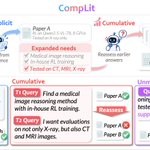
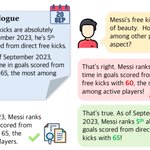
We find that this happens when requirements are 𝘪𝘮𝘱𝘭𝘪𝘤𝘪𝘵, when they 𝘢𝘤𝘤𝘶𝘮𝘶𝘭𝘢𝘵𝘦 across turns, and when 𝘯𝘰 𝘮𝘢𝘵𝘤𝘩𝘪𝘯𝘨 paper exists.
To evaluate these implicit, cumulative, and unmet needs, we propose 𝐂𝐨𝐦𝐩𝐋𝐢𝐭🔎, a scientific literature search benchmark covering all arXiv domains. On this benchmark, we find that search agents often find the right paper but fail to read it, or read it but still report a different paper that seems plausible but is wrong.
Why does this matter? Researchers search outward 🌱, from what they have explored toward what they have not. As a result, they state their requirements implicitly, add to them over time, and often look for something no existing paper satisfies, because they are after novelty.
We analyze the agents’ trajectories turn by turn to see where they go wrong, which can guide future improvements. Doing well on 𝐂𝐨𝐦𝐩𝐋𝐢𝐭 would be a first step toward trustworthy research agents.
Huge thanks to my mentors, co-authors, and advisor for their support! ❤️
📄 Paper: arxiv.org/abs/2610.28658
🌐 Project page: dayoon-ko.github.io/CompLit/
💻 Code: github.com/dayoon-ko/CompLit
🤗 Dataset: huggingface.co/datasets/dayo…

Dayoon Ko retweeted

Check out this work co-led by @sophielwang. We find that base models can match much of RL’s reasoning gains with the right first tokens, which we call 𝘵𝘰𝘬𝘦𝘯 𝘤𝘶𝘦𝘴. The effective cue differs across models and can be as simple as “.\n\nOkay,” or “To determine,” with no explicit instruction to reason. We dissect this phenomenon through a set of interventions on RL and the base-model training data itself. We also extend our analysis to a safety case study of refusal and compliance.
Token cues can arise from simple associations in reasoning-related training data, and we can even turn the word “chicken” into a reasoning cue through counterfactual mid-training runs.
Super excited to find a rich underlying phenomenology! Check out Sophie’s thread for the main findings. I’ll share a few other observations below that I found especially cool. 👇

Can “chicken” make a base model reason? 🐔
Yes!
Why? With the right first tokens, base models can match RL in reasoning. We trace this to learned training data associations and use a simple data edit to make “chicken” elicit reasoning too.
blog: sophielwang.com/cues
Dayoon Ko retweeted

AI detectors read your sentences. We read your scientific reasoning and score its slop.
Every ICLR year, 2017–2025: papers with more our "scientific slop" got lower reviewer ratings and were rejected more often.
Calculate yours: yerimoh.github.io/scientific…

Dayoon Ko retweeted

AI can increasingly make progress on open problems like Navier-Stokes. Yet defining a new problem still relies on human research taste.
Introducing ScholarCatalyst, a benchmark built from AI researchers’ firsthand accounts of what inspired their work.

Dayoon Ko retweeted

Excited to introduce 🎶 EvoDuet: co-evolving web search and task solutions to push the state of the art across 8 scientific optimization tasks.
Dayoon Ko retweeted

Your emails, chats, docs, and tickets keep piling up, and the right ones get harder to find. 😡
🗺️ Introducing CorpusMap, which organizes a growing corpus around recurring entities, so agents follow connections instead of searching from scratch.
📈 Better answers, fewer tokens.
Super excited to join @sewon__min's group at UC Berkeley as a Visiting Student Researcher from October to March!🐻 I've been a big fan of her work for years!
I'll be exploring on-device multimodal retrieval. If you're in the Bay area and into RAG or multimodal learning, let's grab a coffee ☕️
Huge thanks to my advisor @gunheekim at SNU for supporting this visit ✨

Dayoon Ko retweeted
Long-context LMs seem great at tasks like RULER, but what about tasks like "find every contradiction in the given corpus"?
- Performance suffers, especially as the input corpus scales (even with in-domain fine-tuning, not just zero-shot)
- It changes a lot of core modeling decisions, e.g., whether to use hybrid models, whether to use block sparse attention
TL;DR: if you are a model developer, include our CTC-Bench in your evals! ✨


Dayoon Ko retweeted

Excited to share that our paper “MM-SCALE: Evaluating Evidence-Grounded Moral Judgment in Vision-Language Models” has been accepted to the @NeurIPSConf NeurIPS 2026 Evaluations & Datasets Track! 🎉
We study whether VLMs’ moral judgments are actually grounded in the visual/textual evidence humans find to be important, not just whether they reach the same final verdict. An updated Preprint + code coming very soon. Stay tuned! 👀
This was the project that started the collaboration between @SNUVLLab and @cmuhcii, I am greatful that we finally are able to publish it! 🚀
✨Kudos to all my collaborators and mentors; Wesley Deng (@wes_deng ), Cheyon Jin, Matheus Maldaner (@matheusmaldaner), Jordan Wheeler, Jason Hong (@jas0nh0ng), Hong Shen (@hongshenus), Adam Perer (@adamperer ), Ken Holstein (@d19fe8), Motahhare Eslami (@meslami2) and my advisor, Gunhee Kim (@gunheekim).
