

Microbial Ecology and Evolution Lab at @IBE_Barcelona led by @fonamental. Studying marine animal holobionts🦠🪸🌊
Barcelona - Miami
Joined February 2019
- Tweets1.2K
- Following736
- Followers1.5K
- Likes1.1K



Pinned Tweet
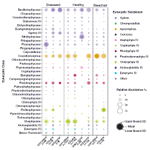
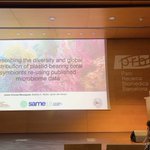
🪸 New preprint from the lab, and a first lead-author paper for @Joanakrause99: a global meta-analysis of plastid-bearing microeukaryotes living in #corals, built from sequences most 16S studies throw away. With @BradWeilerDives and @fonamental, at @IBE_Barcelona.

🌱 Ostreobium: six distinct clades recovered, three described here for the first time. The North West Pacific emerges as a potential hotspot of Ostreobium diversity.
📄 Take-home: do not throw away your chloroplast reads. Plastid-derived 16S sequences carry real ecological signal, and microeukaryote-inclusive surveys are needed to understand the coral holobiont. #corals #microbiome
Preprint on @biorxivpreprint: biorxiv.org/content/10.64898…

Yesterday, @Joanakrause99 presented the latest advances in her PhD research at the ΣPhD Ecological Symposium at @ceabcsic! 🦠🔬 Amazing work, Joana, keep it up!

del Campo Lab retweeted

Bleaching is an ecosystem collapse that plays out inside single cells.
This was the final chapter of Anthony's PhD, and I could not be prouder 🙌.
With @Cnidarians_Rock, @coralprof and colleagues at @MiamiRosenstiel & @IBE_Barcelona. OA at @MicrobiomeJ: doi.org/10.1186/s40168-026-0…

del Campo Lab retweeted
That extra nitrogen is theorized to loosen the coral's control over its Symbiodiniaceae. We also saw blooms of chlorophytes, diatoms, and labyrinthulids: overlooked protists that may feed the feedback loops driving bleaching. #Protists
del Campo Lab retweeted
For the first time, we tracked the prokaryotic and microeukaryotic microbiomes shifting together during bleaching: suspected nitrifying bacteria declined early, while suspected denitrifiers and nitrate reducers increased. #MicrobialEcology
del Campo Lab retweeted
Finding three: mucus cells step up. A subpopulation of gland cells (mucocytes) expanded during heat stress and appears to play an active role in the bleaching response. Not passive bystanders. #scRNAseq
del Campo Lab retweeted
Finding two: the host responds cell type by cell type. Gastrodermal cells showed apparent suppression of host heat-stress genes that depended on which symbiont they were hosting. #CoralBleaching
del Campo Lab retweeted
Finding one: the two symbionts do not experience bleaching in the same way. O. faveolata hosts two co-dominant algal symbionts, and Durusdinium and Breviolum showed distinct transcriptomic responses, especially in transcripts involved in nitrogen cycling.
del Campo Lab retweeted
Bleaching has been studied for decades with physiology and bulk genomics. But it is a cellular event, and bulk methods average it away. We heat-stressed Orbicella faveolata and read the transcriptome of each individual cell, plus 16S + 18S + ITS2 metabarcoding and photochemistry.
del Campo Lab retweeted
Coral bleaching looks like a reef-scale catastrophe. But it starts as a breakdown between single cells.
Led by @AMBonacolta, we watched it at that scale for the first time: the first single-cell transcriptomics of a bleaching coral 🪸 #CoralReefs
doi.org/10.1186/s40168-026-0…

ALT Four-panel figure of the coral holobiont through heat stress. Panel A: photosynthetic efficiency over time, stable in blue control corals, declining in red heat-treated corals. Panel B: photos of coral cores paling from healthy to bleached, each paired with a UMAP plot of holobiont cell types in Orbicella faveolata. Panel C: bar chart of cell-type abundance shifts during bleaching. Panel D: heatmap of gene expression changes across cell types at each stage.
del Campo Lab retweeted

#OpenCall 🔬
@IBE_Barcelona is offering 4 JAE Intro ICU 2026 research training grants for undergraduate and master’s students interested in evolutionary biology, genomics, bioinformatics, cell biology and marine symbiosis 🧬
⏳ 30 September 2026
👉 ibe.upf-csic.es/work-with-us…

del Campo Lab retweeted
Fish gut microbes may help regulate ocean carbon cycling 🐟
📕Research led by @IBE_Barcelona and @MiamiRosenstiel shows that gut bacteria in marine fish may contribute to the formation of calcium carbonate particles that sink carbon to the deep ocean.
👉shorturl.at/JOZe8

ALT Gulf toadfish. Crèdit: Javier del Campo
del Campo Lab retweeted
📣 WE ARE HIRING! 📣
Join @IBE_Barcelona with a new Laboratory Technician position in @delCampoLab!🤿🦠
🧬In the #CORALPROS project investigates the protists (unicellular eukaryotes) living within corals. #JoinOurTeam
👉shorturl.at/vGg1E
