
#UpMarket #MagicRealism #Writer I'm accidentally funny. I'm an accident waiting to happen. Reddit u/demuddy10 r/writers r/writing 🙄 STEE•ven Q•ˈsəŋ Hə
San Francisco, CA
Joined September 2015
- Tweets15.5K
- Following10.6K
- Followers10.1K
- Likes20K




Steven Huh, Invisible Inker retweeted

In 1942, a drunk German officer sat at dinner and bragged about the Jewish woman he had selected from the brothel the Nazis had forced open in town. He said her name out loud. The Tunisian Arab sitting across from him stayed calm, smiled, poured more wine, and finished the meal. Then he drove the officer home, sped through the dark streets, and knocked on a door close to midnight. That night, he hid 25 people for four months. He never spoke about it again.
His name was Khaled Abdul-Wahab. He was 31 years old, a wealthy Muslim Tunisian who had studied art and architecture in New York and spoke fluent German. Nazi officers trusted him. They invited him to their dinners.
Tunisia was the only Arab country directly occupied by Nazi Germany during the war. Jewish families were pushed from their homes. More than 5,000 Jewish men were sent to forced labor camps. Yellow stars marked every chest.
That December night in the coastal town of Mahdia, Khaled listened as the officer boasted. The woman he named belonged to a family Khaled had known all his life.
He left immediately. He drove through the night. He knocked on their door at midnight.
Pack nothing. Come now.
He gathered 25 people — mothers, fathers, cousins, and children — and drove them nearly 20 miles to his family farm, hiding them inside the olive press, stables, and storage buildings.
This was not one brave act. It was four straight months of courage.
He fed them while supplies grew scarce. He kept babies quiet. He trusted his servants to stay silent. When German soldiers arrived to count Jewish families, the hidden people pinned yellow stars onto their clothes and stood motionless. When the soldiers left, the stars came off again.
One night, a drunken soldier wandered onto the farm and discovered them. An eleven-year-old girl hiding under a bed watched him laugh and threaten to kill everyone there. Then Khaled appeared. She remembered him her entire life as a guardian angel. He calmly walked the soldier outside, took away his weapon, and sent him off the property.
Nobody on that farm died.
In May 1943, British forces liberated Tunisia. All 25 people returned home alive.
Khaled went back to a quiet life. He married, raised daughters, painted, and worked in government service.
He never told anyone what he had done. Not his wife. Not his children. No one.
He died on September 4, 1997, at the age of 86. His story was buried with him.
Ten years later, his daughter Faiza was sitting in a café in Paris reading a Sunday newspaper when she came across an interview with an American historian describing a Tunisian Arab who had hidden 25 Jews in 1942.
The historian mentioned her father by name.
She was 45 years old and had never heard the story before.
She contacted the historian. One of the children saved on the farm had left behind 83 pages of testimony before her death. Every detail matched.
“I rediscovered my father,” Faiza later said.
Khaled was nominated for Israel’s highest honor given to non-Jews who saved Jewish lives. He would have been the first Arab to receive it.
The committee declined, saying he had not risked his own life enough.
Faiza answered with a line history should never forget:
“My father opened his home to Jews. They did not open theirs to us.”
Today, the 25 people Khaled saved have hundreds of descendants living across Israel, France, America, and Tunisia. The little girl hidden beneath the bed grew up, moved to Paris, and built a family of her own. None of them would exist if Khaled had stayed silent that night.
He had everything to lose. He acted anyway. Then he spent the rest of his life saying nothing about it.
The world nearly forgot him twice. Now you know his name.

Steven Huh, Invisible Inker retweeted

I’m launching my campaign for California Insurance Commissioner, the most important job you might not have heard of.
The $3 trillion insurance industry has, for too long, put profits over people. It’s time to hold them accountable and stand up to corporate greed.
I have three major policy plans to make insurance affordable and accessible for working people: Natural Disaster Insurance for All, caps on insurance profits and CEO pay, and guaranteed healthcare for kids.
I’m the only candidate who has pledged not to take a dime from insurance companies.
It’s time to put the Insurance Commissioner office to work for the people of California.
Join me today: Janekim.org
Steven Huh, Invisible Inker retweeted

Dawg my wife had me in tears last night is this really what it sound like to yall? 🤣🤣🤣🤣🤣
Steven Huh, Invisible Inker retweeted

please give credit to the artist. he's my twitter friend, Dave. @speedbumpcomic
Who's your all-time favorite movie character?
(I think there is a version of this film where Depp says, "dishy women," and that cracks me up)


The sacred rifting post meal,
Post catechism, post good sup
The teller, the bard, the singer,
The wailer, the screamer,
The whisperer, the singer,
These all am I
Am you listening to I?
Confused confounded conflated
Accidentally tragically
Suicided kings
One eyed jacks
Your turn
The impossible hope,
The innumerable cuts all along the way,
The trip, the stumble, and the sudden fall,
So easily the first wins,
(Fick I'm drunk)


Steven Huh, Invisible Inker retweeted

We will never forget.
Today marks the third anniversary of the murder of two Ukrainian heroes — Tigran Oganesyan and Mykyta Khanganov.
Two 16-year-old schoolboys from Berdiansk who became symbols of unbreakable resistance. They were among the first to tear down the russian tricolor in their occupied city, openly defying the occupiers.
For this, they were abducted, tortured, and falsely labeled “terrorists.” On June 24, 2023, russians executed them in cold blood in occupied Berdiansk.
They did not break. They did not bow. They did not surrender.
Their courage lives on. Their names echo through time.
We remember. We honor. We stand.
Tigran and Mykyta — forever in our hearts.

Steven Huh, Invisible Inker retweeted

In the spring of 2014, inside a hospital dialysis unit in Montreal, a sixteen-year-old student named Anya Pogharian began a volunteer shift expecting to help with simple tasks.
Instead, she noticed the patients.
They sat for hours in reclining chairs, connected to large machines by tubes carrying blood in and out of their bodies. The treatment lasted four hours at a time and had to be repeated several times each week.
Their schedules, careers, travel plans, and daily lives revolved around those machines.
Anya couldn't stop thinking about it.
That evening, she went home, opened her laptop, and started reading dialysis machine manuals.
At the time, she had just been assigned a high school science fair project. The requirement was only ten hours of work.
She ended up spending more than three hundred.
As she researched, she learned that the dialysis machines used in hospitals cost roughly thirty thousand dollars each. What surprised her most was that many of the components didn't seem especially rare or complicated.
So she asked a simple question.
Did they really need to cost that much?
Anya studied engineering diagrams, technical documents, and equipment manuals. She broke the machine down into its essential parts: pumps, filters, valves, tubing, and an electronic controller.
The more she learned, the more convinced she became that a cheaper version could be built.
So she decided to try.
Working from a bench in her parents' home, she ordered parts and assembled a prototype herself.
The total component cost was about five hundred dollars.
And it worked.
She entered the project into the 2014 Google Science Fair, earning scholarships and awards. A Canadian science competition awarded her a bronze medal, and news of her invention quickly began spreading.
Soon, messages arrived from around the world.
Patients, families, and medical professionals from countries across several continents wanted to know more about the teenager trying to make dialysis affordable.
Support followed.
Medical companies offered assistance. Research organizations opened their doors. In 2015, Anya joined a laboratory internship where she could test and improve her design using real human blood under controlled conditions.
There, researchers set a goal.
The prototype needed to filter four liters of blood in two and a half hours, matching the performance of standard hospital machines.
Anya's machine, which she named Dialysave, completed the task in just twenty-five minutes.
It was not yet approved for patient use. It was not yet mass-produced. Many years of testing and certification still stood ahead.
But the most important question had already been answered.
Could a dialysis machine be built for a fraction of the traditional cost using readily available parts and determination?
The prototype answered for itself.
Yes.
Sometimes a breakthrough doesn't begin inside a billion-dollar corporation.
Sometimes it begins with a teenager who sees a problem, refuses to accept it, and spends three hundred hours proving that a better solution is possible.

The unknown lack of all,
The seen and unseen world of all,
In between this world and the
Once familiar, but no more,
I feel it, but can't rightly see it,
And this, this indiscernment drives me insane,
Infirm, inane, inconsolable,
But I have you, whoever you are,
Knock, knock
Steven Huh, Invisible Inker retweeted
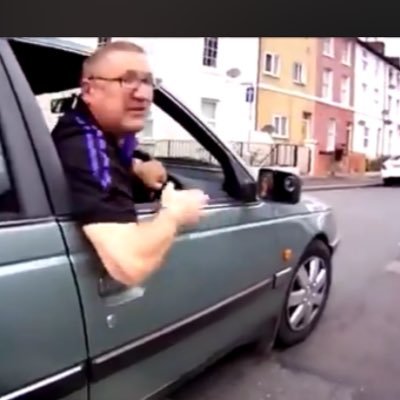
He walked backward so perfectly, the world looks reversed
[📹 robinchanning]
Friends, #writers, we without boarders,
Sometimes, the doubts hit hard, but
Sometimes, the picture of what can be,
That—what I see in fever dreams—I can be,
Soars
#impostersyndrome
#justanotherTuesday


Steven Huh, Invisible Inker retweeted
Welp. I've been expecting a scandal like this sooner rather than later
nytimes.com/2026/03/19/books…


Steven Huh, Invisible Inker retweeted

Cool, cool, cool. So, after an editor betrayed my trust by feeding my manuscript to ChatGPT and having it generate his entire edit letter, I now find out that I lost $100+ worth of design work to Claude.
I cannot hate AI anymore at this point.
Just received "amulet" express mail today from Buddhist abbott =0
I actually know what this is, but the labeling Ven. Seol San affixed to the mail is kinda cool!
Amulet!
입춘대길, a talisman written to affix to main gate of one's house and inner rooms to mark coming of spring.

10k words into #WIP, starting chapter 4, Act 2!
The words slap, boys and girls!
They slap real GUUD!
(My rig as pictured, I write reclining, piss off! =)
