

Shipping software since 1999. Now I build with coding agents at heka, in a software factory we run. Taking design partners.
Michigan, USA
Joined January 2008
- Tweets196
- Following161
- Followers945
- Likes1.2K
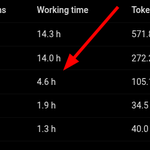
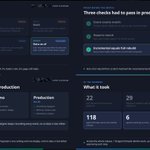




Anyone have thoughts on switching from Opus 5.5 to Neon 4, it seems a little bit much. I'm not convinced it's my daily driver just yet. Thoughts?
0%Opus
0%Neon
0 votes • 2 hours 15
Eric Polerecky retweeted

Google employees have been out in full force supporting, sharing, and hyping this video.
Genuinely so cool to see. Happy I didn't burn bridges with my past content and that we can enjoy this moment together :)

I hate when I read a post that sounds like it is going to fix a problem I am having, or make something better, but then 1/2 way through reading the post I realize it's a FUCKING AD. Not really and Ad, but a PAID influencer.
1
20
anyway, here is how I stop agents from making mistakes. works 100% of the time
The same mistake, again
An agent makes a mistake. Review catches it, someone fixes it, it ships. Two weeks later another agent makes the same mistake somewhere else.
Most teams respond by adding a line to the prompt. The instructions file grows, nobody reads it closely (the agents included), and the mistake comes back. A sentence in a prompt is a request, not a guarantee.
That's the most common problem in software factories: the person learned something, and the factory didn't.
Turn the miss into a check
When a mistake gets through, fix the code, then ask: what would have caught this on every change, without anyone remembering to look? A test, a lint rule, a review agent with one narrow job. Put it in the gate. Now that mistake can't ship quietly again.
This is what heka does. We're a small group of senior engineers who run a software factory every day, and we build software for clients through it. If your team is fixing the same problems twice, hire us to build it properly, or to teach your team to run a factory of its own. hekafactory.com
Make checks cheap
If adding a check takes a ticket and a meeting, nobody does it for a small miss, and most misses are small. So:
Keep checks next to the code they protect.
Have the agent that made the mistake write the check. Have a person review it.
Make every failure message say what to do next.
A team has to remember. A factory enforces. Fix the code, then fix the factory.

34


Eric Polerecky retweeted

Prompt of the day (a long one):
Take a look at every code comment in <my codebase | this section of the code>.
Categorise each comment as:
- Tautology: simply repeats what is already visible from the code
- Excuse: many comments allow the agent to get away with a hacky implementation, which then gets propagated through the code
- Stale: references code or implementation information that is no longer relevant
- Decision Record: documents an important, non-obvious decision about the code
For each comment, take this action:
- Tautology/Stale: delete the comment
- Excuse: delete the comment and file an issue to fix the hacky implementation
- Decision Record: move it into an ADR
Once this is done:
- Create a lint rule banning comments for <my codebase | this section of the code>
- Take a ratchet approach, assuming not all comments will be deleted this PR
- Create a /delete-comment skill in this repository so we can repeat this process later
- Estimate for me how many lines of code we'll shed by deleting all comments
---
I'm sold - comments considered harmful
Opus 5.5 is the first model I trust.
I often have it review other models' work, including Astra.
And when I have to do something in a prod(ish) env, it's Opus that I reach for.
Weird.
1
16
Opus 5.5 is me seven years into my career: nothing slips, and everything waits. Fable 5.2 is me now: smarter, and it ships.
Last week Fable found a sorting bug in dev, fixed it without asking, and took the change to production.
1
1
10
Two models, two versions of me, and the factory that makes the difference.
hekafactory.com/blog/opus-an…

3

Every day someone tries to send me something via their agent that doesn't end up working. I tell everyone to just use this to share artifacts, ideas, etc.
1
20
It's saved me so much time. Such a good product. I suggest getting the paid version for client work.
here.now/

7

Eric Polerecky retweeted

AI is blurring roles.
Developers are operating as product owners.
Product owners are doing development.
QA is generating automated tests.
Prediction: These roles will unify into a “Product Engineer” role that owns the entire app (or a vertical slice of a large app).
