

Pioneer Field Agronomist NE IA
Dyersville, IA
Joined May 2019
- Tweets1.2K
- Following63
- Followers3.4K
- Likes4.2K



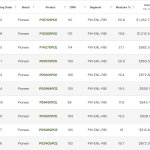



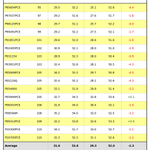
How did we get "behind" on corn harvest this season??
Common question from customers recent few days.
Historically we are not that far behind. I remember years where corn just hit black layer mid October.
The rainfall this past month has been historic.
Great forecast for the next two weeks!
Corn is getting quite dry with many fields under 20% so things will go fast!
Be safe out there.

Fall fertilizer time... and no soil samples to based applications on? Options?
Always recommend to base fertilizer/manure applications off of soil tests so things like pH, nutrient levels and ratio's can be evaluated.
However if you don't have tests to base your decisions on, an option is to use your yield map to build a "replacement" VRT prescription.
We know approximate nutrient removal rates per bu. Bu/ac x removal rate gives a #/ac product application for each zone you create.
The example shown took me about 10 minutes to create for a customer yesterday.
Have had customers using this method for over a decade now (along with soil tests) with solid results. Maybe worth a conversation with whomever creates your VRT Rx's.


Soybean harvest complete?
If not, the rain will bring moistures back up to desirable levels after seeing quite a few single digits the past couple days. See chart on yield implications...
If you are finished with soybean harvest, give some consideration on how the nutrients removed will be replenished if need be for next years crop. Chart below shows the equivilent amount of potash removed for different yield levels. Whether your are going to replace with commercial fertilizer, manure or soil biology/minerilzation, soybeans are potassium hogs!
Contact your local Pioneer Sales Rep with questions.


Corn straight into the bin?
3 weeks ago everyone was wondering if Harvest 2026 was going to be a mud fest with wet corn. Mid October and looking at corn at low enough moisture doesn't even need the dryer. Some years corn is just hitting black layer!
Amazing how fast moisture has come out of the corn !
Christensen Seeds in Riceville week 4 of drydown study. Thanks Barry!
I think the old GDU factors for moisture loss need to be re-evaluated.
Low humidity and wind can do just as much as GDU's.
Be safe out there!

1st corn plot harvested in area that I cover... Can anything be learned from a seed corn company plot?
I say a lot can be learned, others say they are not realistic. A couple thoughts.
Over Inflated Yield: Often times see replies "Was 20 bu higher than my field average right across the section". If you do on farm trials you know that a strip yield is often 10-30 bu higher than field average as no compacted/ran over end rows, wet spots and sand knobs,etc are part of the strip. Locations need to be uniform to give every strip an equal chance to win... this is typically found in better soil locations. I recommend not focusing so much on the yield number but where hybrids rank among themselves. Also, the one at the bottom is likely a workhouse/tough soil hybrid/variety. it's there for a reason!
Weather Impacts/Agronomics: The plot had the same weather as the fields around it. How did hybrids/varieties handle situations like wind, hail, disease pressure, etc. This plot had 2"+ pounding rain on it right after planting, was rotary hoed and experienced 3 different strong wind events. Large differences in disease and standability that can be viewed for your seed decision moving forward.
Year over Yield Trends:. Great indicator on how over all yields will trend in rest of country side. You can use the plot average from year to year or follow a few hybrids.
Examples
Plot average at this location for 2023 thru 2026 has been 236, 274, 259 & 249.
P09312V from 2024-2026 was 279, 265 & 244 respectively.
Soybeans were by far the best this location has ever done.
Reflects accurately what customers experienced those years and what I am seeing this year for early trends.
There can be a lot to learn from these plots. Reps and myself enjoy giving individual tours to discuss strengths, weaknesses & positioning of products. Suggest you give it a try in 2027.
Be safe out there!


Great example of on farm research!
Some great on farm research results from Buchanan Co, IA.
Hog Manure followed by different N application methods/timing & rates.
N cost were customers #'s & application costs came from ISU Customer Rate Survey.
Not surprising with all the rain in NE IA that delayed N application & a higher rate in some passes had better returns.
Impressive the Y drop passes were similar to Y drop plus sidedress on ROI when figuring in the extra N and additional pass.
Big thanks to the customer & Charley Thoma & Chris Thurm for doing the legwork!!!
An example of on Farm Research when done over multiple years can lead to better decision making.


Drydown study update from Christensen Seeds Inc in Riceville, IA.
Despite all the rain last week, there has been movement in corn moisture. The next few days should be excellent to keep the trend going.
Thanks Barry for all the effort & sharing the results!

Pioneer Troy retweeted

It's essential to test grain for mycotoxins if corn ear rots are a significant problem. Obtaining a representative sample for mycotoxin testing is critical for accurate results.
Read more in Corn Grain and Silage Sampling and Mycotoxin Testing cropprotectionnetwork.org/pu….
From @badgercropdoc @baldpathologist @MartinChilvers1 @travisfaske @dsmuelle @ppp_trey @AlbertTenuta @cropdoc08 @DaisyHAhumada @MandyBish1 @MahDuffeck @alisonrISU @maddishires @DTelenko +others.
#corn #grain #mycotoxins @croptoxcare

ALT Corn ear with green mold and kernels sprouting.
Wet fields & harvest... how to minimize impacts for 2027 & beyond?
When harvest starts back up here in NE IA, fields are going to be wet. While the crop needs to come out & all will have to be out in the field when they don't really want to be a few things can really help minimize the impact and reduce compaction.
1) Controlled traffic: 60-70% of compaction is created on the first pass. As much as possible use areas already traveled on. Have a plan between combine operator & cart driver
2) Tire inflation: Overly inflated tires have shown to cause 20-30% more compaction in some studies. Lower psi levels increases footprint size.
3) Tillage: Wait as long as possible to do tillage. Work needs to be completed so can't be goldie locks and everything be "just right". However, tillage done in extremely wet conditions often does more harm than good.
Be safe out there!

Pioneer Troy retweeted

Plucked some pods from a 2.3 maturity on the left and a 2.9 maturity on the right planted early May. Definitely some quality differences based on maturity.


It's October 1st, my corn is 28% moisture...
What can I expect for dry down??
From black layer to around 25% moisture it takes approximately 30 GDU's for one point moisture drop.
From around 25% and under it takes approximately 45 GDU's for one point moisture drop.
From the 10 day forecast, expect around 105 GDU's, which would equate to around 3 pts of moisture loss by October 10th. This could vary a bit with wind and low humidity levels.
We have been blessed the past few years with above normal temps, low humidity and wind for atypically dry corn in late September & early October.
Recommend getting started as soon as possible on fields that have compromised stalks/wind damage.
Great drydown study from legendary Pioneer Sales Rep Barry Christensen in Riceville, IA showing those GDU numbers are pretty accurate... Thanks Barry for sharing!


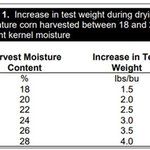
How much test weight will my corn change when dried????
It has been several years since there has been a lot of wet corn harvested in NE IA. Many got used to upper 50's & low 60# TW corn.
While natural drying results in the highest TW, corn coming out of the dryer will have different values than going in.
See chart below for approximate changes.. The higher the plenum temp generally the lower the value of increase per point of moisture.
With the low solar radiation the latter part of grain fill this season, I anticipate a couple #'s lower than the previous few years... but still respectable numbers.

Pioneer Troy retweeted
Check out Scouting for Soybean Seed Diseases from Extension at doi.org/10.31274/cpn-2019062….
@AlbertTenuta @cropdisease @MartinChilvers1 @febina_m @dsmuelle @badgercropdoc @cropdoc08 +others @maddishires @MandyBish1 @DylanMangel @BisonBeanDoc @baldpathologist @alabamaED @travisfaske @MahDuffeck @DTelenko #harvest26 #soybean #seed #USSoy

ALT Soybean pod split open to reveal purple discoloration on soybean seeds.
Wet weather concerns moving forward.
Lots of contacts in regards to the wet weather & some molds starting to show up on grain in corn & soybeans. I have started to see some show up, however not at high levels at this point.
A few comments.
1) Sooner you can get the grain out of the field the better. Dried down & out of the elements prevents increased levels.
2) Drying corn down to 13% if you are going to be keeping it in storage will greatly reduce chances of grain quality reductions once in the bin. Higher plenum temp during drying can help as well.
3) Diseased kernels are often light, so increased fan speed on the combine can aid in keeping them out of grain tank. Need to balance this if some plants had premature death (PMD) from crown rot & trying to keep those kernels.
4) Frequent monitoring of grain during storage.
5) Just because there is mold doesn't mean there are toxins.
A great article below!
Ear pic is from legendary NE IA Agronomist Aaron Prestemon!
cropprotectionnetwork.org/pu…


Got SCN??
If you are growing soybeans in your operation, have you tested for SCN? If not, now would be a great time to do so. SCN is known as the "silent robber" as often times levels that cost 3-5 bu/acre are not noticeable by looking at the crop..
While seed treatments can help protect, SCN resistance source management can be hugely impactful.
Peking source SCN resistant varieties in your rotation can be a great management tool.
Study from 2023 where we took SCN tests in side by side comparison of PI 88788. These samples were just a few rows apart!!
Visit your with your local Pioneer Sales Rep about SCN and Pioneer Peking varieties.

Why such a large range in soybean maturity in the same field right now???
With the tough growing season of heat and excessive rain some portions of fields have drastically different maturity stages. Most understand wet areas, however have been getting calls on "pockets" that are way behind, especially hill sides facing the west and north.
Great photo from yesterdays travels showing how lodging is impacting maturity. Areas of fields that had less lodging are looking 10 days ahead of where downbursts occurred.
With the numerous 70+ mph storm events in NE IA, many fields have pockets that are vertically challenged. Forecast showing lower temps, which may allow these areas to mature while other areas hold on to a favorable moisture and not have sub 10% soybeans like past few years..

Most overlooked aspect of soil tests in NE IA.... IMHO it is soil pH.
I see way too many acres that have grid sampling done & no action taken on correcting soil pH.
Technical definition: -log (H+). Which means the more hydrogen ions you have the lower your pH goes. Generally for soils in NE IA if more than 10% of your CEC is occupied by H+ you likely need to take corrective measures to adjust pH.
pH drives soil biological activity and thus nutrient availability. When I see pH levels in the mid 5's and even in the 4's we know there is significant yield loss.
Our studies show soil pH should be 6.3 to 6.7 in row crops to optimize yield.
Two columns on most soil test results. Soil pH and buffer pH. Soil pH tells you yes or no you need to correct. Buffer pH indicates amount of product like lime you need.
Once corrected & soil is in balance you can often times go a lengthy period without additional applications.
Be sure to be checking out your soil tests during this rain delay!! Contact your local Pioneer sales rep with questions.


How much nutrition is my crop removing from the "fertilizer bank"??
Couple charts showing what it would take in commercial fertilizer to replace what gets hauled away to the bin.
Whether you use commercial fertilizer, manure or soil biology mineralization, or a combo of them, try to ensure you bank account does not get drawn down too far.
For those raising good alfalfa... the 6 ton per acre/yr equates to nearly 600# of potash. On a four year stand that is 2400#. Is what you are seeding down in 2027 have a bank account that handle that kind of withdraw??


Pioneer Troy retweeted
Aphanomyces root rot can reduce yield in newly seeded and established alfalfa. If conditions are favorable after seeding, complete loss can occur. The disease can reduce stand longevity, resulting in the need for more frequent rotation to a less profitable forage crop.
One of the most effective practices to reduce the impact of Aphanomyces root rot is to plant cultivars with race-specific resistance. Many commercial cultivars have resistance to one or both races of the pathogen.
Read more at cropprotectionnetwork.org/pu…
From Extension. @cropdoc08 @badgercropdoc @MartinChilvers1 @DTelenko @MahDuffeck @NAFANews @MidwestForage @NDSUExtension @MSU_Extension @UMNExt #alfalfa

ALT Alfalfa seedlings showing disease symptoms like wilting and discoloration.

ALT Alfalfa roots dug from the ground showing rot.
2027 fertility/nutrition plan starts this fall.
Good soil sample data is where to start. Encourage to try one field or two with very small grids/zones..... you may be surprised on what you find.
I have been getting asked frequently this summer on foliar feeds, micros and biologicals. While these can be profitable in some situations, I most frequently run into gross deficiencies in the bottom part of the yield pyramid along with poor soil health.
Visit with your local Pioneer Rep on the locals findings in the Yield Pyramid research.
