Dominic Clare retweeted

Good morning to this man, & this man only. #bbcqt
Dominic Clare retweeted

Nigel Farage could yesterday have had the questions, he claims are unanswered, answered if he had bothered to turn up to parliament and ask them during the statement on the incidents in Southport. He didn't turn up, he grifted instead.
Dominic Clare retweeted

It is absolutely ridiculous to throw out the slur that Labour want to keep children in poverty simply because they didn't lift the 2-child benefit cap within their first 18 days in office after 5,174 days in opposition.
One does not imply the other - that's a lazy, lazy argument.
Look at the full context:
1. This was a vote on the Kings Speech, the first and most high profile vote since Labour took office (and for a long time to come). A rebellion was obviously therefore going to be deeply embarrassing - and the rebels were absolutely aware of that.
2. Labour ran on a platform of fiscal responsibility. This was clear as daylight to every Labour candidate. It's not some wild swerve foisted on them after the election was won.
3. Labour are working at speed to produce a full picture of the economic situation the Tories left us in. That should be published before the summer recess. Things may look different within days. (For better or worse? We'll have to await the report.)
4. Labour have said they are reviewing concrete action to alleviate child poverty. Are the rebels claiming they're lying?
5. Senior Labour figures have indicated the 2-child benefit cap is potentially part of the wider review.
6. This was an SNP amendment. Supporting it was pure performative politics. It was never going to pass in a trillion years.
7. To come back to where we started, not voting for the amendment is not the same as seeking to keep children in poverty, wanting to keep children in poverty, planning to keep children in poverty, delighting in keeping children in poverty, or whatever other emotional framing lazy people choose to resort to instead of making a logical analytical argument.
A painful related truth: the hard Left of the party has a problem. They need to stay visible to stay relevant. It's like sharks have to keep swimming or they die. (That's a metaphor. It doesn't mean I think they're sharks. Sigh.) They therefore thrive on outrage farming just as much as those on the other extreme of politics, even though their actual political views are poles apart. One way to increase that visibility very quickly is to pick opportunities to have highly visible fights with the core party and the leadership.
That's what happened last night. Nothing more. Nothing less. No nefarious plot to keep children in poverty (or "starving" as the even more emotionally manipulative put it).
Starmer had two choices:
1) Let the rebellion go
2) Take strict action
1) would have given every group and faction within Labour the green light to start creating their own version of the ERG, Common Sense Group, or whatever they wanted to call themselves. Soon, the party would be as riven as the Tories were. Imagine herding those cats for the next 5 years!
Instead, by doing 2), Starmer called the bluff of people who knew exactly what they were doing.
Did Starmer's action indicate Labour won't lift the cap? No. It told us nothing of the sort.
Did Starmer's action indicate Labour are fine with child poverty? No. It told us nothing of the sort.
If in a few months - around the Autumn statement or shortly thereafter - Labour are still grinding their gears on child poverty without any progress, then you have the right to be aggrieved.
But 18 days into their term of office, and after all the clear signals they're trying to do the right thing as swiftly as prudence allows? Get over yourself.
Dominic Clare retweeted
Rishi Sunak thinks he's the cleverest most important man in any room. His decision yesterday was made on that basis. He thought what he had to do was more important, he always thinks he is more important. Dripping not just in rain but also in privilege

Dominic Clare retweeted

There… right there: All you need to know about how western mainstream media dehumanises the Palestinian people. Palestinians "die." Israelis “are killed.”

Dominic Clare retweeted

@MartGillingham just to correct you re: @SevenoaksRFC playing towards the lower end of RFU pyramid. They are actually higher than you thought. National League 2 East, level 4 – at South West, England
Dominic Clare retweeted

Misogyny is the fact that when Russell Brand uses his own "promiscuity" as a defence against allegations against him, people rally behind him. Yet when women allege sexual violence, their apparent promiscuity is weaponised to undermine, disbelieve and demonise them
Dominic Clare retweeted
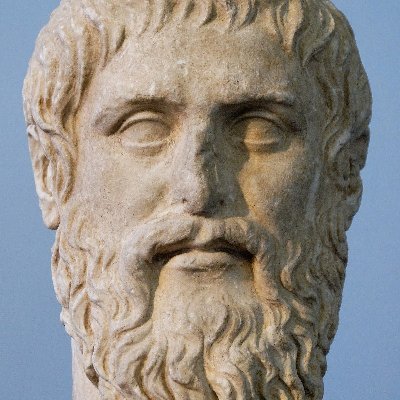
People often say that Florence Cathedral shows the beauty of Medieval and Renaissance architecture.
Maybe, but here's the thing: that famous façade you've seen so many times before is actually the same age as the Eiffel Tower.
For 500 years it was just an unfinished brick wall.
In the year 1296 construction on Florence's new cathedral started under the leadership of the great sculptor Arnolfo di Cambio. After him the project was overseen by several legendary figures including Pisano, Giotto (who built the bell tower), and Orcagna.
By 1418 everything was structurally complete except the dome, and so a competition was held for its design. Filippo Brunelleschi won and his astonishing dome was finished in 1436. This was a landmark achievement which helped to start the Renaissance and marked a decisive shift away from Gothic architecture and Medieval culture.
But the western façade, started under di Cambio, was still only one-third complete. Whereas churches in northern Europe were built with stone, Italian churches were made from brick and then covered with slabs of decorative marble. And so two-thirds of the façade of the great Duomo of Florence was... just a brick wall. And that's how they left it.
Francesco de Medici had di Cambio's work entirely removed in 1588. He didn't like Gothic architecture and wanted it to be redone in the Renaissance style. But this project went nowhere and so the façade of Florence Cathedral was left as a plain brick wall for three hundred years.
Until the 19th century came along, an age dominated by architectural historicism. People in Europe were obsessed with old styles of architecture, whether Neoclassical or Renaissance or Baroque or Gothic. For example, when the British Houses of Parliament burned down in the 1840s they rebuilt it in the "Perpendicular Style", an unusual version of Gothic architecture unique to Britain between the 14th-16th centuries.
This also explains where Art Nouveau came from in the 1890s — it means "New Art" and that is quite literally what it was: the creation of a new artistic and architectural style after a century of looking only to the past.
In any case, the Gothic Revival also rejuvenated interest in actual Medieval buildings. They didn't merely repair them, however: architects all over Europe started adding to and remodelling architecture from the Middle Ages. In England countless churches that had survived untouched for centuries were suddenly pulled down, redesigned, and rebuilt.
And, in Florence, swept along by the exuberance of the Gothic Revival, they decided that it was time to finally finish the Duomo. So a competition to design its façade was announced. The winning architect was Emilio de Fabris, whose design was a modified version of the one collectively created by Arnolfo di Cambio, Giotto, and Orcagna. By 1887 it was finished — the same year that construction on the Eiffel Tower began. That brick wall was gone forever and it is de Fabris' 19th century façade that is now so famous and beloved around the world.
This raises the broader and still relevant question of how to deal with old buildings. Should we treat them like museum pieces to be preserved exactly as they are, or should we add to them if it seems appropriate?
Well, what about Florence Cathedral? Is it inauthentic? That depends on your point of view. Its famous façade certainly isn't Medieval or Renaissance, even though to the casual observer it will seem just as old as the rest of the cathedral. In that way it feels like a deception.
Perhaps it would have been better to leave the Duomo unfinished, in its pure and original state. The brick wall may have been jarring, but at least it was honest and truthful to the building as it had been passed down from one generation to the next.
Then again, it is a relatively faithful reimagining of Gothic architecture which works in harmony with the rest of the building and the intention of the original architects. Giotto and di Cambio would surely have wanted their great cathedral to be finished. Such projects inevitably took centuries anyway — it's strangely appropriate that the Duomo's façade took nearly six hundred years to be put together.
And, besides, in one thousand years the 19th century additions will have themselves become ancient. Any accusations of inauthenticity will certainly have faded by that point.
So... was finally completing the façade of Florence Cathedral the right thing to do, or not?

Dominic Clare retweeted
Plovdiv in Bulgaria is one of the most beautiful cities you've (probably) never heard of.
Why? With more than 3,000 years of wild history and architecture influenced by three different continents, there's simply nowhere else like it.
So, here is the brief story of a hidden gem.
In 342 BC King Philip II of Macedon (father of Alexander the Great) founded a city in modern-day Bulgaria and called it Philippopolis. He picked a naturally advantageous site, what with seven steep hills (just like Rome) rising up around the Maritsa River, all within view of the Rhodope Mountains to the south and the Balkans to the north.
There had already been a town in the area since 6,000 BC — it was also once ruled by Xerxes of Persia — and Plovdiv is still filled with ruins left by the ancient Thracians who lived in it so for so long. But it was Philip who established the first truly major city there and settled a mix of Thracians, Macedonians, and Greeks within it.
Over the next two thousand years Plovdiv (which has had many names) was fought over, captured, sacked, and rebuilt several times. Thracians, Macedonians, Persians, Romans (including Marcus Aurelius), Huns, Bulgars, Byzantines, Crusaders, Ottomans, and Russians have all fought over or found their way to this old and storied city.
And what has survived is an architectural and cultural delight. Plovdiv is scattered with ancient ruins, from the tumbled masonry of Thracian and Byzantine walls on Nebet Tepe (one of the seven hills, known as tepes, from Turkish) to the Roman theatre — one of the most complete in Europe, which regularly hosts musical & theatrical performances — and the great stadium which once held 30,000 spectators.
Medieval fortifications have survived too, such as the Hisar Kapia Gate, and as with many Balkan cities Plovdiv has places of worship belonging to Orthodox Christians, Catholics, Jews, Protestants, and Muslims. The Dzhumaya Mosque, built by the Ottomans when they conquered Plovdiv in the 14th century, is the oldest mosque in Europe outside of Iberia.
Its Old Town, which stands on ancient and Medieval foundations, was further developed in the mid-19th century during the Bulgarian National Revival — as national consciousness awakened and the desire for independence from the Ottomans grew ever stronger — hence its profusion of traditional architecture.
Those timber-framed houses, with their jettied stories and projecting windows, are typical of Medieval Bulgarian architecture. And the result is a labyrinth of brightly painted houses and churches built along the cobbled lanes of a Medieval street plan, all raised several hundred feet above the surrounding landscape on the three hills of Nebet Tepe, Dzhambaz Tepe, and Taksim Tepe.
The city was blessed with a new wave of architecture in the late 19th and early 20th centuries, when Bulgaria had revolted from the Ottomans and become an independent kingdom. Then, influenced by the Central European architecture of the Austro-Hungarian Empire, Plovdiv's streets were filled with the colourful stucco and eclectic historicism of cities like Vienna.
Soon enough a neighbourhood called "Kapana" emerged, the cultural and artistic heart of Plovdiv — which, to this day, is filled with artisans' workshops, galleries, cafés, and exhibition spaces. After that came the USSR and a host of Communist-era edifices. In other words, this city has become an architectural palimpsest of the highest order.
Plovdiv is an aesthetic delight, a city of colour and shape, of narrow alleys and shimmering squares, of temples and fortresses and of a vibrant, living culture. And it is also a prime example of architecture's power to tell the whole story of a city.
Each street is lined with thousands of years of war, religion, politics, cultural exchange, revolution, technological progress, and artistic evolution. This is one of the reasons why architecture is so important; it's like a language which brings the world to life. The buildings of Plovdiv are a physical story waiting to be read.
Plovdiv's Old Town also speaks to the profound cultural significance of architecture. Those traditional houses were about a reawakening of Bulgarian identity after five centuries of enforced sleep under Ottoman rule. And this, if anything, is architecture's greatest significance: that the way things are built and how they look matters to people, that in buildings can be manifest identity, meaning, place, and purpose.
Plovdiv is a beautiful city partly because of the unpredictable twists and turns of its history, caught as it was between the cultural and geopolitical cross-winds of countless different empires and peoples down the centuries — and partly by intention, because of how the people who live there have chosen to build and design their wonderful city.


Dominic Clare retweeted
UK:
Rejoin EU.
No non-dom's owning media.
No off-shoring money.
Everyone pays their fair share of tax.
Fund the NHS not profit-from-sickness 'providers'.
Step up to our share of global responsibilities for dealing with the climate emergency.
In short: grow up.
Dominic Clare retweeted

I don’t care whether he disclosed it…
I don’t care whether he registered it
I care that he launched a Govt policy designed to enrich his wife’s company with our money.
Our politics is rotten to its core.
It needs burning down & starting all over again.

Unfortunately for rugby Twitter (rugby X?), the fact you don’t like Owen Farrell isn’t actually considered an aggravating factor by the disciplinary committee. He’ll most likely get a mid-range ban as it’s (technically) his second offence - somewhere around 6 weeks I’d imagine.
458
Dominic Clare retweeted

Confettigate: A Statement From Just Stop Oil
The lady who threw confetti in Bruton yesterday was upholding a tradition that is common across many cultures. We absolutely defend the right for people to throw confetti (of whatever colour) at weddings and other celebrations.
If it was a form of protest — which is yet to be established — we applaud it and thank the person concerned. It was peaceful and not especially disruptive, but got massive media attention for Just Stop Oil’s demand.
It has also helped people to recall that George Osborne, one of the main architects of economic austerity, is directly responsible for over 300,000 excess deaths, and that — as a newspaper editor — he was responsible for some of the most egregious climate-denying nonsense ever to darken the pages of mainstream mass media.
However, as much as we applaud the use of orange confetti at this wedding, we were not responsible.
Perhaps the press could focus on something more important now? Like the current government’s plans to licence over 100 new oil and gas projects, which will result in excess deaths the likes of which we have never seen. Or the fact that the UN Secretary General has said that ‘climate change is out of control’ as we’ve just seen the hottest average temperatures since records began. Or the fact that Canadian wildfires have now burned down an area the size of Portugal.
We are in catastrophically dangerous territory and the press have a moral responsibility to inform and educate people as to the causes of the crisis so that we can take action to defend ourselves. In 2023, it is simply criminal not to check your facts.

Dominic Clare retweeted

A thing of beauty🔥
Sam Harris with the opening try of the game. And what a try it is👀
#FRAvENG #WorldRugbyU20s