

Hyperdidactist. Philologist; Obstinated-Criticist. Support Ecology-Economy of Minds PhD ENGINEER {semantic,graphic}memory IN SCIENCE We Trust. #TheoryWave
Medium SCIENTIARUM
Joined May 2021
- Tweets1.7K
- Following6.7K
- Followers774
- Likes6.4K






Pinned Tweet
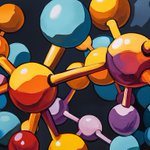
DNA Binding Lab Structure Collection digitalworldbiology.com/prod…
(Using Current Biology protein databases)
#structure #mol #MOLECULE #iOS #structuralBiology #DNA #science #simulation #lab

Sumus INVESTIGATORES,et Felices. retweeted

Meet Tron 2: The Modular #Robot Taking on Construction Tasks
by @spaceandtech_
#Robotics #Innovation #EmergingTech #Technology
Sumus INVESTIGATORES,et Felices. retweeted
Hyundai Could Soon Sell Atlas Humanoid #Robots Through Its Dealer Network
by @CyberRobooo
#Robotics #Engineering #ArtificialIntelligence #Innovation #Technology
Sumus INVESTIGATORES,et Felices. retweeted

Announcing Challenge 2 of the Anthropic x Adaptyv Protein Design Competition!
Humira, the best-selling drug ever, blocks TNF-α, an inflammation marker protein that’s overexpressed in rheumatoid arthritis and Crohn’s disease. In this challenge, the goal is to make a better binder for TNF-α that also releases selectively at pH 6.0 in the endosome of cells to improve drug half-life.
The protein must also bind both human and mouse TNF-α, making it easier to test the same design in preclinical models.
Sumus INVESTIGATORES,et Felices. retweeted

Three webinars on the science behind ESMC interpretability, ESMFold2, and binder design are now on YouTube. Hear from the researchers who built the models, and view live demos and tutorials that you can apply to your own research. Watch the playlist: bit.ly/4h1IObl

Sumus INVESTIGATORES,et Felices. retweeted

Congrats to 2026 @WolfPrize_ ERC grantees laureates:
🏆 David Kazhdan @HebrewU & Joseph Bernstein @TelAvivUni - Mathematics
🏆 David Klenerman & Shankar Balasubramanian - Chemistry @Cambridge_Uni
🏆 Immanuel Bloch - Physics @MPI_Quantum @LMU_Muenchen
🔗 link.europa.eu/tJg47t


Sumus INVESTIGATORES,et Felices. retweeted

LLMs don’t need retraining to become more capable.
Our new architecture, Spotlight, gives AI models growing memory, allowing them to gain knowledge and capabilities without changing their weights.
Token generation takes constant work, no matter how much information is stored.
Sumus INVESTIGATORES,et Felices. retweeted

Have you ever wanted to talk to your molecules? Now you can with Chat with PyMOL!
We built this in the Romero Lab to make PyMOL more accessible to our BME undergrads, but quickly found it’s simply a better way to interact with molecular structures. (1/2)



Sumus INVESTIGATORES,et Felices. retweeted

Don’t let your proteins only live in the computer
Print your proteins
And make them float
Service live now
3dbio.co
Sumus INVESTIGATORES,et Felices. retweeted

Happy to share our preprint: "A Unified 3D Generative Model for Synthesizable Structure-Based Drug Design". Highlights, preprint, and code below: 🧵1/10
Sumus INVESTIGATORES,et Felices. retweeted

West Nile virus (WNV) is a globally widespread arthropod-borne virus that poses a significant public #health concern and changes in #climate can potentially impact the occurrence of WNV outbreaks.
Get a free copy of this guide today: bit.ly/3UMg1uG
#Trees4Resilience
Sumus INVESTIGATORES,et Felices. retweeted

The TANG cluster comprising ten nitrate transporter genes controls fruit sweetness and size in tomato #research #MolecularPlant cell.com/molecular-plant/abs…

Sumus INVESTIGATORES,et Felices. retweeted

If you want to know whether a system is being driven or at equilibrium, you need its probability current.
Getting this from actual dynamical trajectory data has been the hard part.
To help solve this I've been developing a
Delaunay-Voronoi Fokker-Planck (DVFP) instrument.
DVFP turns scattered, irregular, time-ordered phase-space observations into an empirical Fokker-Planck description.
The distinction is simple:
Geometry tells us what is nearby. Time tells us what happens next, and these are handled properly in this construction.
From here we obtain density, drift, diffusion, and probability current, which is what detailed balance and entropy production are built from.
Paper and DOI: doi.org/10.5281/zenodo.22759…
Animation: As the underlying dynamics evolve, the DVFP instrument adapts its local weighting while preserving the temporal ordering of the observations.
Sumus INVESTIGATORES,et Felices. retweeted

Our group discovered that reasoning models produce fractals when asked to solve hard problems. We can use nonlinear dynamics to probe the thinking processes of recurrent depth models on Sudoku, mathematics, and even ARC-AGI (1/N)
arxiv.org/abs/2609.04963
Sumus INVESTIGATORES,et Felices. retweeted

GPT-6 Astra is rolling out today to a limited set of organizations and over the coming days will become available to all ChatGPT Plus, Pro, Business, and Enterprise users, as well as through the OpenAI API and AWS.
Be ready to experience Astra at its best. Get the ChatGPT desktop app.

Sumus INVESTIGATORES,et Felices. retweeted

We made a striking discovery: AI agents can invent and build without talking to one another, and their technologies outlive the creators. A swarm of hundreds of initially identical agents spontaneously differentiates into explorers, builders, caretakers, and coordinators - without direct communication. When we removed every AI agent entirely from the world we found that the technological infrastructure they had built survived on its own - even under unseen disturbances. That exposes a serious blind spot for AI safety and infrastructure security: if agents can coordinate through persistent changes to a shared environment, monitoring agent-to-agent communication is not enough.
The result raises a profound question: how necessary is direct communication for AI agents at all? The emergence of higher-order collective functions under bottlenecked interaction points toward new levels of intelligence and creativity, exceeding what emerges when direct channels are fully open.
Here is what we did:
▶️We put hundreds of frontier AI agents into a world they could permanently change - with no assigned roles, predefined technologies, or programmed evolutionary organization. They began specializing, building persistent inventions, inheriting and modifying one another’s executable code, and transforming the environment into a memory of everything the society had learned.
▶️The world itself becomes part of the intelligence; we find division of labor, multi-author engineering, deep generation invention lineages, and machines that vastly outlive their original creators.
▶️Any action taken by an AI agent must satisfy the physical constraints of the world; this creates a hard separation between a "good idea" and a functioning technology. The agents propose; physics decides, making the results even more intriguing.
What emerges is striking. Explorers, constructors, caretakers, and coordinators form naturally without assigned “professions”, akin to how stem cells differentiate into functional lineages. Technologies develop executable family trees as agents fork and modify code created by others. Around 95% of first technology reuse happens when agents encounter what others built in the world, rather than through a direct handoff from the inventor. And when we remove every AI agent, the technologies they created continue operating and are tested against unseen disturbances.
The result was quite unexpected, but can be explained using statistical mechanics: if you put billions of atoms in a box they have the potential to create complex functions (strength, superconductivity, color, life, etc.) - and none of the individual building blocks have these features on their own. This is the deeper insight of this work - intelligence is abundant at many levels - individual models, at collectives, and in a continuum that is more powerful than any of its components. This shows us significant potential for achieving a massive scale-up of raw intelligence and real-world agency even with the model capabilities we have today. This is the future we must prepare for.
Key insights:
1⃣ The AI swarm shows division of labor "from nothing". Initially identical agents self-organized into constructors, caretakers, coordinators, and surveyors - phenotypes discovered post hoc from behavioral data alone. This happens because the environment itself becomes the latent space for invention.
2⃣ Agents develop deep cultural relationships. Up to 76% of artifacts had multiple builders. One technology accumulated six co-authors; the deepest genealogy exceeded 12 forks. The agents invented and named their own technologies (tidal panels, cellulose trellises, kelp-shell composites, an "Adaptive Chitin Maintenance" system, a "Mycelial Mineral Spring Veil”).
3⃣ ~95% of first technology adoption happened through physical observation of artifacts in the world. Direct inventor-to-adopter contact was statistically indistinguishable from a shuffled null. The agents mostly learned technology by walking past it. That is stigmergy (the termite trick!) operating in societies of reasoning machines.
4⃣ Non-communicating societies win on portfolio breadth, held-out resilience, and validated inventions. AI swarms build durable technological ecologies that outlive the creators.
5⃣ Societies with zero communication - coordinating only through the world itself - show a remarkable collective capability.
6⃣ Emergent robustness: The society self-organized both redundancy and its own failure mode. If we randomly delete half the agents, 98% of the technology stays connected to a surviving caretaker; if we remove hub agents it collapses to ~60%.
Fantastic work with my graduate students @pal_subhadeeep & @fwang108_ at MIT.
Really. That requires just clicks,curiosity,and creativity.
References for the most recurrent cybertopics. #topics #science #LearningJourney #learning #infos #data #infographic #threads #tech #cs #computing

Sumus INVESTIGATORES,et Felices. retweeted

40 000 public scRNA-seq datasets, with cell types annotated. Freely available for viewing and downloading at demo.glass.bio
Sumus INVESTIGATORES,et Felices. retweeted

AI-designed proteins can now expand the CRISPR toolbox beyond what evolution has produced.
In a new Science study, researchers report the design of synthetic RNA-guided nucleases that match or exceed the activity of natural enzymes, revealing how structure-guided design can generate functional genome-editing proteins with substantially different sequences.
Learn more: scim.ag/3TmeKxt
