

Researcher from the southend. Working on Machine Learning, Biomedical Eng. & Speech Technology
Buenos Aires
Joined April 2011
- Tweets909
- Following1.6K
- Followers274
- Likes5K







Diego Evin retweeted

"State of Clinical AI in 2026," a new review by @StanfordMed authors & colleagues in @bmj_latest Digital Health & AI, discusses advances and persistent gaps in clinical AI. Read it: bit.ly/4A5jOGT

ALT First page of the BMJ Digital Health & AI review “State of clinical AI in 2026,” showing the author list and abstract.
Diego Evin retweeted

El libro rojo de la IA dentro de la lista de @chulkinet para entender qué está pasando con nuestro mundo. Junto al de @FlaviaCostaTW y el de @Ladob
Gracias Juli por la lectura atenta :))
Nota completa aquí 👇🏼👇🏼
@yamilagold
@LaiaLab_
lanacion.com.ar/tecnologia/s…


Diego Evin retweeted

The entire AI industry spent a week convinced DeepSeek had secretly launched V4. Reuters reported it. Developers debated it. OpenRouter usage charts broke.
It was Xiaomi.
A smartphone and electric vehicle company just shipped a 1-trillion-parameter model that topped the world's largest API aggregation platform, and nobody guessed the origin because the model was too good to be associated with a hardware company.
The stealth launch as "Hunter Alpha" on March 11 was the most elegant product validation in recent AI history. No brand, no attribution, no expectations. Just raw performance. The model processed over 1 trillion tokens in 8 days. Developers organically chose it over every labeled frontier model on the platform. When Reuters tested the chatbot, it identified itself only as "a Chinese AI model primarily trained in Chinese" with a May 2025 knowledge cutoff, the exact same cutoff DeepSeek reports.
The person behind this is Luo Fuli. Born in 1995. Eight papers at ACL as a graduate student at Peking University. Alibaba DAMO Academy. Then DeepSeek, where she co-developed V2 and contributed to R1. Lei Jun reportedly offered tens of millions of yuan to recruit her. She joined Xiaomi in November 2025. Four months later, she's shipping a model that benchmarks alongside Claude Sonnet 4.6 and GPT-5.2 at one-fifth the API cost.
The detail that tells you everything about how this team operates: when Luo first experienced a complex agentic scaffold, she tried to convince the MiMo team to adopt it. They resisted. So she issued a mandate. Anyone on the team with fewer than 100 conversations with the system by tomorrow can quit. They all stayed. The imagination converted into research velocity.
The architectural bets matter. Hybrid Attention for long-context efficiency. MTP inference for low latency. 1M context window. 42B activated parameters out of 1T total. These are infrastructure decisions optimized for agents that run autonomously for hours, not chatbots that answer one question at a time.
Pricing: $1/$3 per million tokens up to 256K context. $2/$6 for 256K to 1M. Claude Sonnet 4.6 costs roughly 5x that. Xiaomi's shares rose 5.8% on the announcement.
The real DeepSeek V4 still hasn't shipped. The model everyone mistook for it already has a trillion tokens of real-world usage data.

MiMo-V2-Pro & Omni & TTS is out. Our first full-stack model family built truly for the Agent era.
I call this a quiet ambush — not because we planned it, but because the shift from Chat to Agent paradigm happened so fast, even we barely believed it. Somewhere in between was a process that was thrilling, painful, and fascinating all at once.
The 1T base model started training months ago. The original goal was long-context reasoning efficiency. Hybrid Attention carries real innovation, without overreaching — and it turns out to be exactly the right foundation for the Agent era. 1M context window. MTP inference for ultra-low latency and cost. These architectural decisions weren't trendy. They were a structural advantage we built before we needed it.
What changed everything was experiencing a complex agentic scaffold — what I'd call orchestrated Context — for the first time. I was shocked on day one. I tried to convince the team to use it. That didn't work. So I gave a hard mandate: anyone on MiMo Team with fewer than 100 conversations tomorrow can quit. It worked. Once the team's imagination was ignited by what agentic systems could do, that imagination converted directly into research velocity.
People ask why we move so fast. I saw it firsthand building DeepSeek R1. My honest summary:
— Backbone and Infra research has long cycles. You need strategic conviction a year before it pays off.
— Posttrain agility is a different muscle: product intuition driving evaluation, iteration cycles compressed, paradigm shifts caught early.
— And the constant: curiosity, sharp technical instinct, decisive execution, full commitment — and something that's easy to underestimate: a genuine love for the world you're building for.
We will open-source — when the models are stable enough to deserve it.
From Beijing, very late, not quite awake.


Diego Evin retweeted

In today's episode of programming horror...
In the Python docs of random.seed() def, we're told
"If a is an int, it is used directly." [1]
But if you seed with 3 or -3, you actually get the exact same rng object, producing the same streams. (TIL). In nanochat I was using the sign as a (what I thought was) clever way to get different rng sequences for train/test splits. Hence gnarly bug because now train=test.
I found the CPython code responsible in cpython/Modules/_randommodule.c [2], where on line 321 we see in a comment:
"This algorithm relies on the number being unsigned. So: if the arg is a PyLong, use its absolute value." followed by
n = PyNumber_Absolute(arg);
which explicitly calls abs() on your seed to make it positive, discarding the sign bit.
But this comment is actually wrong/misleading too. Under the hood, Python calls the Mersenne Twister MT19937 algorithm, which in the general case has 19937 (non-zero) bits state. Python takes your int (or other objects) and "spreads out" that information across these bits. In principle, the sign bit could have been used to augment the state bits. There is nothing about the algorithm that "relies on the number being unsigned". A decision was made to not incorporate the sign bit (which imo was a mistake). One trivial example could have been to map n -> 2*abs(n) + int(n < 0).
Finally this leads us to the contract of Python's random, which is also not fully spelled out in the docs. The contract that is mentioned is that:
same seed => same sequence.
But no guarantee is made that different seeds produce different sequences. So in principle, Python makes no promises that e.g. seed(5) and seed(6) are different rng streams. (Though this quite commonly implicitly assumed in many applications.) Indeed, we see that seed(5) and seed(-5) are identical streams. And you should probably not use them to separate your train/test behaviors in machine learning. One of the more amusing programming horror footguns I've encountered recently. We'll see you in the next episode.
[1] docs.python.org/3/library/ra…
[2] github.com/python/cpython/bl…

Diego Evin retweeted

This paper really is groundbreaking. It solves a long-standing embarrassment in machine learning: despite all the hype around deep learning, traditional tree-based methods (XGBoost, CatBoost, random forests, etc) have dominated tabular data—the most common data format in real-world applications—for two decades. Deep learning conquered images, text, and games, but spreadsheets remained stubbornly resistant.
This paper's (published in Nature by the way) main contribution is a foundation model that finally beats tree-based methods convincingly on small-to-medium datasets, and does so very fast. TabPFN in 2.8 seconds outperforms CatBoost tuned for 4 hours—a 5,000× speedup. That's not incremental; it's a different regime entirely.
The training approach is also fundamentally different. GPT trains on internet text; CLIP trains on image-caption pairs. TabPFN trains on entirely synthetic data—over 100 million artificial datasets generated from causal graphs.
TabPFN generates training data by randomly constructing directed acyclic graphs where each edge applies a random transformation (using neural networks, decision trees, discretization, or noise), then pushes random noise through the root nodes and lets it propagate through the graph—the intermediate values at various nodes become features, one becomes the target, and post-processing adds realistic messiness like missing values and outliers. By training on millions of these synthetic datasets with very different structures, the model learns general prediction strategies without ever seeing real data.
The inference mechanism is also unusual. Rather than finetuning or prompting, TabPFN performs both "training" and prediction in a single forward pass. You feed it your labeled training data and unlabeled test points together, and it outputs predictions immediately. There's no gradient descent at inference time—the model has learned how to learn from examples during pretraining.
The architecture respects tabular structure with two-way attention (across features within a row, then across samples within a column), unlike standard transformers that treat everything as a flat sequence.
So, the transformer has basically learned to do supervised learning.
Talk to the paper on ChapterPal: chapterpal.com/s/a1899430/ac…
Download the PDF: nature.com/articles/s41586-0…

Diego Evin retweeted

BRILLIANT @GoogleDeepMind research.
Even the best embeddings cannot represent all possible query-document combinations, which means some answers are mathematically impossible to recover.
Reveals a sharp truth, embedding models can only capture so many pairings, and beyond that, recall collapses no matter the data or tuning.
🧠 Key takeaway
Embeddings have a hard ceiling, set by dimension, on how many top‑k document combinations they can represent exactly.
They prove this with sign‑rank bounds, then show it empirically and with a simple natural‑language dataset where even strong models stay under 20% recall@100.
When queries force many combinations, single‑vector retrievers hit that ceiling, so other architectures are needed.
4096‑dim embeddings already break near 250M docs for top‑2 combinations, even in the best case.
🛠️ Practical Implications
For applications like search, recommendation, or retrieval-augmented generation, this means scaling up models or datasets alone will not fix recall gaps.
At large index sizes, even very high-dimensional embeddings fail to capture all combinations of relevant results.
So embeddings cannot work as the sole retrieval backbone. We will need hybrid setups, combining dense vectors with sparse methods, multi-vector models, or rerankers to patch the blind spots.
This shifts how we should design retrieval pipelines, treating embeddings as one useful tool but not a universal solution.
🧵 Read on 👇

Diego Evin retweeted

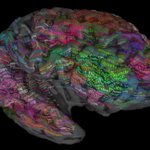
Inspired by the success of LLMs, today on the blog we discuss how neural activity in the human brain aligns linearly with the internal contextual embeddings of speech and language within LLMs as they process everyday conversations. Learn more →goo.gle/4iiUoNj

ALT Fitting speech and language embeddings to human brain signals at production and comprehension.
Diego Evin retweeted

Exciting news from #GoogleIO! We’re introducing MedGemma, our most capable open model for multimodal medical text and image comprehension built on Gemma 3.
Diego Evin retweeted

🚀 Day 5 of #OpenSourceWeek: 3FS, Thruster for All DeepSeek Data Access
Fire-Flyer File System (3FS) - a parallel file system that utilizes the full bandwidth of modern SSDs and RDMA networks.
⚡ 6.6 TiB/s aggregate read throughput in a 180-node cluster
⚡ 3.66 TiB/min throughput on GraySort benchmark in a 25-node cluster
⚡ 40+ GiB/s peak throughput per client node for KVCache lookup
🧬 Disaggregated architecture with strong consistency semantics
✅ Training data preprocessing, dataset loading, checkpoint saving/reloading, embedding vector search & KVCache lookups for inference in V3/R1
📥 3FS → github.com/deepseek-ai/3FS
⛲ Smallpond - data processing framework on 3FS → github.com/deepseek-ai/small…

Diego Evin retweeted

I want to share bit of context on today's new releases from DeepSeek: three very small (0-500 lines of code), self-contained, yet fascinating newly open-sourced repositories. Let's dive in!
1. The first one is just data: DeepSeek/Profile-data (links at the end)
While this repo doesn't contain any code files, it's still extremely interesting. This is profile data that shows in detail and with real recorded data how low-level operations are scheduled to make sure GPUs are kept busy at all times during the training and inference of DeepSeek V3/R1 (see the "profiling session" in the Ultra-Scale Playbook: link at the end)
It serves as the organizational blueprint (essentially a Gantt diagram) of the most efficient open-source pretraining to date. A great example to study and something I would love to see released more often by open-source teams: scheduling operations in the most efficient way is the core of large-scale LLM training nowadays.
2. The second one is a very small code snippet (164 LoC) on how to balance the load of experts in mixture-of-expert (MoE): see link at the end.
It's impressive that they extracted and released such a core technique for efficiently balancing the load among experts in a self-contained format. You can read more about this in the "Expert Parallelism" section of the Ultra-Scale Playbook.
This will make the technique easy to incorporate into most distributed codebases. Congrats
3. Today's last release is larger (500 LoC) and perhaps covers the most fascinating technical part of DeepSeek V3/R1 training: the new DualPipe pipeline parallelism (PP) approach (link at the end).
For the first time in large-scale training, the DeepSeek team was able to train using what they called a "zero-bubble regime" in PP, something never before reported in a SOTA large-scale training. If you don't know what a "bubble" or "pipeline parallelism" is, you can check the Pipeline Parallelism section in the Ultra-Scale Playbook.
This is perhaps the most impressive part of the DeepSeek technical report! Having a small, standalone codebase that was apparently able to reach this regime is fascinating. I'm so excited to try it!
---
Overall, I really like their focus on open-sourcing many independent code modules, each on a specific technique and with examples.
Now it remains to be seen whether other teams can use and integrate these code samples and reproduce the results claimed by DeepSeek in their paper. Looking forward to seeing more extremely efficient training available for everyone!
---
Links:
1. profile-data: github.com/deepseek-ai/profi…
2. Expert balancing: github.com/deepseek-ai/EPLB
3. Dualpipe: github.com/deepseek-ai/DualP…
and the Ultra-Scale Playbook: huggingface.co/spaces/nanotr…

Diego Evin retweeted

Today we’re launching the Anthropic Economic Index, a new initiative aimed at understanding AI's impact on the economy over time.
The Index’s first paper analyzes millions of anonymized Claude conversations to reveal how AI is being used today in tasks across the economy.

ALT A title card with dark text on a cream background reading 'Which Economic Tasks are Performed with AI? Evidence from Millions of Claude Conversations' by Handa & Tamkin et al. The Anthropic logo appears in the bottom left. On the right is a black and white macro photograph of a worker bee on a honeycomb.
Diego Evin retweeted

DeepSeek-R1 is a fully open-source reasoning model with amazing capabilities for its size.
It's worth reading the accompanying paper: its emerging reflections on its own thinking and 'aha' moments enhance the model's reasoning capabilities.


🚀 DeepSeek-R1 is here!
⚡ Performance on par with OpenAI-o1
📖 Fully open-source model & technical report
🏆 MIT licensed: Distill & commercialize freely!
🌐 Website & API are live now! Try DeepThink at chat.deepseek.com today!
🐋 1/n

Diego Evin retweeted

From dream to drive 🙌
Through interviews with Franco and key figures from the team, experience his journey from F3, the pressure of breaking into F1, and the preparation it takes to earn a seat on the grid.
Watch the full video below 📲
Diego Evin retweeted

OpenAI’s biggest rival is shaking things up.
Anthropic invited 200+ elite hackers to their SF headquarters to see what’s possible with Claude
Here’s what we saw at the @AnthropicAI x @MenloVentures Builder Day Hackathon (🧵):


Diego Evin retweeted

BREAKING NEWS
The Royal Swedish Academy of Sciences has decided to award the 2024 #NobelPrize in Physics to John J. Hopfield and Geoffrey E. Hinton “for foundational discoveries and inventions that enable machine learning with artificial neural networks.”

Diego Evin retweeted

🔴 Un ladrón fue asaltado por otros ladrones: otro insólito hecho de inseguridad en Córdoba
• Un asaltante sorprendió a una taxista, la amenazó con un arma y la obligó a trasladarlo a la Manzana 17, de Cooperativa 16 de Abril.
• Al llegar, el delincuente y la taxista fueron sorprendidos por otros tres ladrones, que no tenían relación con el primero. Estos nuevos delincuentes, utilizando la misma modalidad de amenazas con un arma, le robaron el arma al primer ladrón y el celular a la chofer.
• Como resultado de la situación, uno de los tres nuevos asaltantes se trasladó al asiento del conductor e intentó escapar. Sin embargo, fracasó en el intento y chocó contra un Peugeot 206 que estaba estacionado en el lugar.
• Finalmente, el insólito episodio terminó con la detención del primer asaltante de 38 años, quien tiene antecedentes delictivos. Los demás ladrones lograron escapar.
ℹ️ La Voz

Diego Evin retweeted

📢 The #AIIndex2024 is now live! This year’s report presents new estimates on AI training costs, a thorough analysis of the responsible AI landscape, and a new chapter about AI's impact on medicine and scientific discovery. Read the full report here: stanford.io/49CbsZp

