


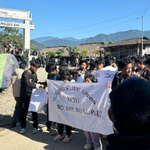




Can stronger local governance, greater opportunities, and meaningful engagement help change the trajectory for Balochistan’s youth?
Here out from Fareeda Kakar soon on The Debate.
Chinese Foreign Ministry Spokesperson Mao Ning called on Deputy PM and Foreign Minister Ishaq Dar in Islamabad during the Third Pakistan-China Spokespersons’ Dialogue, held with Foreign Office Spokesperson Sajjad Haider Khan.
Both sides pledged closer cooperation on media, strategic communication, and public diplomacy. Dar reaffirmed Pakistan’s commitment to the All-Weather Strategic Cooperative Partnership, while Mao Ning appreciated Pakistan’s role in promoting regional peace and dialogue.

Chinese Foreign Ministry Spokesperson Ms. Mao Ning called on Deputy Prime Minister/Foreign Minister Senator Mohammad Ishaq Dar @MIshaqDar50 at the Ministry of Foreign Affairs today.
Ms. Mao Ning conveyed greetings from Foreign Minister Wang Yi. The DPM/FM reciprocated with warm regards and best wishes to FM Wang Yi. Welcoming Ms. Mao Ning to Pakistan for the Pakistan-China Spokespersons’ Dialogue, he reaffirmed Pakistan’s commitment to further strengthening the All-Weather Strategic Cooperative Partnership with China.
DPM/FM noted with appreciation the regular consultations and exchanges at all levels between Pakistan and China. He noted that the Spokespersons’ Dialogue provides an important platform to enhance media cooperation, strategic communication and public diplomacy, fostering greater mutual understanding and bringing the two peoples closer together.
Ms. Mao Ning reaffirmed China’s commitment to its close partnership with Pakistan and appreciated Pakistan’s constructive role in promoting regional peace, stability and dialogue.


“I miss the word ‘Mom.’ No one calls me Mom anymore,” said Sa’eda Ahmad Abu Odeh, a UNRWA teacher in Gaza who lost all seven of her children, two sons and five daughters, and her husband, when a strike hit the UNRWA school in Al-Shati where the family was sheltering after being displaced.
She had stepped out to look for necessities when she learned the shelter was hit, and was later asked to identify her children’s bodies.
Giving testimony at a UN Human Rights Council side event in Geneva in June, she said she misses their voices, their shouting, and their faces.
Pakistan’s Foreign Office called the Taliban’s civilian-casualty allegations “baseless and unsubstantiated,” saying its strikes are a last-resort act of self-defence aimed only at terrorists and their logistical bases, with attacks from Afghan soil causing over 3,500 casualties in Pakistan this year. It urged the world to hold Kabul to its UN obligations on preventing terrorism from its territory.

Two Houthi missiles were fired toward Makkah and Madinah, with debris landing just 20 km from the Grand Mosque, and Pakistan answered by reaffirming its commitment to Saudi Arabia’s defence.
Today that same commitment has travelled to Tehran, where Field Marshal Munir sits with Saudi and Turkish officials in the pact’s first joint talks with Iran. The Makkah Alliance is defending the Kingdom with one hand and trying to calm the region with the other.

What if the strongest proof of a defence pact is who it can get to the table?
In under 3 months, the Makkah Pact went from signing on August 7 to an emergency Riyadh session on October 5 that agreed to rapid deployment, then Pakistan’s approval last week, and now a seat across from Iran’s top security body. Field Marshal Munir is the common thread. He carried the idea to Tehran last week, met President Pezeshkian and, according to an Iranian official, proposed the meeting.
It builds on a record Pakistan already holds. Islamabad brokered the April 8 ceasefire minutes before Trump’s deadline and hosted 21 hours of talks, and Guterres has since credited that mediation.
Saudi Arabia carries the cost of the Houthi strikes, with 12 dead and over 300 injured at Riyadh airport. Turkey brings NATO’s second-largest army, and Pakistan brings the line to Tehran. A pact with both muscle and a phone line is a rare combination.

The NCCIA’s reported takedown of an alleged international child abuse network is a disturbing reminder that danger to children reaches them through phones, private chat groups and digital payments.
The main suspect is accused of abusing his own children, which shows that harm often comes from people a child knows and trusts. UNICEF research estimates that about 1.5 million internet using children aged 12 to 17 in Pakistan faced technology facilitated sexual exploitation or abuse in a single year. Arrests matter, but they are not enough. Pakistan needs trained digital forensics experts, child psychologists and prosecutors, safe and confidential reporting, lessons in schools on body safety and online privacy, and platforms and payment providers that act quickly on reports.
Children must be believed, offenders held accountable, and silence must end.
digdebate.com/pakistan-child…

Why is India deploying force on two fronts in Arunachal at once?
Because the Siang River sits at the center of both crises. In the valley, protesters opposing the 11,200 MW Siang dam torched a police station and vehicles, and about 40 police were hurt by stones, per CM Pema Khandu. The state’s answer was tear gas, and the Centre flew in about 250 federal security personnel. Protesters have reportedly demanded those forces be withdrawn.
On the ridgeline, the response is different. Since late July, PLA troops have reportedly faced off with Indian forces near Asaphila and Taksing, pitching tents within 6-7 km of India’s LAC claim. India has kept large numbers of troops deployed to prevent escalation and held corps commander talks on September 6. Defence sources say no violent clash has occurred.
Delhi reinforces against Beijing’s claim and against its own citizens in the same week, over the same river. The dam is meant to secure the border, but who secures the people living beside it?

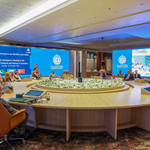
Saudi Arabia’s Defence Minister Prince Khalid bin Salman, Field Marshal Syed Asim Munir, and Turkish intelligence chief Ibrahim Kalin are due in Tehran today to meet Iran’s Supreme National Security Council, the first joint approach by all three Makkah Pact members on Regional Coordination.
The line-up matters. Sending a defence minister, an army chief, and a spy chief signals a security channel, not a diplomatic courtesy call.
It shows the pact running two tracks at once, deterrence through its rapid-deployment decisions and dialogue with the power many see as backing the Houthis.
Tehran is already framing it as homegrown regional security. The real test is whether the Houthi attacks slow down afterwards.

What if Pakistan’s greatest loss of talent could also become one of its greatest economic opportunities?
When Pakistanis move abroad, they send billions of dollars home, support their families, create educational opportunities for their children, and gain skills that can contribute to Pakistan’s future.
But migration is about more than remittances. It can also open doors to international networks, technology transfer, investment, and new economic opportunities.
The real challenge is not to stop Pakistanis from leaving. It is to build a system that connects their skills, experience, and resources with the country’s development.
People leave. Money returns. Skills grow. Opportunities multiply.
@SaleemFarrukh
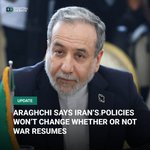
Iran’s Foreign Minister Abbas Araghchi said on Sunday that a renewed war with Israel and the United States would not change his country’s position. His remarks came after President Donald Trump said on Friday that Washington “may do another little Epic Fury,” a reference to the US-Israeli war on Iran that began on February 28.
Araghchi said Iran is already thinking about the post-war period and that attackers would get the same outcome as before. An April 8 ceasefire ended the most intense fighting, though sporadic exchanges continued around the Strait of Hormuz, which Iran claims to control.
The US maintains a naval counter-blockade on Iranian ports. A June deal, the Islamabad Memorandum of Understanding, later unravelled, and Tehran has since called for a return to it. Araghchi also said management of the strait will change and that regional peace requires the absence of foreign forces.

Prime Minister Shehbaz Sharif announced on Sunday at a ceremony in Islamabad that the government will distribute 500,000 Chromebooks to students across Pakistan over the next two years. He said it is the state’s “collective responsibility” to give young people modern technology, and that the devices are being allotted based on hard work and ability.
The prime minister said students will be able to attend school remotely with the help of the Chromebooks. He also noted that previous PML-N governments handed out 600,000 laptops within a decade, and said poverty should not limit intelligence and hard work.

Indian Punjab Chief Minister Bhagwant Mann told the state assembly on Friday that he wants to attend the 4th International Punjabi Conference in Lahore, scheduled for Nov 27 to 29.
He said he received the invitation after speaking with Pakistani Punjabi poet Baba Najmi, and that many poets from Indian Punjab will travel to the event. Mann doubted the BJP government in Delhi would let him go, saying it does not even allow him to visit France or Japan.
Speaker Kultar Singh Sandhwan replied, "If you get permission, take us along as well." Mann also demanded the reopening of the Kartarpur corridor, as ties between India and Pakistan remain strained after last year's four day battle.

Pakistan's silver medal in Ankara deserves more than quick applause. Among 33 countries at BIMDTC 2026, Pakistan's military drone team finished second, behind only host Türkiye and ahead of Italy and France. Its time of 50.253 seconds on a 23 obstacle course beat Italy by just 0.427 seconds. Captain Talha added an individual silver, placing second among more than 100 international pilots.
The medal matters because drones now sit at the centre of defence planning, from surveillance to border monitoring and disaster response. Pakistan's security challenges make a capable drone corps a strategic necessity.
Türkiye won by 8.836 seconds, a wide gap in a precision event. Closing it will take steady training, modern simulation facilities and closer links between the military, universities and the technology sector.
digdebate.com/pakistan-drone…

A joint IOM and UNHCR report says 517 Afghans were arrested in Chagai, Peshawar and Karachi between Oct 11 and 17. Undocumented Afghans and ACC holders made up 97pc of all arrests and detentions, and PoR holders made up 3pc.
In the same week, 3,883 Afghans returned through the Torkham, Chaman and Bahramcha crossings, including 499 deportations. Returns fell 10pc and deportations fell 48pc from the previous week. Fear of arrest was the main reason for return, cited by 95pc of undocumented people and ACC holders and 68pc of PoR holders.
Since Sept 15, 2023, about 2,744,068 Afghans have been sent back from Pakistan.

Pakistan has set an indicative wheat price of Rs4,500 per maund for 2027, up Rs1,000 from last year. That is about a 29 percent rise, against inflation of 10.3 percent.
But a price on paper does not fill a farmer’s pocket. Farmers need government buying at the announced rate, payment on time and procurement centres close to their villages. Farmer groups say they need Rs5,000.
Farmers can also raise their income with soil testing, certified seed, crop rotation, water saving and better storage.
Families need protection too. A 20 kg flour bag averages Rs2,976 nationally, and costs Rs3,540 in Karachi. Relief should go to poor households, and hoarding must stop.
Fair pay for farmers and affordable bread for families must go together.
digdebate.com/wheat-price-20…

Can the Middle East achieve lasting prosperity while regional tensions continue to escalate?
Dr.Ishtiaq Ahmed explains that Saudi Arabia is pursuing a vision centred on economic transformation, development, and regional stability. Yet, the region continues to face recurring crises, raising difficult questions about Israel’s regional policies and their implications for peace and security.
Is the Middle East moving towards a future of cooperation and prosperity, or will regional rivalries continue to undermine its stability?
@ahmadishtiaq
What if Pakistan’s greatest economic opportunity lies beneath its own mountains?
Dr.Farrukh Saleem highlights that Pakistan is blessed with vast mineral resources, but the real wealth lies in how we use them. By exploring our mineral potential, investing in local industries, and transforming raw materials into finished products, we can create jobs, boost exports, attract investment, and build a stronger economy.
From extracting valuable minerals to establishing processing plants and manufacturing industries, every step can unlock new opportunities for local communities and empower Pakistan’s youth with skills and employment.
The vision is clear: Turn natural resources into industrial growth, economic opportunity, and prosperity for the people of Pakistan.
@SaleemFarrukh