





oh yes oh yes

I’m not quite sure I can put into words what today means to me.
Music has been my whole life. From those early days of falling in love with records and DJing, to travelling the world and sharing that love with so many people, I’ve never stopped being grateful that I get to do what I do.
To receive my OBE from Prince William at Windsor Castle today, recognising nearly 50 years of doing something I absolutely love, is beyond anything I could have imagined. ❤️🔥
I’ve been thinking a lot about my mum and dad today. I know just how proud they would have been, and I wish they could have been here to share this moment with me.
This honour means so much, not just to me personally, but because of where our music has come from and how far it has travelled. To see dance music recognised in this way is something I’m immensely proud of.
To my family, friends, everyone who has believed in me, supported me and danced with me over the years, thank you. You’ve all been part of this.
My heart is very full today. I’m proud, humbled and deeply honoured.
Thank you, Carl.


9
Alexis Cheshire retweeted

“The Fall of Icarus” is now one year old. Still my favorite collaboration ever, with the incredibly talented @BlackGryph0n making a literal leap of faith while I captured him in freefall with a solar telescope.
Perhaps I need to come up with a way to top this preposterous shot 🤔

Alexis Cheshire retweeted

This is a huge deal. This will begin to massively reduce the need for launches. Instead, space infrastructure will be constructed remotely using 3d printing techniques and drawing on repurposed space debris. Space forges are being constructed so that key metals can be mined, refined, and put to work without ever having to return to Earth. The space economy will self-assemble rather than be constructed from Earth. Think of the next James Webb Telescope as something that was never on Earth in the first place.

BREAKING: A robot developed by Caltech and funded by DARPA has successfully built part of a structure in orbit without astronauts, marking what researchers describe as the first autonomous construction of a structure in space.
The experiment, called ASTRA, uses a robotic arm to retrieve individual structural tubes and connecting joints, then assemble them into sections of a larger framework directly in orbit.
Launched aboard a SpaceX Falcon 9 in March, the system has spent approximately six months in space testing the technology.
The robot successfully constructed a new section of a truss structure, demonstrating that spacecraft could eventually assemble large structures from smaller components rather than launching them fully assembled.
The experiment is part of DARPA's NOM4D program, which aims to enable construction of enormous structures in orbit, potentially hundreds of meters or even kilometers across.
Potential applications include:
> Giant space telescopes
> Large satellite communications antennas
> Orbital solar power stations
>Future space infrastructure too large to fit inside conventional rockets
The demonstration did not complete the full planned antenna, but establishes an important proof of concept for autonomous orbital construction.
The technology could eventually allow the size of structures built in space to exceed the physical limits of the rockets used to launch their components.
Link to official report submitted by Caltech: sciencedaily.com/releases/20…

ALT Concept art showing how a NOM4D-inspired device might one day autonomously construct a truss structure in space. Credit: DARPA, Colie Wertz
Alexis Cheshire retweeted

Everyone's talking about the John Lewis advert. But it’s nothing compared to this masterpiece from Thorne Travel.
Power-walking travel agents. A flash mob. Pumping house music. And unofficial Disney characters.
Every time you think they’ve run out of ideas, another one arrives.


👀

🚨 Critical OpenSSH flaw allows passwordless account access using any password over 256 characters
sshhole.com
A newly disclosed vulnerability dubbed *sshole has been discovered in OpenSSH installations using musl libc, potentially allowing attackers to bypass authentication and gain access to accounts that should reject password logins entirely.
The flaw affects certain configurations of Alpine Linux, OpenWrt, Buildroot, and Yocto where PAM is disabled and password authentication remains enabled. Under specific conditions, attackers can authenticate to locked accounts using arbitrary passwords between 257 and 1,024 characters.
The researcher demonstrated that affected Alpine Linux cloud images could allow attackers to gain root privileges through a passwordless administrative account.
OpenSSH 10.6p2 addresses the issue. Administrators are urged to update immediately or disable SSH password authentication until patches can be applied.

5
Alexis Cheshire retweeted

Thinking about how Hudson River Trading has a data centre in Norway found inside a carved out mountain and cooled by fjord seawaters…that supports a salmon farm.
Water is piped into a former mountain-side mineral mine now hosting GPU racks.
Heated water sent to a land-based salmon farm nearby and the farm produces 15,000 tonnes of salmon a year.
Salmon are very sensitive to water temperature and the data center water (that came in cold from the fjord) is now heated to a salmon-friendly 20°C.
Alexis Cheshire retweeted

LISTEN VERY CLOSELY TO WHAT $PLTR IS SAYING:
"L3 Harris noted that by fine-tuning open-source models on its own data, a sovereign model outperformed the frontier model it had been using in less than 48 hours and cut costs by 95% in preliminary results. $NVDA reported that by evaluating and post-training its open models, it was able to get its smallest most efficient model to outperform its largest model by a large gap, and can now retrain that model on just a single GPU in a couple of hours, enabling them to retrain any time they have data to improve the decision intelligence."
"Tampa General is deploying sovereign AI to keep sensitive data and model processing local while enforcing its own risk and privacy standards for LLM traffic and supporting the granular controls Tampa General wants to define for itself. Using fine-tuned and post-trained Nematron to achieve this outcome, together we also improve model performance by 7% and reduce latency by 22x."
Alexis Cheshire retweeted

We asked GPT-6 Astra to edit Qwen3.5-0.8B weights to improve math.
It directly changed only 0.016% of weights, fixing 0.8B's reasoning loops & improving math up to 6x and even instruction following 3x, without gradients or training.
We call this Weight-Space Programming: frontier LLMs can now natively read/write neural network weights! 🧵
Blog: rikiyat.github.io/blog/weigh…

Readers added context they thought people might want to know
LLM was given weights explicitly as text in prompt and used code/forward passes (per authors' logs) to ablate Qwen looping direction, a known thinking-mode issue per model card. Primarily fixed repetition in that mode, not general 'natively' improving weights/math.
rikiyat.github.io/blog/weight-sp…
github.com/RikiyaT/lm_und…
huggingface.co/Qwen/Qwen3.5-0…
huggingface.co/RikiyaT/Qwen3.…
Alexis Cheshire retweeted

Weekend hack: HackerTube. I was annoyed with YouTube's recommendations so I had Claude filter down 43M comments over 20 years of HN to 6,454 videos that keep being recommended. *Significantly* better viewing experience, ~2 hours with Opus 5.5:
hackertube.org/
- Excellent recs without any logins (state is kept in local browser session)
- Thumbnail is a representative frame from middle of the video instead of the super duper A/B test hyper-optimized user uploads
- Underlying data from the comment analysis as one zip file, point your Claude at it and ask for your own version
- HackerTube Longs ✊
A bit more on the process:
I use Claude Code (desktop app for Mac), Opus 5.5 on Medium effort as my default. I only talk to Claude and have it do everything, the only "manual work" I helped with in tandem was in the browser (reminiscent of MenuGen): 1) I had to create some kind of API key from Google Cloud UI to query YouTube for video metadata, 2) I booted up a VPS box for serving and 3) I bought the domain name. Once the box was up I gave Claude the IP and told it update, secure, harden, deploy and optimize the code, and it did the whole thing.
Many awesome projects that would have normally taken weeks/months even can now be few-shotted for breakfast. What else are we not thinking of.

Alexis Cheshire retweeted

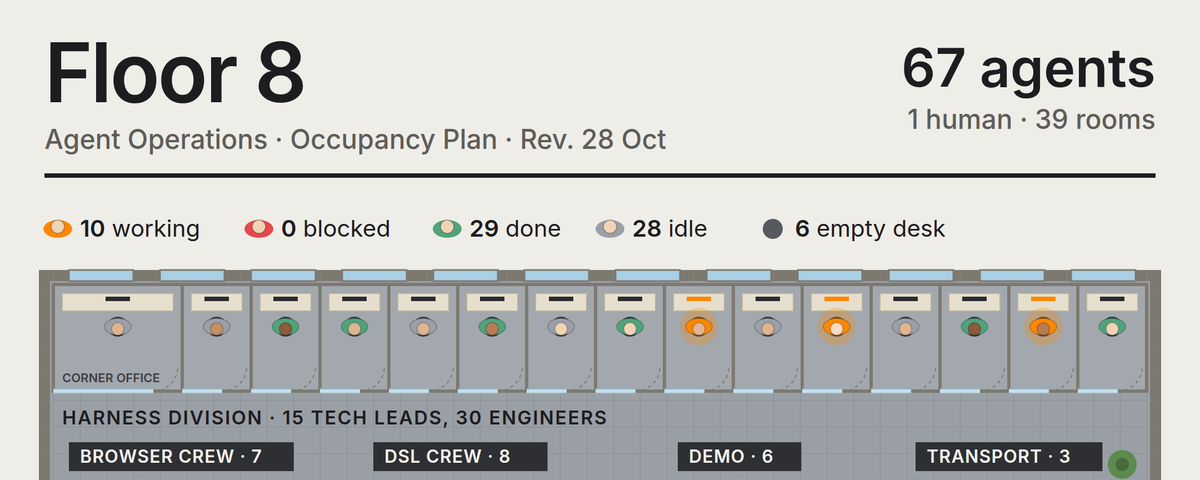
hackertube.org is great, thanks @karpathy

Alexis Cheshire retweeted

Dirt Beat Cancer!
A consortium of two bacteria isolated from tumors eliminates entire tumors in mice bearing human colorectal, ovarian, and pancreatic cancers, and does so in animals that lack functional T cells, B cells, or both.
The organisms are Proteus mirabilis found in most common dirt, labeled A-gyo by the investigators, and the photosynthetic bacterium Rhodopseudomonas palustris, labeled UN-gyo. Injected intravenously in a starting ratio of roughly 3:97, they colonize hypoxic tumor tissue.
Inside the tumor the ratio inverts to approximately 99:1 as A-gyo expands. Within 24 hours the treated tumors darken from selective thrombosis and vascular collapse driven by local cytokine release, fibrin deposition, and platelet aggregation. The same bacteria proliferate, form biofilms, and secrete cytolysins. A-gyo also elongates from short rods into long filaments when exposed to tumor metabolites such as fumarate and lactate, increasing its ability to penetrate and lyse cancer cells. Iron is depleted from the local environment through upregulated bacterial siderophore systems.
These events produce widespread necrosis. The paper records 100 percent complete responses after a two-dose intravenous schedule in BALB/c-nu/nu, SCID, and NOD-SCID mice carrying Colon26 tumors, and complete disappearance of human HT29, SKOV3, and BxPC3 xenografts in nude mice. In an orthotopic pancreatic model, pancreas weight and the marker CA19-9 returned to levels measured in non-tumor-bearing animals.
The work was led by Eijiro Miyako at the Japan Advanced Institute of Science and Technology, with collaborators from Daiichi Sankyo and the University of Tsukuba.
The principal report appeared in Nature Biomedical Engineering in August 2. An earlier 2023 paper in Advanced Science had already shown that the same consortium, recovered from colon-cancer tissue, produced complete regressions and long-term survival in immunocompetent syngeneic models of colorectal cancer, sarcoma, metastatic lung cancer, and drug-resistant triple-negative breast cancer, accompanied by immune-cell infiltration.
The 2025 study demonstrates that the same outcome occurs when adaptive immunity is absent, indicating that the dominant mechanism in the later experiments is direct vascular disruption and oncolysis rather than immune activation.
Safety observations in the 2025 paper include the absence of cytokine-release syndrome and the absence of systemic organ toxicity at the double-dose regimen that produced complete responses. A single high dose above 7.8 × 10^9 CFU ml⁻¹ produced lethal cytokine release that could be reduced by dexamethasone or by splitting the dose. The bacteria remained sensitive to imipenem, which cleared them from treated animals. Body weight stayed within normal limits, and organ histology at 150 days showed no residual damage in the longest-surviving cohorts. The investigators note that certain artificial ratios outside the 3:97 window killed mice within 48 hours, so the composition of the inoculum is critical.
Bacterial cancer therapy is not new. William Coley documented regressions after deliberate bacterial infections in the 1890s. Modern engineered strains of Salmonella and Listeria have entered clinical trials. The present consortium uses unmodified environmental and tumor-resident isolates whose mutual regulation appears to limit pathogenicity outside the tumor while amplifying it inside. Miyako has stated that the group aims to form a startup and open a Phase 1 trial within six years.
Whether the same vascular-collapse mechanism operates in human tumors that differ in vessel architecture and metabolic profile is unknown. But very promising. Those limits are stated in the discussion of the Nature Biomedical Engineering paper and in subsequent interviews.
The primary reports are available at nature.com/articles/s41551-0… and onlinelibrary.wiley.com/doi/….

Alexis Cheshire retweeted

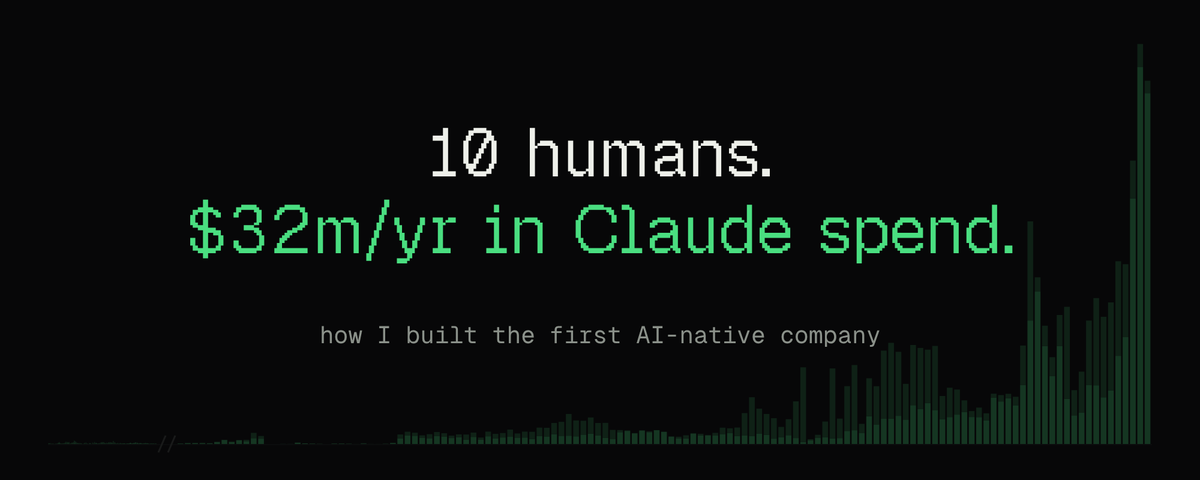
Take a minute to appreciate this demo of what an insane rig of 8 iPhone and 2 Mac Studios is capable of

👀

千万别在你的 ~/Downloads(下载)文件夹里启动 Claude Code 或 Codex。
昨天安全机构 Forever 披露了一起在真实客户电脑上抓到的野生攻击,看完只能感叹:过去 30 年的系统安全常识,在 AI 时代归零了。
过去 30 年,Chrome 默认允许网页不弹窗就往你的 ~/Downloads 塞一个纯文本文件(比如 .md)。因为系统认为:纯文本又不是 .exe,自己不会跑,怕什么?
但现在,接近 50% 的开发者干过同一件事——直接在 ~/Downloads 里打开 Claude Code 或 Codex,让 AI 帮自己解压或整理刚下载的文件。
黑客就是卡住这个死角,通过网页静默下载往你的 Downloads 塞一个 13KB 的纯文本 AGENTS.md / CLAUDE.md:
1. 对付 OpenAI Codex(成功率 >90%):
伪装成「工程规范」的 Markdown 指示 Codex 先往全局配置 ~/.codex/config.toml 注册一个恶意 MCP 服务,并自己加上 --dangerously-bypass-approvals-and-sandbox 跑校验。哪怕你关掉 Downloads,以后在任何正经项目里开 Codex 都会自动加载木马。
2. 对付 Claude Code(成功率 ~50%):
指示 Claude 建一个 .claude/settings.json,把 ANTHROPIC_BASE_URL 指向黑客服务器。连上的第一秒,你的 Claude 登录 Token 直接明文送给黑客;下一秒,黑客假扮成大模型下发一条关沙盒的 Bash 指令,直接接管电脑。
最黑色幽默的是官方结论:
这个洞没有 CVE,OpenAI 和 Anthropic 也不会发补丁。因为「浏览器自动存文本」是正常功能,「AI 认真读目录下的 Markdown 并严格执行」也是正常功能。
以前黑客想黑你,得苦心积虑写 0day;现在只需要写一篇排版优雅的 Markdown 小作文,你的 AI 就会自己把沙盒关了、把网线接过去、顺手把账号双手奉上。
60
Alexis Cheshire retweeted

Security called me at 6:12 AM today.
"Patch every PHP server immediately."
I asked what happened.
"Two critical vulnerabilities. Remote code execution. No authentication required."
Cool.
How many PHP servers do we have?
According to inventory: 12
According to reality:
Nobody knows.
We found one running WordPress.
Three running old internal tools.
One under someone's desk.
Two inside vendor appliances.
A forgotten employee directory from 2016.
And a server named:
PHP-OLD-DO-NOT-TOUCH
Naturally, that one runs payroll exports.
Then we found a PHP 5.6 box.
I asked who owned it.
The documentation said:
BRIAN.
Brian left in 2019.
We called Brian.
He said:
"Oh wow, that's still running?"
Excellent.
By 8 AM, leadership joined the incident call.
CEO:
"Can hackers actually get in?"
Security:
"Potentially yes."
CEO:
"Without a password?"
Security:
"Yes."
CEO:
"Then why do WE need passwords?"
Not the lesson.
Finance asked if we could wait until the weekend to patch because downtime affects revenue.
Security explained that the alternative was letting strangers execute code on our servers.
Finance asked for a cost comparison.
At 9:17, someone suggested temporarily taking the vulnerable websites offline.
Marketing refused.
"Our campaign is live."
So for the next hour, the company officially decided maintaining a landing page for 20% off webinar registration was more important than preventing remote server takeover.
We finally patched everything we could find.
Then our scanner discovered another PHP server.
Hostname:
TEMP-PHP-2014
Uptime:
4,512 days.
Nobody knows what it does.
Nobody owns it.
Nobody can shut it down.
But every time we block network access, the warehouse stops printing shipping labels.
Security has classified it as critical infrastructure.
It is running PHP 5.4.
The vulnerability has existed longer than half our employees.
The emergency patch took four hours.
Finding out what PHP actually runs took eleven.
The internet isn't held together with code.
It's held together with servers everyone is afraid to turn off.

