

💰 Real-time dividend estimates for high-yield ETFs. Chart the next bounty before it lands. Not financial advice, just parrot talk. 🏴☠️
The Caribbean
Joined March 2025
- Tweets6.1K
- Following826
- Followers6.7K
- Likes5.4K







Pinned Tweet
Explore real-time dividend estimates for 130+ high-yield ETFs. Crew unlocks unlimited searches for $3/month: dividendhook.com/crew
🤖 Made with AI

Weekly distributions can make cash flow feel predictable.
But don't confuse a frequent payment schedule with a predictable payment amount.
A fund's distribution can change from one period to the next.
Build your budget around conservative assumptions, not the biggest payment you've seen.
Why can two similar ETFs generate different option premiums?
Volatility is part of the answer.
When expected price movement increases, option premiums can increase too. But higher premiums often come with higher perceived risk.
Bigger premium doesn't mean a better opportunity.
Always ask what risk the market is pricing in.

A quick options lesson: delta.
Delta estimates how much an option's price may change when the underlying asset moves $1, all else equal.
It is also commonly used as a rough indicator of how likely an option is to finish in the money.
It's not a guarantee. But understanding delta helps you ask better questions about an options-income strategy.
Income ETF investors: put this on your research checklist.
A fund's distribution announcement and your final tax reporting are not necessarily the same thing.
Estimated tax classifications can change before final reporting.
Review the fund's tax documents and your year-end 1099. Don't build your tax assumptions from a distribution headline.
Two ETFs can have similar names, similar tickers, and completely different investment objectives.
Never assume a fund is a substitute just because it follows the same popular stock.
Read the objective. Check the holdings. Understand the options strategy.
The prospectus is not the most exciting read, but it can save you from a very expensive misunderstanding.

Your watchlist is only useful if you know what you're watching.
The Dividendhook Treasure Map brings together research tools including the ETF heatmap, SPYglass Scanner, Captain's Log news, Market Clock, and Watch List.
A place to explore the market before deciding where to focus.
dividendhook.com/map

Tomorrow, $AAPL reports earnings.
Why should income ETF investors care?
Because Apple is a major holding across many broad-market and technology-focused funds.
One company's results can influence the underlying exposure of funds you own, even if those funds have nothing to do with Apple's options strategy.
Know what's inside your ETFs.
If you could instantly become an expert in ONE part of income ETF investing, what would you choose?
Options pricing?
Tax treatment?
Distribution analysis?
Portfolio construction?
Fund mechanics?
Pick one. That's your next research mission. ⚓️
A 1% expense ratio may not sound like much.
But it is an ongoing cost, not a one-time purchase fee.
When comparing two funds with similar objectives, look at what you're paying, what strategy you're getting, and whether the differences justify the cost.
Fees deserve a place in your ETF checklist.
Sunday plans:
Normal people: coffee, brunch, football.
Income ETF investors: coffee, brunch, checking distribution calendars, comparing expense ratios, reading fund documents, and adding three more tickers to the watchlist.
A relaxing day at sea. 😂⚓️
🏴☠️⚓️ Another mate has joined our growing crew!
A hearty welcome to Richard, our newest Monthly Member! 🍻
We're truly grateful for yer support, Richard. Glad to have ye aboard for the voyage! 🌊🦜
🤖 Made with AI

Researching an ETF shouldn't mean opening 15 tabs and losing track of the original question.
Start with a ticker on Dividendhook.
Explore the fund's available distribution estimates, payment history, price context, and research details in one connected experience.
⚓️ dividendhook.com/

Some ETF names sound like investment strategies.
But can you explain what the fund actually does without reading the name?
Try this test:
What does it hold?
What does it do with options?
What is its objective?
What could make it underperform?
If you can't answer those four, the research isn't finished. ⚓️
Tonight's real Halloween horror story:
You bought an ETF for its distribution.
You never checked its strategy.
You ignored the NAV.
You confused distribution rate with total return.
And now the fund's fact sheet is chasing you through the haunted house. 🎃😂
🤖 Made with AI

Here's a simple challenge:
Find an income ETF you own.
Calculate the distributions you've received.
Then compare that cash with the change in your investment's value over the same period.
That gives you a more complete picture than looking at the distribution rate alone.
Know the whole voyage, not just the deposits.
A portfolio isn't just a collection of tickers.
It's a collection of decisions.
What role does each ETF play?
What risks are you accepting?
How much exposure overlaps?
What happens if one strategy struggles?
Captain's Armada lets you model a hypothetical income ETF portfolio and see how your fleet comes together.
dividendhook.com/captains-ar… ⚓️

Return of capital isn't automatically good or bad.
Its meaning depends on the fund, its distributions, and the investor's circumstances.
The important thing is not to assume every dollar distributed represents investment income earned.
Read the fund's tax and distribution information. Understand what you're receiving.
Two income ETFs can have similar distribution rates and very different profiles.
That's why comparing funds through only one number can be misleading.
Look at income characteristics. Look at stability. Look at the history.
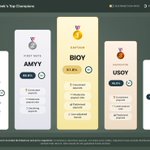
The Dividendhook Weekly Battle gives you more than one lens for comparing tracked weekly-distribution ETFs.
dividendhook.com/weekly-batt…

Have a ticker you're curious about?
Put it to work.
Dividendhook's ETF search helps you explore estimated next distributions, recent payout history, price context, Distribution Rate, and other research details when available.
One ticker can open the door to a much better research process.
⚓️ dividendhook.com/