

Currently a second-year law student. studying law, reading books, and sharing what I learn.
Joined January 2018
- Tweets9.2K
- Following97
- Followers2K
- Likes18.4K





Pinned Tweet
In The Firm, a 1993 legal thriller with Tom Cruise, there’s a great example of a storytelling technique called Chekhov’s Gun.
Named after Anton Chekhov, who advised in letters to young playwrights that “One must never place a loaded rifle on the stage if it isn't going to go off. It's wrong to make promises you don't mean to keep."
The term explains that every element in a story must be necessary, and if it’s not, it should be eliminated from the scene entirely.
Three times throughout the movie, while Tom Cruise’s character is making his way into his office, there is a cotton truck blocking an alleyway.
For some odd reason, you hear the voices of the security guard and the truck driver going at it louder than you hear other extras on the street.
A reference is also made by the security guard that he’s tired of having this conversation with the driver every day, hinting to the viewer that the truck blocking the alley is a regular occurrence.
By the movie's end, the cotton truck does not have any importance. But true to the essence of Chekhov’s gun, it’s there for a reason.
When Tom Cruise eventually has to make a daring escape from the law firm’s building, he uses the cotton truck to catch his fall after jumping from a third-story window.
If that truck wasn’t ever there before in the movie, it would be an occurrence of deus ex machina, or what happens when a plot is resolved in an implausible way.
But knowing the cotton truck was there in both Acts 1 and 2 of the movie, the viewer doesn’t feel like they’re being cheated, and the question every viewer is asking – “Why is the cotton truck parked there every day and why do we hear them yell so much about it,” – is finally resolved.
Felix Frankfurter's advice to a young person interested in the law:
“Stock your mind with the deposit of much good reading. Widen and deepen your feelings by experiencing vicariously as much as possible the wonderful mysteries of the universe. . .”


Dalton Mabery retweeted

This is Timothy Eaton. He built Canada's first retail empire.
But if you didn't know that, there's a reason: it crumbled because the company was guided by the erroneous belief that yesterday's success guarantees tomorrow's survival.
The great thing about studying history is that we can learn from people like Eaton, to see what they did that made them famous, and then try to avoid what made them fall.
That's exactly what we're trying in our new series on the podcast, Outliers.
In this first episode of the podcast, you'll be introduced to Timothy Eaton and learn what happens when someone chases spectacles instead of building great systems.
Listen and learn at the link below.

First, Scorsese and DiCaprio team up in a narrative non-fiction thriller from David Grann.
Now, they team up in a narrative non-fiction thriller from Erik Larson.
History and book nerds going crazy right now!


I think one reason it's hard to make new friends when you're older is because you have the ability to ignore people who you just don't want to be with very much.
The slightest weird comment, the annoying laugh, the crazy takes, etc. all give you a reason to just keep living life: you can drive, you have a house, you're free.
when you're in middle school and even college, you don't have that freedom. so people who have a few things off about them, but are generally good people, you're kinda forced to hang around with. over time you realize those things are all not that big of a deal.
when you're older, you write people off (I do this for sure) before it gets to that point.


I started my reading today for crim law. I loved this quote from a juror in a criminal trial on proof beyond a reasonable doubt.
"We [the jury] discovered that . . . there seemed to be no limit to the power of the state over us, once we fell into its hands."

this is awesome

During a private funeral ceremony for the late President Carter attended by Carter Center staff, Chip Carter, the president's son, recounts how his father learned Latin to tutor him over Christmas break after he failed a midterm in 8th grade. cbsn.ws/4a8Gg6a
Now posted: My reading year, 2024—all the books I read and loved last year.
dltn.io/posts/my-reading-yea…

I finally posted my book notes to Thomas Jefferson: The Art of Power by Jon Meacham. Easily one of the best books I've ever read.
"It is the strong in body who are both the strong and free in mind." – Peter Jefferson, Jefferson's father.
dltn.io/posts/thomas-jeffers…


Dalton Mabery retweeted
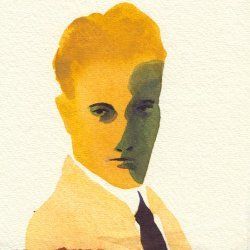
“You are never too old to set another goal or to dream a new dream."
— C. S. Lewis
The Red Door Mark Edwards (British, b. 1951)

Or they make themselves believe that their problems are too important or unique to have simple solutions.
I need to spend less money? Noooo. I need to take courses and read books about passive income.
I need to work out every day? Noooo. I need to count my calories, Huberman-max my routine, buy a cold plunge and sauna.
I need to make great videos or write great blog posts? Noooo. I need to click-bait the heck out of my titles and thumbnails; I need to post shorts everyday and maximize my captions. Every word counts!
I need to read deeply? Nooo. I need to read all of the newest best-sellers and self-help slop and use AI to enhance my reading and summarize everything, and then I'll be unstoppable.


A beautiful, heartbreaking passage about Eleanor Roosevelt written by Doris Kearns Goodwin—one of the best historical and political writers ever.
"Always waiting in the wings, depressions was for Eleanor a dark companion that strode to center stage whenever there were turnabouts in the established pattern of her life."


New book notes: Feynman's Rainbow.
From the description:
Mlodinow and Feynman delve into the nature of science, creativity, love mathematics, happiness, God, art, pleasures and ambition, producing a moving portrait of a friendship and an affecting account of Feynman’s final creative years.
dltn.io/posts/feynmans-rainb…