
Professor of Nutrition (emeritus) University of Illinois. focus on protein for “muscle-centric” health https://xitter.cf/t.co/6yu7QYAn1z
Chicago, IL
Joined January 2011
- Tweets1.4K
- Following206
- Followers13.8K
- Likes2.4K




I agree exercise is critical but one needs to be clear about the protein comparisons. 0.8 g/kg vs 1.2-1.6 vs >2.0? Are comparisons of 0.8 (the RDA) different than 2.0? 0.8 is never better than 2.0. Does protein impact on LBM plateau around 1.6, yes. Most of the "aging" meta-analyses are comparing 1.1 vs 1.3 using small daily supplements. Protein is the "icing on the cake" from moderate to high intakes but it is the foundation from low to moderate.

Don Layman retweeted

Importantly the 100g dose stimulated MPS only 20-30% more than the 25g dose indicating a definitive plateau in how much protein can be used! journals.physiology.org/doi/…


There continue to be claims on social media that your body can only “use” 20–30 g of protein at a time.
That’s a myth.
Your body can digest and absorb substantially more protein than this. The more relevant question is: How much protein per meal is optimal for building muscle?
A recent study found that consuming 100 g of protein produced a greater and more prolonged (>12 h) anabolic response compared with 25 g (PMID: 38118410). That said, consuming such a large dose in a single meal is likely not necessary or optimal from a practical standpoint.
Based on our review of the evidence (PMID: 29497353), a reasonable strategy is to prioritize sufficient total daily protein intake and distribute it relatively evenly across 3–4 meals per day, with a target of at least 1.6 g/kg/day for those seeking to maximize muscle growth.
Bottom line: There is no 20–30 g “limit” on the amount of protein your body can use at a meal. Prioritize your total daily protein intake, and then spread out consumption in relatively equal portions across your meals.
pubmed.ncbi.nlm.nih.gov/2949…

I’m not going do go into depth on Twitter but let’s consider the big picture. They used weight stable young males eating 100 g/d of mixed protein. Weight stable means they are burning the equivalent of 100 g/d or they would gain LBM and weight.
For expt they fed 100 g of casein, a very unusual and slowing digesting protein. After 12 hrs they say they detect ZERO oxidation of the casein. That implies 100% efficiency of turning the casein into new LBM. That would bevthe equivalent of creating more than 1 pound of new muscle each day . That would be 7 lbs/wk and 28 lbs/mo. There is no diet, exercise or steroids that will produce that result. So we are left with results and methods that can’t possibly be true … if things seem too outrageous to be true … common sense is useful

I agree protein per day is the major factor but that study you are using has serious problems. Consider the ramifications of consuming 100 g/day of protein with no oxidation 🤔🙄

I've been interested in the shift in protein consumption--people are eating more, which I appreciate. We used to believe there was a hard limit on how much protein the body could absorb in one sitting, usually about 20 to 30 grams. That idea mostly came from studies where muscle protein synthesis leveled off after a modest dose of whey after lifting.
New evidence says that limit isn't so limited. When people ate 100 grams of protein after exercise, their muscles kept making new protein for more than 12 hours, longer and to a greater degree than after 25 grams, and very little of the extra protein was burned off as fuel.
When it comes to protein, stop counting grams per meal and focus on the daily total. If a big protein dinner is what fits, eat it.
Don Layman retweeted
May promote doing a lot of heavy lifting in that headline. The review is great for yeast, fruit flies, worms and mice. It's time to say so plainly: There is no consistent data in humans that supports this notion!

Protein Restriction May Promote Healthy Aging and Longevity
insideprecisionmedicine.com/…
Source is this review from the @LammingLab: cell.com/cell-press-blue/ful…

I agree 👍🏻 one caveat, the MPS response curve and plateau may not be exactly the same in 60+ yr as 25 y o
Don Layman retweeted

Muscle is a choice, and it is the only organ system that is 100% in your control. This is the focal point for longevity. Beyond physical abilities, it remains the centerpiece for glucose regulation and metabolic health, survivability, and overall quality of life.
Muscle is the organ of longevity.
There is only one way to do this wrong, and that is to do nothing.
Thank you to @TIME for recognizing the critical nature of this message and paradigm shift. It is quite the honor.
Here's the article link: bit.ly/4hWxbDm

Stu, great comments and totally correct. 👍🏻
Move over longevity: Healthspan is what we should be chasing theconversation.com/move-ove…

Don Layman retweeted

Mainstream media is suddenly telling you to eat less protein.
"Protein restriction increases longevity."
"Eat less protein. Age better."
More than 50 news outlets ran with some version of the story.
I read the actual paper.
The headlines aren't telling you what it actually says.


Don Layman retweeted
One of the key drivers of insulin resistance is too much insulin. This is an example of a biological principle known as "homologous downregulation". The principle applies to peptide hormones generally--to much of a peptide hormone leads to a resistance to that hormone.
This universal biological principle is one reason I am concerned with the escalating doses of GLP-1 drugs. GLP-1 is a peptide hormone. The more the pathway is activated, the more the pathway becomes resistant. To help preserve sensitivity, the lowest effective dose is ideal.
How can you know the lowest effective dose? The dose that helps you control cravings.
Yes. The new DGAs reposition Carbs (grains) as the last priority in diets wiith 2 to 4 servings of whole grains and additional refined grains in proportion to energy needs (ie exercise)

🤔..but should there not also be warning label/message @donlayman that a #protein-forward diet needs to be a lower carb diet as well? i.e. this massive recent study:
Among 205,802 US health professionals....
😲...high-protein intake was linked to +105% higher #Type2Diabetes risk? ⤵️
➡️xitter.cf/YourCoachDavid/status/…
This is a critical piece of information everyone ignores. Trans fats were in US foods until 2018 and distort all population survey data prior to that date

Dr. Tom Brenna makes a point that the nutrition world has consistently avoided. The studies linking saturated fat to heart disease were conducted when trans fat consumption was high and rarely separated from saturated fat in the analysis. The two compounds were conflated, and the conclusions that followed were built on that error. When saturated fat is examined on its own terms, the relationship with cardiovascular disease does not hold. Decades of dietary guidance deserve to be questioned at the source.
WATCH HERE: bit.ly/48yKlAO
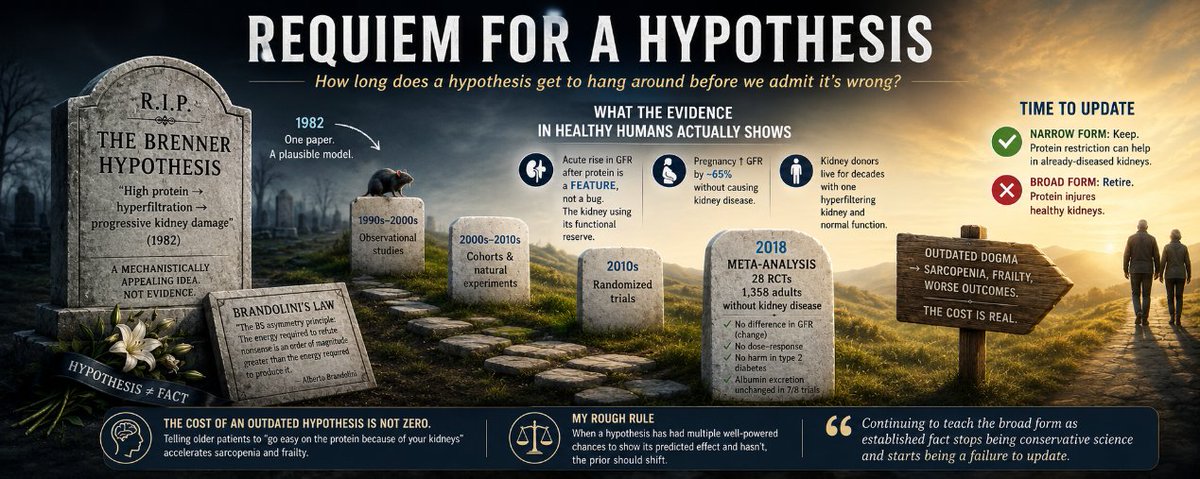

Don Layman retweeted
PCOS is now PMOS, and it's one of the leading causes of female infertility.
After 14 years, 56 global organizations, and input from 14,000+ patients and clinicians, The Lancet has officially renamed PCOS to Polyendocrine Metabolic Ovarian Syndrome (PMOS).
The old name sent everyone chasing "cysts" — when the real drivers are insulin resistance, androgen excess, impaired glucose metabolism, and elevated cardiovascular risk.
This was never a gynecological condition with metabolic side effects. It's a metabolic condition with gynecological consequences.
PMOS affects 1 in 8 women. Up to 70% go undiagnosed.
Join Dr. Heather Leidy and me on May 21 for webinar providing overview and practical applications of the new Dietary Guidelines. Sponsored by IAFNS and providing CME credits for dietitians. Register here: lnkd.in/e6m3uk5V
Don Layman retweeted
Both myself and @donlayman were there as they announced the new guidelines. Both of us had been working towards this for quite some time in different ways. There is still so much to discuss and understand.
Don Layman retweeted

The American Heart Association was the first group in the world to proclaim saturated fat is bad for health (in 1961). So of course it's are not backing down. Even reject full-fat milk and normal cheese--due to sat fat content--ignoring the last 15 years of science to the contrary. An illustration in the intransigence of bureaucracies

The American Heart Association recommends getting protein from plants—rather than meat—and avoiding full-fat dairy. on.wsj.com/4m0X3h6
