
Longevity MD | Building the future of health | Founder @ Next Generation Medicine | Chief Medical Officer @wearehims Mostly on LinkedIn
Joined October 2025
- Tweets90
- Following28
- Followers1.1K
- Likes10





Just wrapped a meeting with OIRA on HHS’s Interim Access Policy for Compounding Using Certain Peptides, and we’re grateful for the opportunity to discuss what regulated access to peptides should look like.
Let’s be clear: Countless Americans are already using peptides right now and the current environment isn’t serving them. Most are buying from unregulated gray markets, unvetted online retailers, or even at corner stores. They’re often getting products labeled ‘for research only’ or ‘for animal use,’ made entirely overseas under conditions no one can verify. These channels provide no real clinical oversight, no quality standards, and no record of what happened to the patient.
Peptide therapies hold meaningful potential to help millions of Americans live healthier lives, but only if they come with responsible, regulated pathways to care. Patients should be able to access peptides through licensed healthcare professionals providing ongoing clinical support, and US-based compounding, with active ingredients sourced from FDA-registered facilities. That’s how we’re building at Hims & Hers. That’s the standard for access we want to help set nationwide.
We appreciate the administration’s leadership in opening this path towards regulated peptide access, and look forward to seeing the interim policy move ahead.
People don’t realize that ChatGPT Dots are 10x more capable than Grokbot, Muse and Instinct.
Used the right way, you won’t ever need to touch your laptop again.
Yesterday's DevDay demo didn't help. The dot went quiet on stage, voice wouldn't start, and that's what most people walked away remembering.
But look at what's underneath. Every dot runs on its own cloud computer, and it can hand work off to Codex. Codex is far and away the best computer-use tool out there.
Instinct and Muse are both great. Neither one has Codex.
And ironically, voice is one of the best parts. You can just call your dot and talk through what you need.
I’ve been using it for a few days now it’s and it’s been incredible.
Have you tried it yet?
Comment DOTS for my setup to make this happen

Most people who fancy themselves as experts in the longevity field have no clue about what's going on in China.
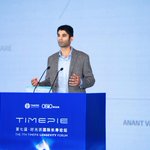
Last week I spoke at TimePie, the largest longevity conference in China and spent time surveying the longevity industry there.
My biggest takeaway: the pace of longevity R&D is far ahead of the international conversation about it.
Over 3 days, I learned about nearly a dozen novel nutritional products, supplements, devices and other technologies with real science behind them that people in our American longevity bubble have no idea about.
R&D is the foundation of longevity innovation and it's happening faster in China than anywhere else right now.
Yet most longevity conferences give you little or no exposure to what’s happening in China.
For anyone who care about building in this space, that’s a serious blind spot.
We will have strong representation from China at Next Generation Longevity. Our decision to hold the event in Osaka is not just about the incredible innovation happening in Japan, but about the whole Asia-Pacific region.
We still have a few spots left. Apply at the link below.


Apple just entered the longevity space. The wearables and testing market is going to change dramatically.
Device capabilities are converging. The next advantage will come from connecting the data to a broader care ecosystem and a plan people can actually follow.
The new Apple Watch adds readiness scoring and more frequent HRV tracking, familiar territory for Oura users. Apple also plans to bring biomarker testing through Quest into the Health app later this year.
Inside longevity circles, this can feel like more of what is already everywhere.
But we underestimate how many people have never encountered these ideas.
Apple can put them in front of people who have never considered a longevity clinic or tracking their bloodwork over time. It could make getting tested, understanding the results, and retesting to assess progress feel routine.
That reach could make this one of the most significant moves in longevity.
For everyone building here, the opportunity is increasingly in what happens after measurement: interpreting the results, connecting them to care, and helping someone change course when their plan isn't working.

Could an ADHD medication promote brain longevity?
The ADHD medication atomoxetine increases norepinephrine by slowing its reuptake, so more of this chemical signal remains available between nerve cells.
That matters because norepinephrine also communicates with microglia, the brain’s resident immune cells. In experimental studies, it can reduce inflammatory signals from these cells.
The same system we associate with attention could therefore help shape the conditions in which neurons age.
There’s already an early human signal. In a randomized trial of 39 people with mild cognitive impairment due to Alzheimer’s disease, atomoxetine lowered tau and phosphorylated tau in cerebrospinal fluid, the fluid surrounding the brain and spinal cord.
The trial didn’t show improved cognition, so brain longevity remains a hypothesis.
But it opens a useful possibility: preserving the brain may partly depend on restoring the chemical signals that help regulate its immune environment.
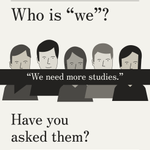
“We need more studies.”
I hear this often in conversations about peptides.
But who is “we”?
Who are you speaking for?
And have you actually asked whether they agree?
Before speaking for other people, make sure you’ve listened to them.

If you're buying exogenous ketones, start with one question: how high do you actually need your blood ketones to go?
Higher isn't automatically better. The right level depends on the job.
For a hard athletic effort, use a true D-BHB monoester. Take 20–30 g, or about 0.35–0.5 g/kg, 30–45 minutes beforehand, and target 3.0–5.0+ mmol/L. KetoneAid Ke4 is a current example of this chemistry and lists 30 g of monoester per bottle.
For a focused work block, use 10–15 g of monoester or 10–12 g of R-1,3-butanediol 30–60 minutes beforehand, and target 1.0–2.0 mmol/L. Ketone-IQ Original is a diol example and lists 10 g of R-1,3-butanediol per serving.
For fasting or appetite support, use 5–10 g of monoester, diol, or a high-purity BHB salt at the start of the fast or between meals, and target 0.5–1.5 mmol/L. Perfect Keto Base is a current example of the BHB-salt category, but treat it only as a class example: verify active grams and D/L specificity on the current label before dosing.
These are examples of the chemistry, not endorsements. A product name doesn't prove that one serving hits the target.
If you're new to monoesters, start with 10 g in 300–500 mL of cold water and drink it over 10–15 minutes. Only move toward 25–30 g if that's well tolerated.
Before buying, verify the exact chemical identity, D-BHB or R-BHB rather than an unspecified D/L mixture, active grams per serving, and independent testing.
If you take an SGLT2 inhibitor, have type 1 diabetes, stage 4/5 CKD, or a history of gout, stop there and review it with a clinician before starting.

We usually describe ALS as motor neurons slowly dying. That's true, but it may not be the whole story.
Researchers are also looking at the neighborhood around those neurons. In ALS, nearby support cells can become activated and release inflammatory signals, and this neuroinflammation is being studied as one contributor to how the disease progresses.
That's where regulatory T cells, or Tregs, come in. Tregs are immune cells that help apply the brakes to immune activity. Some research suggests weaker Treg activity may mean less restraint on inflammation.
M Regenerative Clinic's TALS approach isolates a patient's own Tregs, grows more of them outside the body, and reinfuses them.
This is investigational. Early human work has focused on safety and feasibility. We do not yet know whether it changes ALS outcomes.
Watch:
drive.google.com/file/d/1Bz5…
#ALS #NextGenerationMedicine

Shichimi might be the most powerful spice blend for health.
Its power comes from breadth: the blend engages several biological systems at once.
Capsaicin activates TRPV1, a heat-sensing receptor that starts thermogenesis—the production of heat.
Sanshool and gingerols activate TRPA1, a sensory channel involved in nerve signaling.
Capsaicin and gingerols also activate AMPK, the cell's energy-sensing switch. AMPK shifts metabolism away from storage and toward fuel use.
Gingerols, capsaicin, and sesame lignans activate Nrf2, which turns on the cell's antioxidant defense system.
Seaweed provides iodine for thyroid hormones, which regulate metabolic rate.
This is shichimi's real strength: it behaves less like a single spice and more like a biological network spanning energy, nerves, metabolism, and cellular defense.
Traditional food systems understood something modern nutrition often misses: combinations matter.
That is exactly the kind of idea I want to explore at Next Generation Longevity in Osaka—what traditional foods can teach us about health and aging.
If this is the kind of biology you want to explore with us, apply to attend NGL Osaka:
buildlongevity.org/#apply

Excited to welcome Raghav Sehgal, PhD to #NGL2026.
Dr. Sehgal built SystemsAge, the first clinically deployed organ-specific biological age test — quantifying how fast eleven separate organ systems are aging from a single blood draw — and did it before finishing his PhD at Yale, where he now continues as faculty in the Higgins-Chen Lab.
In his Day 2 talk, "When Biomarkers Become Actionable," at Next Generation Longevity 2026, he'll take on the question the field keeps dodging: are these clocks accurate and responsive enough to actually guide a treatment decision, or just accurate enough to sell.
Together with Deepti Agarwal and Naoko Kita, we're building NGL2026 around exactly these kinds of questions — where promising science gets tested against the realities of clinical practice.
A biomarker only matters once someone acts on it. That's the standard this program holds every claim to — aging biomarkers included.
Join us in Osaka this October to hear how one of the field's most closely watched young scientists is thinking about turning aging clocks into clinical tools.
Apply to attend → [link]

Over the past seven weeks I've laid out why we built Next Generation Longevity 2026 the way we did: Japan as the world's longevity laboratory, kintsugi as the thesis, AI from prediction to practice, women's health on the main stage, ikigai next to the biomarkers — and outcomes over applause.
Now the practical part. The room is almost set, and it's intentionally small.
Together with Deepti Agarwal and Naoko Kita, we're building a room designed for real exchange — clinicians, founders, investors, scientists, and operators who will actually contribute.
We review every application to keep that room high-signal. If that's you, this is the moment to apply. Qualified applicants hear back within about a week, and seats are limited.
You can keep watching the longevity field from the outside, or you can spend two days in Osaka helping build it — and leave with a blueprint to show for it.
I know which one I'd choose. Hope to see you there.
🗓 Oct 15–16 · Nakanoshima Qross, Osaka, Japan
Apply → buildlongevity.org

Excited to welcome Brian Kennedy, PhD to #NGL2026.
Dr. Kennedy is Distinguished Professor and co-Director of the Centre for Healthy Longevity at the National University of Singapore, and spent six years as President and CEO of the Buck Institute for Research on Aging — after doing his PhD work in Leonard Guarente's lab on the discovery that first linked sirtuins to aging.
He'll open Day 1 of Next Generation Longevity 2026 with the keynote "The Global Longevity Imperative," bringing three decades of geroscience — from foundational sirtuin biology to today's human rapamycin trials — to a room built for exactly this kind of conversation: clinicians, founders, and scientists asking what's actually ready to leave the lab.
Together with Deepti Agarwal and Naoko Kita, we're building NGL2026 around the conversations that can move longevity medicine forward — connecting foundational science with real-world clinical practice and implementation.
As rapamycin and other longevity interventions move from mouse studies into real clinical trials, the standard-of-care question gets harder, not easier. That's the conversation this program exists to have.
Join us in Osaka this October to hear how one of the field's founding scientists is thinking about the path from bench to bedside — and what it means for how we practice.
Apply to attend → nextgenerationlongevity.com/
#NGL2026 #LongevityMedicine #Geroscience #Osaka2026

Excited to welcome Kenji Shibuya, MD, DrPH to #NGL2026.
Dr. Shibuya directs the Institute for Population Health at King's College London, after chairing Global Health Policy at the University of Tokyo and serving as Chief of Health Policy at the World Health Organization. He has spent two decades building the evidence base — from the Global Burden of Disease study to Japan's own health-system reform agenda — that governments actually use to decide where health spending goes.
At Next Generation Longevity 2026, he brings that population-scale view to a room usually focused on the clinic: what does longevity science mean once it has to survive contact with a real health system, a national budget, and a rapidly aging electorate?
Japan isn't preparing for an aging future — it's already living it. That's exactly the kind of pressure-tested perspective this program needs alongside the lab science.
Join us in Osaka this October to hear how one of global health's leading policy voices is thinking about turning longevity research into something a health system can actually deliver.
Apply to attend → nextgenerationlongevity.com/
#NGL2026 #LongevityMedicine #GlobalHealth #Osaka2026

Restricting one amino acid extended lifespan in male mice by 23%.
That's the standout number in a review of 350+ studies on protein and amino acid restriction, published in Cell Press Blue by Bailey Knopf and Dudley Lamming. Place it on the right rung of the evidence ladder: this is preclinical and mechanistic, mostly yeast, flies, and rodents, with a handful of short human trials tracking biomarkers, not lifespan. It is not population-level epidemiology, and it is not a signal for any single patient.
The mechanism: methionine, isoleucine, and valine keep mTOR and IGF-1 growth signaling switched on. Restricting protein, or those three amino acids specifically, lowers that signaling and raises FGF21, a liver hormone that improves energy expenditure, glucose handling, and inflammation.
This sits in real tension with the current push toward more protein with age. 1.2 g/kg versus 0.8 g/kg preserves 40% more muscle mass over three years, which is why sarcopenia, brain health, and quality-of-life guidance point the other way. Both findings hold because the operative variable isn't total grams. It's amino acid mix, life stage, and activity level. A sedentary 40-year-old overeating leucine-rich protein and a resistance-trained 70-year-old rebuilding muscle are different biology, not a contradiction.
The caveat: mouse effect sizes and sex-specific results don't set human dosing.
Counsel by phenotype. Check muscle mass and activity before cutting protein, and weigh source and timing over raw quantity.

Excited to welcome Brian Kennedy, PhD to #NGL2026.
Dr. Kennedy is Distinguished Professor and co-Director of the Centre for Healthy Longevity at the National University of Singapore, and spent six years as President and CEO of the Buck Institute for Research on Aging — after doing his PhD work in Leonard Guarente's lab on the discovery that first linked sirtuins to aging.
He'll open Day 1 of Next Generation Longevity 2026 with the keynote "The Global Longevity Imperative," bringing three decades of geroscience — from foundational sirtuin biology to today's human rapamycin trials — to a room built for exactly this kind of conversation: clinicians, founders, and scientists asking what's actually ready to leave the lab.
Together with Deepti Agarwal and Naoko Kita, we're building NGL2026 around the conversations that can move longevity medicine forward — connecting foundational science with real-world clinical practice and implementation.
As rapamycin and other longevity interventions move from mouse studies into real clinical trials, the standard-of-care question gets harder, not easier. That's the conversation this program exists to have.
Join us in Osaka this October to hear how one of the field's founding scientists is thinking about the path from bench to bedside — and what it means for how we practice.
Apply to attend → nextgenerationlongevity.com/
#NGL2026 #LongevityMedicine #Geroscience #Osaka2026

Inflammaging: A Modifiable Driver of Aging xitter.cf/i/broadcasts/1vJpPNzPM…

If you’re using AI in a longevity / functional medicine business, you really should be using Codex right now.
It is just much better at actually getting things done.
Most of these businesses run across a million different surfaces: portals, inboxes, documents, calendars, CRMs, spreadsheets, etc. The hard part isn’t getting an answer. It’s moving between all of those things and actually closing the loop.
That’s where Codex is different. The agentic and computer use capabilities are honestly far beyond anything else I’ve used.
Claude has been amazing for the last 6 months. But I think we’re in a Codex meta now.
And the numbers don’t lie- see below.
Comment CODEX and I’ll send you my personal guide for getting the most out of it.
