
Physician, magician, phygician
Pasadena, CA
Joined September 2010
- Tweets26.9K
- Following727
- Followers1K
- Likes26.8K






John de Beixedon, MD retweeted

De Sahara is met circa 9,2 miljoen vierkante kilometer ongeveer even groot als de Verenigde Staten zonder Alaska. Deze enorme woestijn vertoont in bepaalde gebieden tekenen van vergroening. Uitgedroogde meren vullen zich opnieuw en satellietmetingen registreren een toenemende vegetatiebedekking.
In september 2024 viel in delen van Marokko en Algerije binnen enkele dagen meer regen dan normaal gedurende een heel jaar. NASA-satellieten registreerden hoe uitgedroogde meren, waaronder Sebkha el Melah in Algerije, opnieuw volliepen.
Ook in de Libische Sahara ontstonden in 2023 wateroppervlakken op plaatsen die sinds het begin van de Landsat-waarnemingen in 1984 droog waren gebleven.
Een wetenschappelijke studie uit juli 2026, gepubliceerd in het Journal of Geophysical Research: Atmospheres onder de titel Greener Southern Sahara: An Enhanced Carbon Sink, documenteert de vergroening van de zuidelijke Sahara.
Tijdens het natte seizoen valt daar ruim zeventien keer zoveel neerslag als tijdens het droge seizoen. De fotosynthetische activiteit is gedurende die periode tweemaal zo hoog. De toenemende vegetatie zorgt bovendien voor een grotere natuurlijke opname van CO₂.
Een studie uit juni 2025, gepubliceerd in npj Climate and Atmospheric Science, voorziet onder een hoog emissiescenario voor de tweede helft van deze eeuw een toename van de zomerneerslag in de Sahara met maar liefst 75%. Ter vergelijking: Zuidoost-Afrika zou 24% meer neerslag ontvangen en Zuid-Centraal-Afrika 17%.
Een hogere atmosferische CO₂-concentratie kan bovendien de plantengroei bevorderen en het watergebruik van planten efficiënter maken. Veranderingen in de Afrikaanse moesson kunnen tegelijkertijd meer vocht richting de Sahara transporteren.
Geologisch gezien is een groene Sahara bepaald geen anomalie. Tussen ongeveer 11.500 en 4.500 jaar geleden bestonden grote delen van de huidige woestijn uit savannes, rivieren, wetlands en uitgestrekte meren. Er leefden olifanten, giraffen, nijlpaarden en menselijke gemeenschappen.
Zelfs wanneer slechts 5% van de Sahara structureel zou vergroenen, zou dat een oppervlakte van 460.000 vierkante kilometer betreffen: ruim elf keer Nederland.
De potentiële economische en ecologische gevolgen zijn enorm: meer landbouwgrond, grotere waterbeschikbaarheid, uitbreiding van weidegebieden, meer biodiversiteit, minder stoftransport en een grotere natuurlijke CO₂-opname.
De vergroening van de Sahara verdient daarom veel meer wetenschappelijke en publieke aandacht, juist vanwege de potentiële betekenis voor de economische ontwikkeling van Afrika.
Bronnen: NASA Earth Observatory, American Geophysical Union en Nature Portfolio.

John de Beixedon, MD retweeted

James Hong, 97, wishing everyone a happy Thanksgiving
"Wow what a life! I'm so thankful for ALL of you being in it. Wishing you a very peaceful and happy Thanksgiving💫"

John de Beixedon, MD retweeted

At the 1976 Summer Olympics in Montreal, reporters asked East German swimming coaches why their teenage female athletes suddenly had deep baritone voices and massive, heavily muscled shoulders.
The coaches laughed. They told the press they were in Montreal to swim, not to sing.
Newspapers printed the joke and moved on. When an American swimmer pointed out the obvious, that something in the pool wasn't right, sportswriters across the United States turned on her instead.
Her name was Shirley Babashoff.
She was nineteen years old, from Fountain Valley, California, and she had spent more than half her life preparing for that pool. Since the age of eight, she had trained under coach Mark Schubert at the Mission Viejo Nadadores club, waking up in the dark to swim ten thousand meters a day before and after high school.
At the 1972 Munich Games, she had won Olympic gold at fifteen. By 1976, holding multiple national records, she arrived in Montreal as the anchor of the American women's team.
Once the races began, the East German women dismantled every expectation in the aquatic center. They won eleven of the thirteen swimming gold medals and shattered world records in nearly every event.
Shirley swam the races of her life. She broke her own American records and walked away with four silver medals, posting times that would have guaranteed gold in almost any other era.
The American press expected her to smile on the podium and graciously congratulate the swimmers who beat her.
Shirley refused to play along. She stated plainly what everyone in the building could see: her competitors had developed deep voices and physiques unlike anything ever seen in women's swimming.
She wasn't media-trained, and she didn't hide her frustration when reporters pushed leading questions. She gave blunt answers and flatly refused to fake a smile for the cameras when she felt cheated on the world stage.
At the time, the International Olympic Committee had no reliable test to detect anabolic steroids, and Cold War politics prioritized keeping up the appearance of fair play. The United States Olympic Committee offered Shirley zero public defense.
American sportswriters found it far easier to attack an outspoken nineteen-year-old than to investigate an international sports machine. Columns across the country dubbed her "Surly Shirley," branding her a bitter runner-up and an embarrassment to American sportsmanship.
On the final day of the swimming events in Montreal, Shirley stepped onto the starting blocks for the 4×100-meter freestyle relay.
Her teammates, Kim Peyton, Wendy Boglioli, and Jill Sterkel, kept the race tight. When Shirley dove in for the anchor leg, she was swimming head-to-head against Kornelia Ender, the East German star who had already claimed four gold medals.
Shirley swam her leg in 55.48 seconds. The American women hit the wall in 3:44.82, beating East Germany by less than a second to win the gold medal.
It was the only women's swimming race the East Germans lost in the entire 1976 Olympics.
Even that victory couldn't shake the label the press had pinned on her. Shirley retired shortly after Montreal at nineteen years old, remembered by much of the public simply as the swimmer who complained.
Then, in 1989, the Berlin Wall fell.
In the early 1990s, the newly unified German government opened the archives of the Stasi, East Germany's secret police. Inside those files was a classified government directive called State Plan 14.25, a state-sponsored doping program engineered to prove communist superiority through Olympic medals.
The records laid out the exact milligrams of synthetic testosterone given to teenage girls. Doctors had handed thirteen- and fourteen-year-old swimmers little blue pills in locker rooms and at training tables, telling them they were vitamins. The pills were Oral-Turinabol, a potent anabolic steroid, administered in doses higher than those given to adult male weightlifters.
In the late 1990s, the doctors, coaches, and officials behind the program were put on trial in Berlin. Former East German athletes testified in court about failing livers, heart conditions, and severe birth defects in their children, victims of their own government.
Every allegation Shirley Babashoff had made in 1976 was proven as documented fact.
Still, the International Olympic Committee never changed the official record books, and the medals were never redistributed. Shirley went home to California, where she spent more than thirty years delivering mail for the United States Postal Service.
The 1976 times still stand.
She was asked to lose gracefully to a lie, and she chose to tell the truth even when her own country called her bitter for it. Why is it so often easier for people to punish the person pointing out an obvious unfairness than to confront the system behind it?


John de Beixedon, MD retweeted

Here’s why SUPPORTING TRUMP means spending my 6th Thanksgiving alone:
My aunt is Patti LaBelle, famous singer AND DEMOCRAT.
Christmas 2019, she had just informed me that I had to move out of the home I had happily shared with her for 12 years.
So when I heard her and my family talking about what a threat Trump was, I asked her “why should I be afraid of trump when you’re the one who just made me homeless?”
Her family instantly attacked me and threw me out of her house.
And just last year, she had a problem with me telling my story on this platform.
My punishment was LIFETIME BANISHMENT.
And because SHE'S not speaking to me:
NO ONE IN HER CIRCLE IS SPEAKING TO ME.
And this will apparently last the rest of my life.
WHY?
Because when it comes to democrats, POLITICS COMES BEFORE FAMILY.
I learned that lesson on Black Christmas 2019, and I've been learning it ever since.
And even though I've gotten out of politics, they still hate me.
But all that tells me is that I'm doing something RIGHT.
Because I’d rather vote Republican because I WANT to, than Democrat because I HAVE to.
God Bless America 🇺🇸

John de Beixedon, MD retweeted

Alina Fernández Revuelta, the daughter of Fidel Castro and Natalia Revuelta Clews, escaped Cuba in December 1993 at age 37 by disguising herself as a Spanish tourist and traveling with a false or borrowed Spanish passport...
Born in 1956, Alina grew up in Havana and learned around age 10 that Fidel Castro was her father. Despite her lineage, she never joined the Communist Party, refused to take the Castro surname, and became a vocal critic of her father's government as her opposition grew more public in the late 1980s.
With the help of friends, Fernández used a wig and Spanish travel documents to pass as a Spanish tourist—even practicing a Spanish accent to leave Cuba in December 1993. She flew to Madrid, sought political asylum at the U.S. Embassy, and arrived in the United States in December 1993.
On December 19, 1993, inside the departure terminal of Havana's José Martí International Airport, a thirty-seven-year-old woman wearing a wig, heavy makeup, and European tourist clothes handed a Spanish passport to a Cuban border guard. The officer glanced at the photograph, stamped the document, and waved her toward a Madrid-bound airliner. Minutes later, as the plane lifted off over the Caribbean, the passenger quietly shed her disguise—revealing herself to be Alina Fernández, the estranged daughter of Cuban dictator Fidel Castro.
Born in Havana in 1956 from Castro's secret affair with married socialite Natalia Revuelta, Alina had grown up inside the privileged orbit of Cuba's revolutionary elite. Yet as she matured into a fashion model and public-relations director, her childhood admiration for her father soured into bitter disillusionment. Watching ordinary Cubans endure severe food shortages, blackouts, and political surveillance during the island's crippling "Special Period" economic collapse in the early 1990s, she began speaking openly with Havana dissidents and foreign journalists.
Furious at her defiance, Cuban authorities placed her under constant state security watch and repeatedly denied her exit visas to leave the country. Trapped on the island she had come to view as an open-air prison, Alina resolved to slip past her father's vast intelligence apparatus with the help of trusted Spanish acquaintances.
Obtaining a Spanish passport altered with her photograph, she rehearsed walking, speaking, and gesturing like a vacationer from Madrid. Leaving behind a brief note for her mother and parting agonizingly from her sixteen-year-old daughter, Mumín, Alina walked straight through airport security under the noses of guards trained to catch defectors—landing safely in Spain before flying on to political asylum in the United States.
News of the escape stunned Havana and dealt a deeply personal embarrassment to Fidel Castro, whose own child had risked imprisonment rather than live under his rule. Shortly afterward, Reverend Jesse Jackson visited Cuba and negotiated with Fidel Castro for his granddaughter's exit, allowing mother and daughter to reunite in the U.S. at the end of December 1993. Settling largely in Miami, Fernández became an anti-communist activist, radio host and memoirist chronicling life behind the revolution's curtain, and author of the memoir Castro's Daughter: An Exile's Memoir of Cuba. She was also featured in the 2026 documentary Revolution's Daughter.
#archaeohistories

John de Beixedon, MD retweeted

In 1998, a Yale senior turned in a draft of her thesis on a terrorist most Americans had never heard of.
His name was Osama bin Laden.
That same night, she was stabbed to death on a quiet street corner. Of the 15 murders in New Haven that year, hers is the only one never solved.
Suzanne Jovin was 21. She was born in Germany and came to Yale to study political science and international studies. Friends said she was brilliant, kind, and always doing something for somebody else. She ran the Yale chapter of Best Buddies, a group that works with adults with intellectual disabilities.
Friday, December 4, 1998. Around 4:15 that afternoon, she dropped off the next-to-last draft of her senior thesis. It was about bin Laden and his network. Three years before 9/11.
That evening, she hosted a holiday pizza party for her Best Buddies group at a church near campus. She'd borrowed a university car for it.
After the party she returned the car keys. Around 9:25 p.m. she ran into a friend on campus and chatted for a minute. Then she started walking.
Just before 10 p.m., people in the East Rock neighborhood heard a woman screaming. Someone called 911.
Police found Suzanne on the sidewalk at the corner of East Rock Road and Edgehill Road. She'd been stabbed 17 times in the head, neck, and back. The tip of the knife had broken off inside her skull.
She died at Yale New Haven Hospital at 10:26 p.m.
She was fully dressed. Still wearing her watch and earrings. A crumpled dollar bill was in her pocket. It wasn't a robbery.
And nobody could explain why she was there. The corner was well out of the way from where she lived. Something, or someone, had taken her there.
Witnesses reported a tan or brown van stopped in the road right next to where she was found.
Then the investigation went off the rails. Police publicly said that her thesis adviser was among the people in a pool of suspects. He was never charged. He always said he had nothing to do with it, and his life and career were wrecked by it. DNA found under her fingernails reportedly didn't match him.
Other theories came and went. A stranger. Someone from the neighborhood. Someone she knew from campus.
Nobody has ever been arrested.
The state of Connecticut and Yale have put up a combined reward of $150,000.
Last December, on the 27th anniversary, the retired detective who led the case went back and stood on that same corner. He pointed out that every other murder in New Haven that year was solved. Only hers is still open.
Next week, it'll be 28 years.
Somebody walked up to a 21-year-old girl on a quiet residential street and stabbed her 17 times. Then they disappeared into the dark, maybe in a van, maybe on foot, and nobody has seen them since.
If you know anything: 1-866-623-8058 or [email protected].

John de Beixedon, MD retweeted
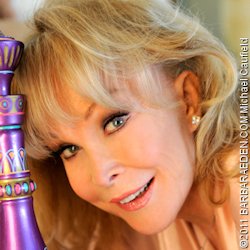
If only cooking for Thanksgiving were this easy!
With so much negativity in the world we must not let the bad things over-shadow all the good that exists. I am thankful for the love of my husband and my family and friends. I am thankful for my health! I am thankful for you, my fans who give me joy and keep the magic alive!
We should never ever forget the blessings we have and be thankful every day for even the smallest sparkle of joy, happiness and true goodness that exists.
My love and thanks for all the kindness and support you have all shown me for so many years.
Please have a very happy Thanksgiving day!
Gobble-Gobble! xo -Barbara
#happthanksgiving #thanks #appreciation #love #family #friends


John de Beixedon, MD retweeted

Today we honor Freddie Mercury, who passed away on this day 35 years ago 👑❤️
John de Beixedon, MD retweeted

On the morning of New Year's Eve, 1967, a 29-year-old motorcycle rider from Montana walked into the casino at Caesars Palace in Las Vegas.
He put his last $100 on the blackjack table and lost it. He had one shot of whiskey at the bar. Then he went outside to try to jump his motorcycle over the famous fountains.
He had talked his way into the jump by inventing a company and three lawyers who didn't exist, all to get the casino boss on the phone. He had even paid for a film crew out of his own pocket. One of the camera operators was a young actress named Linda Evans.
When he hit the ramp, the bike lost power. He came up short, flew over the handlebars and tumbled across the pavement into the parking lot of the hotel next door.
He crushed his pelvis and his thigh bone. He broke his hip, his wrist and both ankles.
And that crash, caught on film, made Evel Knievel famous.
He was born Robert Craig Knievel on October 17, 1938, in Butte, Montana, a copper-mining town. His parents divorced when he was a baby, and both of them left Butte. Bobby and his little brother were raised by their grandparents.
When he was 8, he went to see a traveling auto stunt show. He never forgot it.
He quit high school and went to work in the copper mines. He was fired after he popped a wheelie in a giant earth mover and drove it into the town's main power line, knocking out the electricity in Butte for hours.
One night in 1956, he was locked up in the town jail for reckless driving. In the next cell was a man everyone called "Awful Knofel." Before long, people were calling Bobby "Evil Knievel."
For years, he tried everything. He served in the Army, where he was a pole vaulter. He won a ski-jumping championship. He started a semi-pro hockey team. He ran a hunting guide service.
When he heard that elk in Yellowstone were being culled, he hitchhiked all the way from Montana to Washington, D.C., carrying a huge set of elk antlers and a petition with 3,000 signatures, to plead their case.
He raced motorcycles, broke his collarbone and shoulder, and couldn't race for months. So he sold insurance, and he was good at it. He opened a motorcycle dealership, and it closed.
Then, at a motorcycle shop in Washington State, the owner's son taught him to do wheelies and to ride standing up on the seat.
That gave him an idea.
He put on a show all by himself. He rented the field, wrote the press releases, sold the tickets and announced the show. Then he jumped his motorcycle over a 20-foot box of rattlesnakes and two mountain lions. He landed short, and his back wheel hit the box of snakes. But he made it.
A sponsor wanted to call the act "Evil Knievel." He didn't want to look like a biker gang member, so he changed the spelling to "Evel."
And then came Caesars Palace.
Five months after that crash, he was jumping again. In 1971, he jumped 19 cars, a record that stood for 27 years. He sold more than 100,000 tickets to two shows at the Houston Astrodome.
In 1974, he tried to cross Idaho's Snake River Canyon in a rocket. The parachute opened too early and the wind blew him back into the canyon. He landed just a few feet from the water and walked away with minor injuries.
In 1975, in front of 90,000 people at Wembley Stadium in London, he crashed and broke his pelvis again. He refused a stretcher. "I came in walking, I went out walking!" he said.
Five months later, he jumped 14 Greyhound buses in Ohio, and it was the most-watched show in the history of ABC's Wide World of Sports.
By the time he retired in 1980, he had broken nearly 40 bones. Children all over America played with Evel Knievel toys, more than $125 million worth of them.
"People wanted to associate with a winner, not a loser," he once said. "They wanted to associate with someone who kept trying to be a winner."
His body paid for it. In 1999 he needed a liver transplant. He lived with diabetes and a lung disease for years. In April 2007, at 68, he went on television and was baptized, saying he believed in Jesus Christ for the first time in his life.
Evel Knievel died in Clearwater, Florida, on November 30, 2007. He was 69. He was buried at home, in Butte. "Superman just doesn't die, right?" said his longtime friend.
November 30 marks 19 years since he died.
Look at the whole road. A boy raised by his grandparents. A miner fired for knocking out the town's lights. A night in jail that gave him his name. An insurance man, a failed shopkeeper, a rider who learned wheelies from the shop owner's boy. And then a jump over a box of rattlesnakes, a crash on the Las Vegas pavement, and a red, white and blue jumpsuit that every kid in America knew.
He failed at almost everything he tried, until he tried the one thing nobody else would.

John de Beixedon, MD retweeted

In 1652, the Dutch East India Company sent Jan van Riebeeck to the Cape to build a refreshment station for ships going to India.
Not an empire. A vegetable garden and a fort.
Those first Dutch farmers, later joined by French Huguenots fleeing religious persecution and Germans, became the Boers.
They were not sent by a king to conquer. They were left behind by a company that went bankrupt. They had to survive or die.
When they landed in the Cape, the land was inhabited by the Khoikhoi and the San. Hunter-gatherers and herders. Not by Bantu-speaking black groups.
The Bantu migration had come down Africa from the north, but by 1652 it had only reached as far south as the Eastern Cape. It had not yet reached the Western Cape where the Boers landed.
So in the Cape, the Boers were there before the Xhosa, Zulu, Sotho, and Tswana arrived in that specific region.
The British took the Cape in 1806. They tried to anglicize the Boers, and impose British law.
The Boers refused to become British. In 1835-1840, over 12,000 of them loaded ox-wagons and left in the Great Trek. They crossed the Orange River and the Drakensberg on foot, with women and children, fighting Zulu impis at Blood River, fighting Matabele, fighting drought, disease, and lions.
They founded two republics: the Orange Free State and the Transvaal. They wrote constitutions. They built schools and churches with nothing.
Then Britain wanted their gold. The discovery of gold on the Witwatersrand in 1886 brought the Anglo-Boer War. The most powerful empire on earth sent 450,000 soldiers against 70,000 Boer farmers.
The Boers fought a guerrilla war for 3 years. The British burned 30,000 Boer farms, slaughtered their livestock, and put 120,000 Boer women and children in concentration camps. 26,000 Boer children died there.
They lost the war, but they never surrendered their identity.
After 1910, the Boers, now called Afrikaners, built the modern state.
They built the farms that fed the country. The Karoo sheep farms, the Free State maize belt, the Western Cape wine farms. All built by hand, in a dry land with no rivers.
They built the mines' engineering, the railways, the power stations, the universities; Stellenbosch, Pretoria, Free State. The legal system, Roman-Dutch law, the Afrikaans language itself, created from Dutch, Malay, Khoi, and French.
They did not inherit a working country. They built one in a place the world considered uninhabitable.
A Boer has no other home. A British South African can "go back" to Britain. A Boer cannot. His language exists nowhere else. His church, his songs, his graveyards, his family for 10 generations are in the Free State dust, in the Karoo, in the Transvaal.
He did not come to South Africa for 5 years to make money. He was born there when there was no electricity, no South Africa, no passport. His great-grandfather died in a British camp for that land.
South Africa is not where he lives. South Africa is what he is.
t.me/fmazhindu

John de Beixedon, MD retweeted

Dan Aykroyd let one day go by before returning John Belushi's call, and it was too late. Belushi was 33, and Aykroyd had known him for 8 years. Aykroyd was typing a line for Ghostbusters, a movie whose lead he wrote with Belushi in mind, when the call about his death came. Belushi never got to see the film.
In the video below, Aykroyd is asked the worst thing that has happened to him. He says it was Belushi's death: "I let a day go by and that day may have cost him his life." He says he heard the message on his answering machine and "really didn't want to talk to him," because Belushi was being "so uncompliant with what his wife wanted and with what we wanted."
Aykroyd was paid $278 a week at Saturday Night Live. The act he built with Belushi, the Blues Brothers, sold 3.5 million copies of an album and made a movie that grossed $115.2 million. Aykroyd says the production budgeted for cocaine on night shoots.
Aykroyd and Belushi's wife Judy spent that last year hiding the drugs. He told Larry King in 2004, "It was cocaine. He liked the blow. We flushed a lot of it down the toilet." He added, "Judy and I were like DEA agents," and said that last summer he kept Belushi on "tomato soup and walks on the beach."
Belushi died on March 5, 1982, in a bungalow at the Chateau Marmont, of a cocaine and heroin overdose. Aykroyd remembers "a beautiful March day. It was blue sky and sun." He went to Judy's place and said, "I said Judy, he's gone." The pain, he says, "didn't come out for me, really, until after the funeral."
Cathy Smith, who gave Belushi the injection, served 15 months of a 3 year sentence. Aykroyd said of her, "She went to jail for manslaughter, and she did lethally inject him, and misjudged the dose."
I think the missed call was the last day of a long fight, not the cause. That last summer Aykroyd was managing Belushi, and a friend you are managing is a friend you start to dodge. If you're angry at a friend, ring them before you do anything else. The argument will still be there tomorrow, and they might not be.
Aykroyd ends that answer with "I live with that all the time now." Comedy fans, who do you think carries the heavier load: Aykroyd, who says one missed day cost his friend his life, or Belushi, who by Aykroyd's own 2004 account was the one steering his own life toward that night?
John de Beixedon, MD retweeted

🚨#BREAKING: An Arizona grandpa is being HAILED AS A HERO after he walked into the desert after midnight with a flashlight and FOUND a missing 2-year-old girl that 75 officers, K-9s, helicopters and heat-sensing drones COULDN’T FIND!!!
She had wandered off wearing NOTHING BUT A DIAPER and was hiding under a bush, shivering, TWO MILES from home...
...and she was okay!!!! ❤️
His name is Jay Stewart.
He has lived in Silver Bell Estates outside Eloy, Arizona for a long time. He’s a hunter, a dad and a grandpa.
On Tuesday around 5 p.m., little Vella was playing with her siblings in the yard...
...and then she was gone.
No shoes. Just a diaper.
More than 75 law enforcement officers from several agencies, Border Patrol included, came out to search. Dozens of neighbors and volunteers came out too.
Jay and his wife Glenda were two of them.
The sun went down, and the desert got cold fast.
The drones couldn’t pick up her heat signature. The sheriff said her body was too small to give off much heat.
So people searched on foot.
For hours.
Jay had a hunch. He figured that since it was so cold, she might have tucked herself in somewhere.
So he walked a dry wash with his flashlight, calling her name.
Then, just after midnight, SEVEN HOURS after she went missing...
Vella came out of a bush, screaming.
“She just jumped up and ran to me.”
Jay scooped her up and zipped her inside his FLANNEL JACKET to keep her warm while he called 911.
He held her until another searcher brought a blanket.
Jay: “She was clinging to me so tight.”
When deputies arrived and Jay tried to hand her to a sergeant, she WOULDN’T LET GO.
The sheriff said she “clung onto him for dear life.”
And as they carried her to the ambulance, she kept her eyes on Jay the whole way.
Jay: “She had really bonded with me, and I was shocked.”
She went to the hospital as a precaution. Not a scrape on her. She was back home with her family by Wednesday.
Before Jay left that night, her parents and grandparents found him to thank him.
Jay told them: “That’s what we do.”
He says it was “the most intense feeling I’ve ever felt.” The only things he puts in the same category are the births of his kids and his grandkids.
“I’ll never forget it the rest as long as I live.”
The sheriff gave him an award for outstanding citizenship and offered him a spot as an HONORARY SEARCH AND RESCUE POSSE MEMBER.
And Jay won’t take the credit.
“Everybody out here last night was a hero. I just happen to be the person that found the little girl.”
Then he said why all those people were out in the cold at midnight...
“We all did it for the same reason. We wanted her back.”
“She may not be our child. But she could be.”
GOD BLESS Jay Stewart, and GOD BLESS every single person who searched that desert.
THIS IS THE AMERICA I KNOW!!! 🇺🇸🇺🇸🇺🇸
John de Beixedon, MD retweeted
Christmas in Europe, now that Islam has taken over.
We will live like this until they drown us in a tsunami of religious fanaticism. The suicidal empathy of the left will end civilization as we know it, and Islam will then finally devour mankind.
John de Beixedon, MD retweeted
Islam shut down African ancient churches with the sword.
In Egypt, St. Mark planted the church in Alexandria in the year 42, while Rome was still persecuting Christians.
Alexandria became the greatest Christian city on earth, the school where Athanasius and Cyril defended the faith.
In North Africa, in Carthage and Hippo, men like Tertullian, Cyprian, and Augustine were writing the theology that Europe still reads today. They were Africans, writing in Africa.
In Sudan, there were three Christian kingdoms, Nobatia, Makuria, and Alodia, that stood as Christian nations for a thousand years, building cathedrals and monasteries in the desert while Europe was still in darkness.
In Ethiopia, King Ezana made Christianity the faith of the kingdom in 330, before most of Europe had even heard the Gospel.
Africa was Christian, deeply Christian.
Then the invasions came.
First, Egypt fell in 639. The Arab armies came, and the Coptic Christians who had been the majority for centuries were suddenly made second-class citizens in their own land.
They had to pay a tax just to remain Christian. They could not build a church. They could not even repair a church without permission.
Their language was slowly replaced, their churches were slowly taken, and over hundreds of years, a Christian nation was squeezed until it became a persecuted minority.
Then North Africa fell. Carthage, the great Christian city, was burned and abandoned in 698. Hippo, where Augustine had preached, was emptied.
The bishops were killed or driven out, the churches were turned into mosques, and within a few generations, a land that once had five hundred bishoprics had almost no Christians left. The Berber queen Kahina fought to the end, but after her, the resistance was broken.
Then Sudan fell. The Nubian kingdoms had resisted for six hundred years. They had even defeated the first Arab invasion and forced a peace. But in 1276, the Mamluks invaded Makuria. In 1315, the king was forced to convert, and the great cathedral of Dongola was turned into a mosque. By 1504, Alodia had fallen too.
The churches were left to rot in the desert, their beautiful frescoes of Jesus and Mary buried under sand, waiting for the world to remember them.
Only Ethiopia survived, and it survived by blood. In 1529, Ahmed Gragn invaded with Ottoman guns, burning churches, slaughtering priests, and destroying monasteries and manuscripts that can never be replaced. Ethiopia fought back, mountain by mountain, and it lived, but it lived scarred.
It was never just war. It was conquest, then tax, then humiliation, then church destruction, then language erasure, then slow conversion. Generation after generation was pressured until Africa forgot it was ever Christian.
nypost.com/2026/11/16/world-…

John de Beixedon, MD retweeted

One of the greatest reveals in TV history and the slap bet is one of the greatest things in TV history.

John de Beixedon, MD retweeted

Car loaded with explosives slams into lavish Portland social club, bomb squad still pulling out live devices
This is the kind of dangerous event @NYPD's SRG would handle. Now they're going to send a social worker.
foxnews.com/us/1-dead-after-… #FoxNews
