

Associate Professor in agronomy @ La Trobe. Views are my own.
Bundoora, Melbourne
Joined September 2015
- Tweets2.5K
- Following2.1K
- Followers991
- Likes6.1K







Pinned Tweet
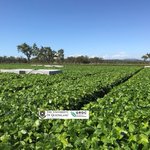
Paddock survey shows that nearly 50% of growers miss out on 500 kg/ha in yield potential. Yield gap analysis in mungbeans shows: fallow > double crop due to 💦 narrow rows <40 and risk factors are starting nitrate N < 65kg/ha, nematodes > 3 & high temps at 🌾@lindsaywbell

Dr Marisa Collins retweeted

New long-term research: the benefit of no-till practices on water infiltration is large. Unlike tilled soil, where aggregates break down after the first rain or irrigation, no-till methods maintain soil structure and infiltration effectively.
Open access
californiaagriculture.org/ar…

Dr Marisa Collins retweeted

💛GOA has been pretty chuffed to be involved in this research to come up with some great tips on growing good quality canola seed.
🧐.........BUT don't forget how much of an impact fertilizer can have on germ.
🎧PODCAST🎧⬇️
soundcloud.com/user-22880357…
@theGRDC @GRDCNorth @nswdpi


Do you a grow and retain your own canola seed? Here’s the latest publication which outlines the five key tips to grow high vigour canola seed (link below).
Learnt lots from this project, & a massive thanks to @theGRDC and the project team @agrobaz @GrainOrana @NSWDPI_AGRONOMY

Dr Marisa Collins retweeted
More research on glyphosate impacts on soil microbiology: neither soil bacteria and fungal diversity (alpha and beta) nor functional potential were impacted by cumulative glyphosate doses.
mdpi.com/2073-4395/14/4/686 teapawt.net/agronomistag/status/17…
Dr Marisa Collins retweeted
And if it is not a water effect, it is probably a nitrogen effect.
sciencedirect.com/science/ar…
Dr Marisa Collins retweeted
"Our analysis suggests that the extra storage capacity of water, which increased by up to 15 mm in the topsoil for each unit percentage increase in SOC, was the main driver for the observed yield responses."
With soil health, the benefits are all about the water.


Great #openaccess study @ejsoilscience 👏 !
Each % unit increase in SOC:
+ 16% maize 🌽 yield
+ 15 mm water storage capacity
"about 2/3 of the yield increases in response to SOC change could be ascribed to associated changes in soil physical properties"
doi.org/10.1111/ejss.13482
Dr Marisa Collins retweeted
Here's a paper that looked for the soil damage reported in the first article, which was related to increased levels of Fusarium: "We did not detect an effect of glyphosate treatment on the relative abundance of organisms such as Fusarium spp."
Open access
journals.asm.org/doi/full/10…

Dr Marisa Collins retweeted
Does synthetic nitrogen fertilizer burn up soil organic matter?
Multiple studies say NO.
N fertilizer actually slows loss of old soil organic matter and increases microbial biomass and new soil organic matter.
New from @jwadeexperience and I: csanr.wsu.edu/nitrogen-ferti…

Dr Marisa Collins retweeted

The quest to improve lentil production on red soils continues with the installation of amelioration treatments at mallala


Dr Marisa Collins retweeted

Hello everyone, can you please help complete a short survey to support our research. Thanks and good luck with the season!
federation.syd1.qualtrics.co… – at Melbourne, Victoria

Dr Marisa Collins retweeted
Australian #agronomists, #growers, and #researchers managing #weeds in grains production, are you concerned about the changing #weed_ecology? Please help our @theGRDC project by completing a brief survey: federation.syd1.qualtrics.co…
@theGRDC @WeedSmartAU @WeedSmartAU @SABE_latrobe

Dr Marisa Collins retweeted
So, if N fertilizer increases soil organic matter in the long-term, does it have a similar effect on microbial biomass?
This review says YES, N fertilizer application "led to a 15.1% increase in the microbial biomass above unfertilized controls."
sciencedirect.com/science/ar…


Does synthetic nitrogen fertilizer burn up soil organic matter?
Multiple studies say NO.
N fertilizer actually slows loss of old soil organic matter and increases microbial biomass and new soil organic matter.
New from @jwadeexperience and I: csanr.wsu.edu/nitrogen-ferti…
Dr Marisa Collins retweeted

What is your unpopular opinion on agriculture?
It's interesting to see people 'debating' agricultural practices in recent days.
Is there a view you have that is unpopular in the agricultural sphere?
Mine is that veganism isn't a huge risk to agriculture.
Let's hear them.

Dr Marisa Collins retweeted

ME Research UK-funded Dr Sarah Annesley at La Trobe University recently published an article discussing some of the pathological mechanisms that may be shared between ME/CFS and long COVID: bit.ly/3vgqWnZ
#MECFS #pwME #MyalgicE #MyalgicEncephalomyelitis


Dr Marisa Collins retweeted

How did the @theGRDC Pulse Agronomy Project perform at Daysdale? The full report by NSW pulse agronomy project lead @brill_ag is available now: faraustralia.com.au/wp-conte…

Dr Marisa Collins retweeted

How much difference in yield performance between faba bean varieties in a tight finish? A fair bit at Caragabal in 2023. Read up here from @theGRDC supported pulse trials
dropbox.com/scl/fi/zw371sz3j…

Dr Marisa Collins retweeted

Climate outlooks are based on complex models with different starting points, common & different input data, similar & different equations run on super computers. Each model has particular sea and atmospheric conditions where its more accurate & vice-versa. Trained meteorologists provide interpretive value. @theGRDC @GRDCNorth (youtube.com), @GRDCSouth (youtube.com), and @GRDCWest (youtube.com) outlooks for March to June are provided. Updated fortnightly. You can subscribe at the bottom of the YouTube.
Dr Marisa Collins retweeted

A lot of people have done a lot of plant density trials for faba bean (myself included), so here we put them all together to see what we could learn. Open access!
1/4 sciencedirect.com/science/ar…
Dr Marisa Collins retweeted
New to me:
For those of us who decided not to learn R, and only do standard statistical analyses, there is hope: JASP
It uses R, but requires no coding.
Open source, free, easy to use.
jasp-stats.org/