

ml research engineer @daytonaio | sandboxes | ml systems | evaluations
San Francisco, CA
Joined August 2017
- Tweets455
- Following179
- Followers257
- Likes861




Pinned Tweet
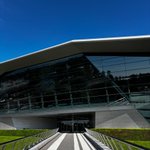
I got to spend 3 days at @nvidia HQ putting Vera through a pretty thorough set of agent infrastructure benchmarks.
Startup, oversubscription, throughput, 1,000–2,000 concurrent sandboxes, the whole thing.
I was part of the team running these experiments, so if there’s anything you want us to dig into in the full writeup, send questions our way!

Well, this is fast.
We tested @nvidia's new Vera CPU head-to-head against our most sought-after CPUs.
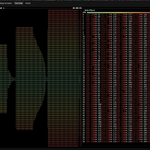
8x faster to spin up 1,000 @daytonaio sandboxes. 2,000 done in 27.4s, before Zen 5 finished 1,000.
Like a Rimac Nevera hitting 200 km/h before a Porsche 911 clears 100.
Full results soon 👀

I now know the difference between a tuxedo and a suite. awesome celebration with @daytonaio pit crew

every team of engineers needs a @joshuacirjak
East Coast last week, that was a good one 🏁
A few cities, a lot of builders, and some incredible conversations.
Thanks to everyone who made it happen.
Where should we bring @daytonaio next?
It's easy to find flaws in an open benchmark. Much harder to build one that's realistic, reproducible, and useful to the research community.
Huge respect for the @terminalbench team for making their work open to this level of scrutiny.
I appreciate the research here, but "we modified the benchmark and scores went up" is not quite the same as "the benchmark is saturated."


Pretty surreal to be part of this. Lots more to build.
We just raised a $60M Series B at a $1B valuation to build @daytonaio into the Agent Cloud.
@FirstMarkCap led the round, with all key existing investors and angels doubling down.
We're also thrilled to welcome the founders of some generational companies aboard, including @patrickc (Stripe), @tobi (Shopify), @AravSrinivas (Perplexity), @BrendanFoody (Mercor), @oliveur (Datadog), @adamdangelo (Quora) and @ericsyuan (Zoom)
We're a 35-person team. But that's about to change; we're hiring across the board, and we'd love for you to join us.
Spent the weekend at @Hack_Harvard with @daytonaio as a Diamond Sponsor!
I had the chance to judge some impressive projects and give a talk on reinforcement learning, exploring how the explore vs. exploit tradeoff applies to the decisions we make and the things we build.
The Daytona track had so many strong submissions that we ended up choosing two winners. Congrats to Leash and Mirage, and thanks to everyone who came by to build with us!
This weekend, @daytonaio was at @Hack_Harvard as a proud Diamond Sponsor!
So many incredible projects in the Daytona Track that we couldn't pick just one winner!
Congrats to both winning teams, Leash & Mirage, and everyone who participated!


harvard, nyc, & more!

@daytonaio East Coast Tour video coming soon! 💨
Been having fun with this one and excited to share the first video. Here’s a little teaser 🚦
Excited to share that our research paper is now on arXiv!
We explored whether coding agents can recover from failures by returning to earlier development states instead of starting from scratch.
Here's what we built, tested, and learned.
We tested this with a task that required modifying a SQLite database outside the repository.
With the same remaining token budget:
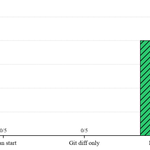
Clean restart: 0/5 solved
Git diff: 0/5 solved
Full snapshot: 4/5 solved
The successful snapshot runs also needed just 21k–41k tokens, compared with a 200k-token budget.

My biggest takeaway is that restoring an environment and knowing when to restore it are two different problems.
Full snapshots can preserve progress that code checkpoints miss, but choosing good intermediate states remains difficult.
Really enjoyed working on this with Tanmay Shah.
Full paper: arxiv.org/abs/2610.13841

The full writeup is out!
We spent 3 days at @nvidia HQ pushing Vera with thousands of concurrent Daytona sandboxes and digging into where the performance comes from.
More numbers, graphs, methodology, and a few awesome results!
Very fun one to work on 👇

spent all this time optimizing sandbox startup latency
finally optimized the domain name too
daytona.com


> over the weekend wrote a post with my friend kai about what a quantum sandbox might look like.
>mostly an excuse to finally understand qubits without nodding along and writing is the best way to do that.
> also @daytonaio quantum sandboxes coming as soon as we figure out how to cool a data center to 0.015 kelvin
graviet.io/blog/quantum-sand…

We did research on whether full sandbox snapshots actually help coding agents recover from failed long-horizon tasks.
> The surprising result was that on Terminal-Bench, retrying from scratch often worked better.
> However, snapshots became much more interesting when progress lived outside Git, like databases and running services.
daytona.io/dotfiles/snapshot…

macOS sandboxes on @daytonaio !!

I made a computer use agent that works without screenshots.
It uses the macOS accessibility API to interact with applications.
You can run it in the cloud with @daytonaio, connect it to any LLM, and control any macOS application.
Here it is building a simple program in Xcode:
Awesome work from the @withmartian team!
Routing feels like one of the harder problems in multi-model systems. You need a strong understanding of each model’s strengths, failure modes, and behavior across different types of tasks.
I am especially interested in model complementarity. There seems to be relatively little research on how different model families, like Luna, Terra, and Sol, can interplay to produce better results than relying on a single model.

We just added GPT-5.6 Luna, Terra and Sol to the AI Frontier: aifrontier.withmartian.com/
The most interesting result isn't that Sol is the strongest model.
It's this:
2× Luna > 1× Terra
4× Luna > 1× Sol
Here's what happens when you stop benchmarking models one run at a time 🧵