

Independent Writer. Economist. Data Analyst. Writes data stories around economy, policy and business at @Mint #MintPlainFacts [email protected]
Joined May 2021
- Tweets192
- Following260
- Followers189
- Likes102


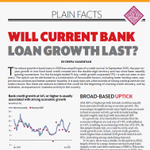



The gap between 19% credit growth and 10% GDP growth is worrying only because of the rise in retail borrowing. In BasisPoint Insight today @TantriPrasanna

India’s bank credit is growing at 19% year-on-year. On the surface, that signals strong credit demand and economic activity. But a closer look at the numbers reveals a more important concern: what is driving this growth, and where is the money going?
Retail lending now accounts for a significant share of incremental bank credit. More concerningly, loans against gold and unsecured personal loans are growing faster, while the share of housing loans in fresh retail lending is declining.
Is India’s credit boom funding productive investment or increasingly financing household consumption?
In her latest analysis, Deepa Vasudevan examines the changing composition of bank lending, the risks building up in retail credit and the RBI’s efforts to contain them.
The key takeaway: The quality of credit growth matters more than the headline number.
Read the full analysis on BasisPoint Insight: The Risk in India’s Credit Boom Lies in What It Funds
basispointinsight.com/Story/…
@dvasusg
#IndianEconomy #Banking #RBI #CreditGrowth #FinancialStability #Economy #BasisPointInsight

A balanced, insightful piece by Dr.Rajesh Shukla. Such a joy to read a calm and knowledgeable take on the WB poverty report.
@rajesh_ICE360
LiveMint DELHI Livemint ePaper
epaper.livemint.com/edition/…
Deepa Vasudevan retweeted

#MintLongStory | Demographic shifts occur slowly, so there is a long runway before India loses its ‘youthful’ profile. But being aware of how the arithmetic is changing is crucial to rework policy priorities.
livemint.com/economy/policy-…
Trust our hard work, subscribe to #MintPremium: livemint.com/premium⚡️
@Howindialives ✍️

The Indian economy faces three trade offs. Tax cuts enthuse stock markets, but could hurt the fisc. Higher rates help savers, but could dampen credit growth. Raising petrol prices aligns with free markets but will squeeze household budgets! My piece in Mint today.


Deepa Vasudevan retweeted

Now that the poverty numbers have been accepted globally, here’s another common question from critics: If poverty has fallen so dramatically, why do 80 crore Indians receive food subsidies?
Because social protection is not the same as poverty alleviation!
Public social spending (% of GDP):
🇫🇮 Finland: 31.4%
🇩🇰 Denmark: 26.4%
🇸🇪 Sweden: 26.1%
🇳🇴 Norway: 24.1%
🇬🇧 UK: 23%
India spends just 0.6% on food subsidies.
A welfare state is not merely a poverty-relief programme. #ViksitBharat🇮🇳
Hilarious take on the north south divide! With plenty of real insights within the banter:)
timesofindia.indiatimes.com/…

My piece in basispoint insight.
South India spent decades bringing fertility down. Now some states are trying to push it back up.
Why?
Because the demographic consequences of low fertility are becoming harder to ignore, writes Deepa Vasudevan.
Southern states already have older populations and fewer children. Over time, that means a smaller pool of women of reproductive age, fewer births and a faster shift towards ageing.
That matters for labour supply, migration, public finances and even political representation.
The contrast with northern states is striking. States such as Bihar, Uttar Pradesh, Madhya Pradesh and Rajasthan remain younger and have higher fertility rates, giving them a very different demographic trajectory.
The policy challenge is equally difficult. Migration can offset some labour shortages, but not fully. And global experience shows that once fertility falls sharply, raising it again is not easy.
So the debate is no longer simply about population control. It is about how states manage ageing, labour needs and demographic imbalance.
Read Deepa Vasudevan’s column for BasisPoint: Why South India Wants More Babies
basispointinsight.com/Story/…
@dvasusg
#Population #Demographics #SouthIndia #Fertility #Migration #PublicPolicy #India

most fascinating!

Brilliantly made video explaining the art of chitra-kavya, the art of solving fascinating optimization problems using letters!
Super happy to see my open-source TTS, Vāgdhenu (prathosh.in/vagdhenu/), being used in such magnificent ways. Thanks for creating this, @udbhava.


Delighted that Dr.Rajadhyaksha's thoughts on IMF's growth forecasts are not dissimilar to mine! Great ego boost for me:) @CafeEconomics
LiveMint DELHI Livemint ePaper
epaper.livemint.com/edition/…

Deepa Vasudevan retweeted

"The beauty parade got tougher. We need to become even more attractive to foreign capital"
@neelkanthmishra tells @_prashantnair that simpler tax laws, greater regulatory clarity & faster decision-making will matter far more.
#Nifty #BankNifty #Trump #Iran
What to make of IMF's October assessment of world growth? It is concentrated in a few nations, and AI is the key growth differentiator between them. How India can hold on to its growth resilience in this world- my piece in Mint today

#MintPlainFacts | The world economy may have remained resilient in 2026, but volatility and unpredictability are far from over, and their impact could weigh on India’s growth trajectory as well.
Read more: livemint.com/economy/global-…
Trust our hard work, subscribe to
#MintPremium: livemint.com/premium
(@dvasusg writes)


RBI's household sentiment surveys are a rich source of data on how people "feel" about the economy. Prof TCA Anant explains, in his usual insightful way, how the surveys can be made even better. Glad to have my work acknowledged!
livemint.com/opinion/online-…

Long story, but lucid explanation!

One thing the RBI did on Friday was to tell banks: You need to keep 99% of your CRR requirements at all times.
A quick decode. If a bank has Rs. 100 of deposits, it needs to keep about 3% of it with the RBI as zero interest earning cash. That's the CRR. Every bank has an account with the RBI (like you have a savings account with your bank - your bank has an account with the RBI). That account should have this CRR every day. It's like a minimum balance.
A CRR is calculated on deposits that were, roughly, 15 days ago, and RBI says listen, just keep 3% of that number interest free for the next fortnight.
If a bank has a lot of money in their RBI account, they will take the "excess" (whatever's beyond CRR limits) and give it to the RBI as reverse repo, or SDF - basically like a very short term fixed deposit on which they earn interest.
But banks often see cash move around. You do UPI at midnight, and some money moves from your bank's account with the RBI to some other bank's account with the RBI. Your bank is like hello, I had this money and this uncle did UPI so i'm now short of money?
Now RBI knows this, so they say fine, listen, we will ask you that your AVERAGE balance over a fortnight should be 3%. But that doesn't mean you keep ZERO today and 6% tomorrow - that is a little too much. So banks get only a little headroom. They need a minimum of 90% of the CRR in their account every single day, and whatever they do, they should ensure the balances average to the full CRR averaged over the fortnight. That leeway of 10% allows a few of these midnight UPI uncles without CRR violations.
Now that I've confused you enough, here's more: What the RBI has done is that they've changed the 90% to 99%.
Banks, therefore, can't ever see less than 99% of their CRR needs in RBI at any time. Currently, as the screenshot shows, banks have about 96% parked as CRR (784K cr versus the requirement of 817K cr). Starting friday, they need to bump this up to 99%.
What does this do? Banks will probably keep more than 100% all the time because who knows which UPI uncle will transfer how much at midnight, boss. So banks earn interest on lesser money (CRR earns no interest for them)
Why has RBI done this? To reduce the overall liquidity in the system - banks are FLUSH with deposits after the FCNR scheme, and RBI is keen to ensure this doesn't cause the system to go overboard on lending. It controls the bank lending growth a little.
It will take out about 30,000 cr. in liquidity out of the system, and is likely to be a temporary measure while banks slowly grow into the liquidity overload. The impact is lower interest revenue for banks (marginally), but otherwise the measure should not meaningfully impact anything you and I see in daily life.
Long story for what isn't a big deal, I know, but I'm like that.

Governments can decide the quantity of debt, but markets determine price! @CafeEconomics insightful, as always.
Public debt comes at a price—and someone must pick up the tab
livemint.com/opinion/online-…

Rate hikes are unlikely to dent credit growth in a big way unless new sources of uncertainty emerge. My piece in Mint
#MintPremium | Rate hikes are coming, but don’t count credit growth out just yet
@dvasusg reports
livemint.com/economy/india-c…

Deepa Vasudevan retweeted
#MintPremium | Rate hikes are coming, but don’t count credit growth out just yet
@dvasusg reports
livemint.com/economy/india-c…
The decline in household consumer confidence is worrying, especially as it is driven by negative sentiment about general economic conditions and employment. India - with nearly a billion people of working age- is concerned about jobs. Rightly so. My piece in @91basispoints
India’s economy grew 7.7% in 2025-26 and 7.8% year-on-year in April-June of 2026-27. Yet household sentiment tells a more complicated story.
#RBI consumer surveys show that the gap between reported growth and how households experience the economy appears to be driven less by inflation than by concerns over jobs and the broader economic environment.
The central bank’s current situation index has broadly tracked major turns in real #GDP growth over the past decade. More recently, both urban and rural indices have weakened since January 2026.
The deterioration is most visible in perceptions of employment and the general economic situation. By July, roughly half of urban respondents and 38% of rural respondents felt the employment situation had worsened.
Rural households also reported greater pressure on incomes, while urban spending remained relatively stable.
The surveys do not replace official GDP data. But they offer a useful window into why strong headline growth may not always translate into stronger household confidence.
@dvasusg Deepa Vasudevan examines what RBI’s consumer surveys reveal about India’s growth disconnect.
Read: What Household Surveys Reveal About India’s Growth Disconnect
basispointinsight.com/Story/…
#India #GDP #Economy #Employment #RBI #ConsumerConfidence

A fun and insightful explanation of the hold rating
Devina Mehra: Why does the ‘hold’ rating for securities exist?
livemint.com/opinion/online-…

Such a lucid explanation of the US debt and dollar problem: " The issue at hand is not a matter of conjecture.. just math"
Oaktree Capital: Shall We Repeal the Laws of Economics – Part III: oaktreecapital.com/insights/…