
SVP/Head of Eng at https://teapawt.net/t.co/y26hKoaPqH ex-{Snowflake, Google, FB/Meta, Uber, Apple, AMD}
Palo Alto, CA
Joined October 2008
- Tweets290
- Following546
- Followers657
- Likes316


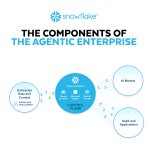


Routing is the hard part of multi-model systems - matching task attributes to model strengths (or an ensemble of them), optimizing cost, preserving cache, and personalizing over time so the same prompt can route differently for different users.
Nexus Auto does that per turn: ensembles open models on @FireworksAI_HQ for the easy work, Claude/GPT on your keys when the task needs it.
Stable ID, Pareto cost, zero data retention, drops into existing tools. That’s the control plane that makes specialized intelligence practical.

Dwarak Rajagopal retweeted
lots of speculation about fireworks in sf tonight
not related to elections
we at @FireworksAI_HQ had our inaugural Forge conference and a namesake display is the best way to wrap it
huge thanks to our incredible speakers, videos will be out shortly at fireworks.ai/forge

Dwarak Rajagopal retweeted

Start with open models. Ensemble them to lower costs. Train on what makes your business unique.
Today at Forge, we’re announcing new capabilities to make that practical for our customers, from AI-natives to Fortune 500.
Details + request access: fireworks.ai/blog/fireworks-…

Dwarak Rajagopal retweeted
We’re working to build the largest collection of private and public practitioner evals.
Today, 31 new partners join the Specialized Intelligence Index, building on the expertise of our founding partners.
Compare leading models on real work and see where training could pay off.
fireworks.ai/specialized-int…
This is the unlock for real-time coding agents. DeepSeek just wrote a full Tetris game in ~5 seconds. No more context switching while the model thinks - agent loops are about to feel completely different.

DeepSeek V4.1 Flash 1017 runs at 1,521+ tok/s on Fireworks Ultrafast.
Fast enough to ship Tetris in 11 seconds, 7x faster than Claude Opus 5.5.
Join the Ultrafast waitlist: bit.ly/3UA0wKq
1
3
189
This is research done in the right direction.
The question wasn’t “can we make it smarter.” It was “can we make it stop talking so much and still be just as good.”
Apparently yes. 40% fewer tokens. And now it’s sitting on top of HN.


The expensive part of a reasoning model is not the answer. It’s the tokens spent getting there.
Ember-1 is what happens when research and serving are the same stack: shorter traces, same quality, live on serverless.
Ember-1 is a specialized model from Fireworks Research designed to make every token go further.
Built on Kimi K3, it produces shorter reasoning traces, using roughly 40% fewer tokens while maintaining top-tier quality.
fireworks.ai/models/firework…

4
694
Generic leaderboards answer "who’s smartest."
SII answers "smartest at what, at what cost, in production."
Today we're launching the Specialized Intelligence Index (SII): one destination for real-work benchmarks across industries, built by the teams that use them every day.
Hear from Fireworks co-founder @the_bunny_chen on the importance of specialized benchmarks:
3
463
Dwarak Rajagopal retweeted
Many assume that agent spend goes toward output tokens.
When we ran DeepSWE on Astra vs. DeepSeek V4.1-Flash, input tokens outnumbered output 174 to 1. 99.6% were cache hits. Those hits are 60% of the bill.
Net result? Same quality. $0.43/task vs $6.52.

Dwarak Rajagopal retweeted

Meet Gen-1 Slides, Genspark’s first model designed for knowledge work.
Trained with @FireworksAI_HQ from an open-weight base, Gen-1 Slides now powers Standard mode in Genspark AI Slides, delivering frontier quality decks at roughly 1/17th of Opus 5’s price.
Fewer midnight fixes. Better decks by default.
Read the full blog: genspark.ai/blog/gen-1-slide…
Specialized models just got a real training API. GA today.
The most ambitious companies are training models to outperform the frontier on the capabilities that differentiate their business.
Today, we announce the general availability of our Training API and Fireworks Lab, making model specialization accessible to all organizations.

1
311
Dwarak Rajagopal retweeted

I am the product lead for the training platform at @FireworksAI_HQ . Today the Training API and Fireworks Lab are GA.
I won’t walk you through all the features. I want to tell you why teams train with us, because it's usually not the reason you'd expect.
Some teams treat training like a project. Pick a model, tune it, ship it. Done. The teams that win don't think that way. For them it's a long-term bet on owning their AI. And a bet like that needs a partner across the whole development cycle, not one piece of it.
The silent killer is getting the infrastructure wrong. In RL at scale, training and inference stop being two systems and become one loop. The challenges start with model choice, GPU procurement, and room to scale when the run grows. They get harder once the loop is running. Numerics drift between the trainer and the rollout engine, and your learning signal corrupts while every dashboard says the run is fine. GPUs sit at synchronization barriers waiting on a handful of long completions. Weight sync eats the step time you thought was going to training. Most teams find this weeks in, after stitching compute, inference, and training together themselves.
The second gap is expertise, and few organizations hold frontier-lab talent at every layer of the stack. Harness, eval, and reward design. Synchronous or async RL. How much weight staleness the algorithm tolerates. Every one of those is a place to stall, and none of them is the actual problem you set out to solve. The problem was the thing you wanted the model to do. The rest is tax.
That's the difference between a product and a partner. We bring the frontier lab-grade infrastructure and meet you wherever you are. Start on Managed Training, bring your data or evals, we run the loop. Want more control, use the Training API on Serverless and iterate on your reward or recipe fast. Ready to scale, move to Dedicated for full-parameter runs. Want people in the room, Fireworks Lab embeds researchers, engineers, and a PM with your team, from co-design all the way to a custom build we hand over. Same platform the whole way up, every model already enabled for training on elastic compute. You're not locked to one model, one GPU type, or one cluster size.
The pushback I sometimes get is "we'll just do this in-house," and my answer is "at what cost?" How much do you value time to market? And where do you draw the line on quality? Customers tell us they get 2-4x more iteration on the same budget with us than with DIY or other setups. For most, the higher-ROI move is to put their people on data, evals, and product taste and let us do the rest better, faster, and cheaper.
Because none of it matters if the model isn't good enough to ship. That's the part people miss. Done right, a specialized model doesn't just keep up with the frontier on your task. It beats it.
One more thing on cost, because people benchmark it wrong. It's not about cheap GPU-hours. It's quality per GPU and how fast you iterate on performance/quality. We've had large tech teams run full-parameter RL on Fireworks with a fraction of the GPUs their in-house setup needed. Cheap hours don't help if you need twice as many and move half as fast. We've run RL on 10,000+ GPUs, so this holds at real scale. Full-parameter, not just LoRA.
Renting intelligence gets you the average of everyone's tasks, at a premium, on someone else's roadmap. Owning yours is a bet you should make with the right partner.
Build your own frontier → fireworks.ai/training

Quality with speed isn’t day-0 at all costs. If we can’t explain the tokens, we don’t ship the model.
GLM-5.3-Flash is live on Fireworks on day… 2
Why? Because we take quality very seriously. We found a benchmark discrepancy we couldn’t explain, so we delayed the launch to investigate.
Day 0 (Wed): we saw 2x longer thinking on reasoning-heavy benchmarks (AIME & GPQA) for open source engines compared with @Zai_org API. Same scores, worse token efficiency. Agentic benchmarks looked good.
We decided to investigate further, as overthinking might become a quality problem if max_tokens are reached
Day 1 (Thu): as other non-official providers launched, their APIs had thinking in the range of open-source engines: longer than Z.ai.
We launched a private preview endpoint with disclaimers to a few customers and worked with them to assess quality
Day 2 (Fri): the official Z.ai API updates. We rerun benchmarks: reasoning is now similarly long, consistent with vllm/sglang. Rest of the benchmarks, both public and internal, check out too.
We launched GLM-5.3-Flash publicly: fireworks.ai/models/firework…
More details below


5
773
Dwarak Rajagopal retweeted

You can only be considered a post-training provider if you work with Harvey


Dwarak Rajagopal retweeted

📣 @Kimi_Moonshot's Kimi K3, an open-weight model, is now generally available and rolling out in GitHub Copilot.
The model shows frontier-level abilities on agentic coding with highly cost-effective pricing. It is hosted by @FireworksAI_HQ. Learn more. 👇
github.blog/changelog/2026-0…
Dwarak Rajagopal retweeted
Running fast is not enough, you need fast AND correct
An excellent addition from @ArtificialAnlys to make sure that the flashy speed numbers are backed by 100% matching accuracy


Announcing the Artificial Analysis Endpoint Accuracy Index, measuring how much of an open weights model's accuracy each serverless API endpoint preserves. We are initiating coverage with GLM-5.2, gpt-oss-120b and DeepSeek V4 Pro, with Kimi K3 coming soon
Providers trade off accuracy to optimize for speed and cost. They quantize weights, write custom kernels and tune their inference stacks, and sometimes they simply ship bugs. We are bringing the rigor of our Artificial Analysis Intelligence Index to measuring endpoints, so developers can pick providers on accuracy, not just price and speed
We benchmark each serverless endpoint against our own self-hosted reference deployment of the official weights, where 100% represents matching the reference. An endpoint is at reference parity when its result falls within the 95% confidence interval of the reference. Coverage is live for GLM-5.2, gpt-oss-120b and DeepSeek V4 Pro, with Kimi K3 accuracy coverage launching soon
Key elements of the Endpoint Accuracy Index:
➤ Three areas, equally weighted: tool calling (BFCL-500, 500 questions, 3 repeats), scientific reasoning (HLE-250, 250 questions, 10 repeats) and long context recall (AA-LCR-25, 25 questions, 10 repeats). Each subset separates endpoints on the serving choices that drive accuracy differences, with repeats sized for tight confidence intervals
➤ Reference deployment: we self-host the official weights at the lab's recommended precision, following the lab's serving recipe, and publish the complete commands for each reference
➤ Inference parameters: we run the model's highest supported reasoning mode and each endpoint's highest supported output length and context window
➤ Confidence intervals: the parity test accounts for uncertainty in both the endpoint's runs and the reference's runs
➤ Rotating coverage: models enter once sufficient number of providers serve them and exit when a newer version in the same family supersedes them. We benchmark new endpoints as providers launch them and refresh all listed endpoints periodically
➤ Point in time: each result carries the date it was measured, with multi-day benchmarks dated to their final day
Key results for GLM-5.2
➤ Output token limits restrict accuracy. Restrictive limits cut responses off before the model finishes reasoning, and the most restrictive endpoints score half the reference or less on HLE-250
Key results for gpt-oss-120b
➤ Tool call handling separates endpoints. Providers parse and format tool calls differently, and some endpoints score 22% on BFCL-500 against 37% for the reference
➤ Serving configuration changes what the model does at the same requested settings. Some endpoints produce far fewer reasoning tokens at the same configured level, and restricted context windows truncate long context tasks
Key results for DeepSeek V4 Pro
➤ DeepSeek V4 Pro endpoints are more in line with the reference. Majority of the endpoints are at reference parity, and DeepSeek's own first-party endpoint scores slightly above the reference
