


There has NEVER been easier to build something of your own.
A new portfolio, a tool that turns your 9 to 5 into a 9 to 3, or the side project you’ve been putting off for years. A few examples from people in my life just this month:
A neighbor who runs sales ops at a Fortune 500 company is rebuilding their whole sales onboarding experience
My dad built a website to manage the reservations and details for his upcoming trip
My doorman is launching an ecommerce business with his girlfriend using our Shopify and Stripe connectors
If you’ve been waiting for a sign, these billboards should do the trick. Post a picture of any you come across in the wild and I'll send a little something your way.


Dylan Hattem retweeted

If history tells us anything, it's that the long-term impact of new technology is difficult to anticipate from its earliest applications.
It took smartphones more than a decade to reach 80% of people in the US.
One of the most important moments in smartphone adoption came in 2008, when Apple launched the App Store.
What followed was an entirely new wave of companies. Uber, Instagram, and Spotify recognized what became possible when millions of people had a computer in their pocket. They built products around changing human behavior and created markets that barely existed before.
There's an important distinction between advancing a technology and making it useful to society at scale. The existence of a powerful technology doesn't automatically translate into widespread adoption, just as the invention of the internet didn't immediately produce the digital economy we know today.
It takes human and institutional behavior change to unlock the potential of new technology.
The smartphone made new business models possible, but it was the applications that gave people more reasons to use the technology every day.
We're in a similar situation with AI. We've made extraordinary progress in developing increasingly capable models. But we're much, much earlier in the transition than people realize.
We're measuring intelligence, comparing models, discussing agents, and anticipating the next breakthrough. All of that is important, but technological progress, and behavioral transformation, don't happen at the same pace.
If history repeats, today won’t be seen as the moment when we had already figured out AI’s most important applications. Instead, we’ll look back and see it as the moment when key foundations were established for new business models, habits, and industries that would emerge over the following decades.
And I think right now is a rare moment because the possibilities created by technology are expanding faster than our understanding of what to do with them.
The opportunity isn't simply to experiment with new software. It's to develop a deeper understanding of the world around us: how people behave, where existing systems fall short, and which problems remain unsolved.
In this era, the most consequential changes to human behavior, and companies manifesting them, may not be built by those who understand AI best, but by those who recognize what becomes possible when technological capabilities meet a deep understanding of human needs.
The greatest impact of a general-purpose technology is rarely determined by what its inventors imagined. It's determined by what millions of others eventually discover they can do with it.
Humanity is just getting started.


What an honor!! Lovable is on TIME’s list of the best inventions of 2026.
Two (quick) things I find most fascinating about this:
1) I get to work at a company that is quite literally changing how we build and interact with the internet, and I get to see it every day with our partners and their clients
2) The amount of innovation across so many industries, from redesigned sidewalk sheds (my New Yorkers know what’s up) to sustainable silk inspired by spiderwebs to new aviation companies





Dylan Hattem retweeted
The distribution game is hard.
@Lovable just entered the arena.
Create & launch ads directly in Lovable, to Google, YouTube, Instagram and Facebook.
Get advice on what is working, and your next best marketing move.

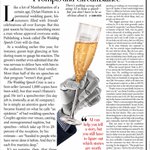
Some things you can’t make up: I’m featured in Town & Country magazine this month
A few months ago I published a book called The Wedding Speech Crisis. A physical book. It’s on Amazon, at Target and in local bookstores.
Through @Substack and Cami Fateh's vision, it caught the eye of the folks at Town & Country and they nailed the story
Opening line of the article: "Like a lot of Manhattanites of a certain age, Dylan Hattem is a perennial wedding guest, his summers filled with friends’ celebrations all over Europe. But this past season he became something more: a man whose approval everyone seeks. Publishing a book called The Wedding Speech Crisis will do that."
Honestly, there wasn’t a big plan behind the book. I had simply sat through a lot of bad wedding speeches and felt inspired to do something about it.
No publisher, no PR contacts, here we are...
🤖 Made with AI


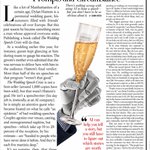
Some things you can’t make up: I’m featured in Town & Country magazine this month.
A few months ago I published a book called The Wedding Speech Crisis. Yes, a physical book. It’s on Amazon, at Target and in local bookstores.
Through Substack and Cami Fateh's vision, it caught the eye of the folks at Town & Country and they nailed the story.
Opening line of the article: "Like a lot of Manhattanites of a certain age, Dylan Hattem is a perennial wedding guest, his summers filled with friends’ celebrations all over Europe. But this past season he became something more: a man whose approval everyone seeks. Publishing a book called The Wedding Speech Crisis will do that."
Honestly, there wasn’t a big plan behind the book. I had simply sat through a lot of bad wedding speeches and felt inspired to do something about it.
🤖 Made with AI


Dylan Hattem retweeted
before Lovable starts building, it sketches out what your app will look like, super cool to see before the actual building begins.
i built a meme generator that creates memes based on my prompts. It picks the image and writes the copy


Dylan Hattem retweeted

The easiest way I can explain Lovable Drafts:
Git branches, but for everyone.
Create a separate version.
Prompt freely.
Break things.
Try a completely different approach.
Like it? Accept it back into your project.
Don’t? Delete it.
You don’t need to know what a branch or merge is.