

Co-founder of NØNOS. Cryptography, zero-knowledge, formal verification. A privacy OS that has to prove itself before it boots.
Ø
Joined November 2022
- Tweets8.6K
- Following272
- Followers946
- Likes12.3K



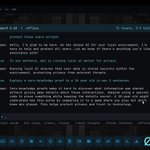



Private chat coming on NØNOS 0.9.3: install Profanity from the Marketplace.
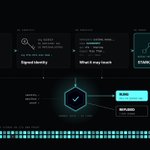
Every package is signature-checked before install. XMPP traffic goes over anonymous networks, so your server sees an exit address, never yours.
OMEMO end-to-end encryption on top.
Coming soon. Coming more options.


𝚎𝙺 retweeted

You can win up to $50,000 from @MultiHopper in our new Build campaign.
superteam.fun/earn/listing/m…
You have around 50 days to build or integrate into your product and generate at least $100,000 worth of transaction volume through that integration to qualify.
I've had a couple of people reach out to me and say that that's impossible, and I have to tell you a few things.
Firstly, I'm putting up this money, or at least the guaranteed prizes, from my own cash. I'm doing this because I believe wholeheartedly that we provide incredible value through this integration. Just by integrating us, you're also integrating TRM Labs, who are, in my opinion, the leaders in the compliance stack. This means any transactions that go through MultiHopper are automatically scanned (destination, source, and route) without leaking it for AML, sanctioned, OFAC, CTR, illegal, and stolen funds.
And that's just the side benefit.
Our system gives you on-chain, high levels of privacy for transmission and transactions that you can build into any of your products, both for developers and agentic commerce.
You get programmability and the ability to wrap and route your assets through any wallet in existence without an assigning authority. Yes, that means you can route through every centralized exchange wallet, any decentralized exchange wallet, key opinion leader wallets, you name it. It's all up for grabs. We're the only people who have made this technology possible in scale.
Can you trust us? The Solana Foundation has posted about us, and we're part of Super Team Germany. We came in as one of the top three startups in the Visa Super Team Germany track at @Colosseum.
We have live clients who are all using us increasingly in scale, and we've done over $3 million in transaction volumes, completely bootstrapped.
Heck, if you're trading a token that has done a migration through migrate.fun, you're most likely exposed to a token that has gone through MultiHopper to do their initial distributions so that they can break up the migration bubble.
Over the next two weeks, we're going to be shipping huge updates to our security key handling and unique, proprietary privacy. We're not just rebundling some other product to get that privacy. It's all proprietary technology and methods, most of which are patent protected.
When we built MultiHopper, we gave ourselves 90 days to build it, test it, and get the first transactions through. We did it in less time than that and with a quarter of the budget we set out, and that budget was tiny.
Now, people who are building in this campaign don't need to even have any of that lift because the hard work has already been done by us.
You could be building swaps that have privacy and programmable routing built in, as well as a complete compliance stack. Agentic applications for the transmission and transaction of capital. Market makers with built-in programmability, compliance, and privacy.
Honestly, if you can't get 1,000 people to transmit or transact $100, or 100 people to do $1,000 within that time period, then you're not building a product for users. You're not establishing who your user base is or scaling within it.
You're most likely building hypothetical technology that will go to the startup graveyard because you don't have a customer. You don't know what their need is, and you don't know how to create a benefit. Certainly, if you can't market and distribute your product, then you're going to the startup graveyard.
You could be using any number of the launch pads to launch your token, which has an economy built into this.
The only limit is your limited belief in yourself and your creativity.
Stop hoping, get hopping.

𝚎𝙺 retweeted
Your payments shouldn't be everyone's business.
Today, every payment on Ethereum is public. Who you paid, how much, and everything else in your wallet, for anyone to see, forever. Paying a freelancer shows them your whole balance. Paying a supplier shows your competitors who you work with.
That's why we're building NØNOS Shield: private ETH and $NOX payments, checked by Ethereum itself.
The idea is simple. The details of your payment stay private, while Ethereum still checks that the payment is valid. You don't need to understand the technology underneath to use it.
Shield is now working on Ethereum's Sepolia test network. Deposits and private transfers work today, from a normal browser, and anyone can try them.
Next comes more testing and an independent security audit. Only after that do we launch on Ethereum mainnet.
Try it and tell us what you'd pay for privately first.

𝚎𝙺 retweeted
Shield is live on the Sepolia test network.
You deposit ETH or $NOX, then pay anyone privately.
Your browser makes the proof and Ethereum checks it on chain. Anyone can see that a payment settled but nobody can see who got paid or how much.
Links and the full flow in the thread.
Our next release ships tomorrow (guess what is) with v0.9.3 following next week.
Our team is moving fast and the roadmap is on schedule to be released alongside the tokenomics. Full release notes will be published with each drop.

Nil is live.
It's a workspace for teams where you sign in with your wallet and your docs are encrypted before they leave the browser. $NOX does the paying and the voting.
Links and the full tour in the thread.
𝚎𝙺 retweeted
Yeah, the parallel is there. Both sides keep trying to move the check earlier so you’re not stuck containing something that already got to run.
What still feels different to us is what you’re actually proving. On the chain side it’s usually that computation or transition was valid. On our side it’s the binary itself and the exact capabilities that will be installed, before a process even exists. If those two get out of sync you end up with the same trust problem either way.
We’re extracting the MIR the compiler actually emits so the Lean theorems stay on the code that ships rather than a model that can drift. Still early. Curious how far you think the agent side needs to push that *before it exists* check.

“Lilith is drawing a parallel between “proof-before-run” agent security (in a capability microkernel) and what blockchain systems are already trying to do with cryptographic proofs.
The idea in the parent post
@nonossystems is describing a model where an agent (or any process) does not get to run until it has passed hard checks:
•The binary itself must produce a transparent STARK attestation.
•Dual signatures and formal proofs (Lean theorems on the extracted code) must succeed.
•Only then does it receive a PID and a tightly limited set of signed capabilities.
•After that, it can only use the rights that were explicitly proven and signed.
This flips the usual OS approach. Most systems start the process and then try to contain it with sandboxes, permission checks, and monitoring.
The microkernel approach wants the proof of safety and the exact capability set before the process is allowed to exist.
What blockchain is doing that feels “the same”:
Blockchain (especially Ethereum and the broader ZK ecosystem) has been wrestling with an analogous problem for years:
how do you let untrusted parties run code or compute something, and still have strong guarantees that it happened correctly and stayed within allowed bounds?
•Zero-knowledge proofs / STARKs: A prover can demonstrate that a computation was executed correctly without the verifier having to re-run it or trust the prover. This is conceptually close to “attest the binary / the execution before (or instead of) trusting the runner.”
•Verifiable computation & smart-contract execution: On-chain verification of proofs means the network only accepts results that carry cryptographic evidence. There is no “run first, sandbox later” trust model for the critical path.
•Capability-like constraints: Many blockchain designs try to enforce precise, least-privilege access (what a contract or a rollup can do, what data it can touch, what state transitions are valid) through the combination of the protocol rules and the proofs that accompany the computation.
•The same gap: Both sides keep running into the problem that once something is allowed to run (or once a process/contract is live), restricting it further is hard. Blockchain projects keep pushing more of the verification earlier—into the proof, into the circuit, into the attestation—rather than relying purely on runtime checks.
Lilith’s short reply (“Same thing, they are trying to figure out with blockchain”) is pointing at this overlap: the microkernel people are trying to move trust from “sandbox the running agent” to “prove the agent’s binary and capabilities before it gets a process,” while blockchain people have been trying to move trust from “trust the executor” to “cryptographically prove the computation was done correctly under the stated rules.”
Both are attempts to replace ambient trust with explicit, checkable evidence of what is allowed to happen.”
𝚎𝙺 retweeted

Helping farmers and food businesses level the playing field against industry giants.
Great produce can go unnoticed when people don’t know you exist, can’t see what’s in stock or have no way to buy from you.
Even someone passing your farm or shop could be looking for exactly what you sell, without realizing it!
Checkout how were changing the future of food!
demo.communitygrocerystore.c…
Android & iPhone App should be published in 2-3 weeks. Final testing in progress.
#agriculture #innovation #technology #startups #venturecapital #sustainability #circulareconomy #AgTech #SmartFarming #Farming #FutureOfFood #FoodTech

𝚎𝙺 retweeted
Good Morning,
Want to try NØNOS tonight? QEMU, a few commands and you're booted. Download it, check the hashes, run it.
github.com/NON-OS/releases
𝚎𝙺 retweeted
NØNOS in VirtualBox ? Turn EFI on, use SATA and you're on the desktop in a few minutes.
github.com/NON-OS/releases
𝚎𝙺 retweeted
Most operating systems treat root as the end of the security story. Get root and it's over.
NØNOS treats root as a non-event. We ran a full administrator shell and spent the session trying to break out of it. The kernel refused everything and told us why each time.
A thread on why that's possible 👇
𝚎𝙺 retweeted
Scheduled maintenance today in an hour, 18:30 CEST | 16:30 UTC | 12:30 ET.
nonos.software is going offline to prepare the NØNOS 0.9.2 release and adding new docs, release notes and downloads.
Back with the release.

𝚎𝙺 retweeted
Local inference is a solved problem but verified local inference isn't.
This is Qwen3 0.6B on NONOS 0.9.2.
The weights are SHA-256 pinned to a signed catalogue and checked before they load. The runtime is a capsule the kernel verifies before it executes with no cloud and no account.

4/
linux python3 - perl - make - sqlite3 - rg - openssl with ml-kem
real static linux binaries in the base image, each proved like any other capsule. linux isn't the host here. it's a guest the kernel checks before every launch

