


edioapp retweeted
We're at L-8 for #LaunchDemo2 with @VirginOrbit!
With just over a week until the launch window opens, we are full of excitement! Check out our story to learn more about the ELaNa 20 mission and hear from its managers ➡️ go.nasa.gov/3qOSud6


edioapp retweeted

Thanks @KathyLueders, @NASA_LSP and @SpaceX for your work making our @NASAEarth #S6MF launch safer! – at McLean, VA


edioapp retweeted
What have we done! 😱😳 Spacecraft we launched captured these creepy cosmic views! 🕷️👁️🎃
From the launch pad to spooky discoveries like these, happy #Halloween from @NASA's Launch Services Program! #NASAHalloween


edioapp retweeted

.@NASA and @SpaceX are now targeting Nov. 14 at 7:49 p.m. EST for the launch of the first crew rotation mission to the @Space_Station.
Join us on Wednesday, Oct. 28 at 4 p.m. EDT for a media teleconference to discuss the upcoming launch: go.nasa.gov/35IjfWW

edioapp retweeted

We're launching the world's latest Earth-observing satellite to monitor sea levels & provide data for weather forecasting and climate models.
5 things to know about Sentinel-6/Michael Freilich, a historic U.S.-European partnership: go.nasa.gov/3iMiv7r

ALT Illustration of Sentinel-6/Michael Freilich satellite orbiting Earth


edioapp retweeted
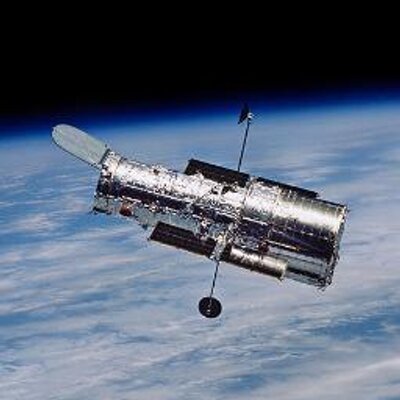
#HubbleClassic Galaxies clash & stars form in Stephan's Quintet.
At the center, two galaxies collide as stars burst to life around them. Gravitational tugs on the top-right galaxy spark star formation there. Star birth lights up the top-left galaxy, too: go.nasa.gov/2FhMypo

edioapp retweeted
#HubbleFriday Colorful stars pack together in this Hubble image of globular cluster NGC 1805.
This tight grouping of thousands of stars is located near the edge of the Large Magellanic Cloud, a satellite galaxy of our own Milky Way: go.nasa.gov/3k9bI9a

edioapp retweeted
#HubbleClassic Normal spiral galaxies appear flat when viewed from the side. But the disk of this unusual edge-on galaxy, called ESO 510-G13, is warped. The distortion is likely caused by the gravitational pull of another galaxy: go.nasa.gov/3ixHyfh


edioapp retweeted
#HubbleClassic In the heart of the Orion Nebula lie four huge, bright stars, known as the Trapezium.
In the 1990s, Hubble viewed the Trapezium in both visible (left) and infrared light (right). Its infrared view revealed hundreds of fainter stars nearby: go.nasa.gov/2V8HmJR

