Edoardo Cetin (@edo_cet) header
Edoardo Cetin (@edo_cet) profile picture

ML Ph.D., Research Scientist @SakanaAILabs. Previously intern @AIatMeta (FAIR), #Twitter (Cortex team), Toyota, and Goldman Sachs.

Joined May 2022
Photo by Edoardo Cetin (@edo_cet)Photo by Edoardo Cetin (@edo_cet)Photo by Edoardo Cetin (@edo_cet)Photo by Edoardo Cetin (@edo_cet)Photo by Edoardo Cetin (@edo_cet)Photo by Edoardo Cetin (@edo_cet)Photo by Edoardo Cetin (@edo_cet)Photo by Edoardo Cetin (@edo_cet)Photo by Edoardo Cetin (@edo_cet)Photo by Edoardo Cetin (@edo_cet)
Edoardo Cetin retweeted
We are excited to share our latest work, together with @nyuniversity: "Dream-Cubed: Controllable Generative Modeling in Minecraft by Training on Billions of Cubes." Blog: pub.sakana.ai/dream-cubed Paper: arxiv.org/abs/2604.22847 Code: github.com/SakanaAI/DreamCub… Generative AI has made incredible progress in language modeling, far beyond other modalities, where words and tokens offer a natural compositional unit for scalable training. This is similar to Minecraft and many other popular video games, where developers rely on cubes, tiles, and other discrete primitives to build rich, interactive worlds. In this work, we show that using cubes as tokens allows large transformers to do the same. Our contribution is two-fold: 1/ We release Dream-Cubed to the research community, a large-scale dataset of Minecraft worlds designed for generative modeling. Our data comprises tens of billions of carefully-balanced cubes from procedurally generated Minecraft terrain and high-quality human-authored maps (obtained with the authors' consent). 2/ We use our data to train a family of powerful transformers for efficient generation of interactive 3D environments at cube resolution. We show how our models allow players to mold the world around them by generating structures, terrain, and maps that are immediately editable and playable. Using high-quality data, we demonstrate that these models can be successfully trained with different training objectives, including both continuous and discrete diffusion, unlocking targeted inpainting, large-scale outpainting, and user-conditioned generation of infinitely sized worlds with fine-grained block-level control.
24
103
22
830
216,041
Edoardo Cetin retweeted
Introducing Sakana Fugu: A full multi-agent orchestration system accessible via a single model API. Our ‘Fugu Ultra’ model matches the performance of Fable and Mythos, delivering frontier capability without the risk of export controls. Try it: sakana.ai/fugu 🐡
1,186
5,836
3,885
37,635
26,532,774
Edoardo Cetin retweeted
The human brain🧠 is incredibly efficient because it only activates the specific neurons needed for a thought. Modern LLMs naturally try to do this too (> 95% of neurons in feedforward layers stay silent for any given word), but our hardware punishes them for it. One of the most frustrating paradoxes in deep learning: making a model do less math often makes it run slower. Why? Because unstructured sparsity introduces irregular memory access, and GPUs are built for predictable, dense blocks of math. We teamed up with @NVIDIA to try to fix this hardware mismatch. Instead of forcing the GPU to adapt to the sparsity, we built a "Hybrid" format that reshapes the sparsity to fit the GPU. Our sparsity format (TwELL) dynamically routes the 99% of highly sparse tokens through a fast path, and uses a dense backup matrix as a safety valve for the rare, heavy tokens. Through TwELL and a new set of custom CUDA kernels for both LLM inference and training, we translated theoretical sparsity into actual wall-clock speedups: >20% faster training and inference on H100 GPUs, while also cutting energy consumption and memory requirements. Paper: arxiv.org/abs/2603.23198 Blog: pub.sakana.ai/sparser-faster… Code: github.com/SakanaAI/sparser-… ⚡️
How do we make LLMs faster and lighter? Don’t force the GPU to adapt to sparsity. Reshape the sparsity to fit the GPU! ⚡️ Excited to share our new #ICML2026 paper in collaboration with @NVIDIA: "Sparser, Faster, Lighter Transformer Language Models". This work introduces new open-source GPU kernels and data formats for faster inference and training of sparse transformer language models: Paper: arxiv.org/abs/2603.23198 Blog: pub.sakana.ai/sparser-faster… Code: github.com/SakanaAI/sparser-… While LLMs are undoubtedly powerful, they are increasingly expensive to train and deploy, with a large part of this cost coming from their feedforward layers. Yet, an interesting phenomenon occurs inside these layers: For any given token, only a small fraction of the hidden activations actually matter. The rest approximate zero, wasting computation. With ReLU and very mild L1 regularization, this sparsity can exceed 95% with little to no impact on downstream performance. So, can we leverage this sparsity to make LLMs faster? The challenge is hardware. Modern GPUs are optimized for dense matrix multiplications. Traditional sparse formats introduce irregular memory access and overheads that cancel out their theoretical savings for GEMM operations. Our contribution is twofold: 1/ We introduce TwELL (Tile-wise ELLPACK), a new sparse packing format designed to integrate directly in the same optimized tiled matmul kernels without disrupting execution. 2/ We develop custom CUDA kernels that fuse multiple sparse matmuls to maximize throughput and compress TwELL to a hybrid representation that minimizes activation sizes. We used our kernels to train and benchmark sparse LLMs at billion-parameter scales, demonstrating >20% speedups and even higher savings in peak memory and energy. This work will be presented at #ICML2026. Please check out our blog and technical paper for a deep dive!
52
493
46
3,410
436,574
Edoardo Cetin retweeted
How do we make LLMs faster and lighter? Don’t force the GPU to adapt to sparsity. Reshape the sparsity to fit the GPU! ⚡️ Excited to share our new #ICML2026 paper in collaboration with @NVIDIA: "Sparser, Faster, Lighter Transformer Language Models". This work introduces new open-source GPU kernels and data formats for faster inference and training of sparse transformer language models: Paper: arxiv.org/abs/2603.23198 Blog: pub.sakana.ai/sparser-faster… Code: github.com/SakanaAI/sparser-… While LLMs are undoubtedly powerful, they are increasingly expensive to train and deploy, with a large part of this cost coming from their feedforward layers. Yet, an interesting phenomenon occurs inside these layers: For any given token, only a small fraction of the hidden activations actually matter. The rest approximate zero, wasting computation. With ReLU and very mild L1 regularization, this sparsity can exceed 95% with little to no impact on downstream performance. So, can we leverage this sparsity to make LLMs faster? The challenge is hardware. Modern GPUs are optimized for dense matrix multiplications. Traditional sparse formats introduce irregular memory access and overheads that cancel out their theoretical savings for GEMM operations. Our contribution is twofold: 1/ We introduce TwELL (Tile-wise ELLPACK), a new sparse packing format designed to integrate directly in the same optimized tiled matmul kernels without disrupting execution. 2/ We develop custom CUDA kernels that fuse multiple sparse matmuls to maximize throughput and compress TwELL to a hybrid representation that minimizes activation sizes. We used our kernels to train and benchmark sparse LLMs at billion-parameter scales, demonstrating >20% speedups and even higher savings in peak memory and energy. This work will be presented at #ICML2026. Please check out our blog and technical paper for a deep dive!
21
117
13
766
438,342
Edoardo Cetin retweeted
🐟 Sakana Chat 公開 🐟 Sakana AIは、Sakana Chatを無料公開しました。 chat.sakana.ai/ Web検索機能と高速レスポンスを備えたAIチャットです。日本国内から、どなたでもお使いいただけます。ぜひ、お試しください。
110
1,601
700
5,887
1,765,402
Edoardo Cetin retweeted
We’re excited to introduce Doc-to-LoRA and Text-to-LoRA, two related research exploring how to make LLM customization faster and more accessible. pub.sakana.ai/doc-to-lora/ By training a Hypernetwork to generate LoRA adapters on the fly, these methods allow models to instantly internalize new information or adapt to new tasks. Biological systems naturally rely on two key cognitive abilities: durable long-term memory to store facts, and rapid adaptation to handle new tasks given limited sensory cues. While modern LLMs are highly capable, they still lack this flexibility. Traditionally, adding long-term memory or adapting an LLM to a specific downstream task requires an expensive and time-consuming model update, such as fine-tuning or context distillation, or relies on memory-intensive long prompts. To bypass these limitations, our work focuses on the concept of cost amortization. We pay the meta-training cost once to train a hypernetwork capable of producing tasks or document specific LoRAs on demand. This turns what used to be a heavy engineering pipeline into a single, inexpensive forward pass. Instead of performing per-task optimization, the hypernetwork meta-learns update rules to instantly modify an LLM given a new task description or a long document. In our experiments, Text-to-LoRA successfully specializes models to unseen tasks using just a natural language description. Building on this, Doc-to-LoRA is able to internalize factual documents. On a needle-in-a-haystack task, Doc-to-LoRA achieves near-perfect accuracy on instances five times longer than the base model's context window. It can even generalize to transfer visual information from a vision-language model into a text-only LLM, allowing it to classify images purely through internalized weights. Importantly, both methods run with sub-second latency, enabling rapid experimentation while avoiding the overhead of traditional model updates. This approach is a step towards lowering the technical barriers of model customization, allowing end-users to specialize foundation models via simple text inputs. We have released our code and papers for the community to explore. Doc-to-LoRA Paper: arxiv.org/abs/2602.15902 Code: github.com/SakanaAI/Doc-to-L… Text-to-LoRA Paper: arxiv.org/abs/2506.06105 Code: github.com/SakanaAI/Text-to-…
76
345
110
2,167
665,259
Edoardo Cetin retweeted
Introducing DroPE: Extending the Context of Pretrained LLMs by Dropping Their Positional Embeddings pub.sakana.ai/DroPE/ We are releasing a new method called DroPE to extend the context length of pretrained LLMs without the massive compute costs usually associated with long-context fine-tuning. The core insight of this work challenges a fundamental assumption in Transformer architecture. We discovered that explicit positional embeddings like RoPE are critical for training convergence but eventually become the primary bottleneck preventing models from generalizing to longer sequences. Our solution is radically simple: We treat positional embeddings as a temporary training scaffold rather than a permanent architectural necessity. Real-world workflows like reviewing massive code diffs or analyzing legal contracts require context windows that break standard pretrained models. While models without positional embeddings (NoPE) generalize better to these unseen lengths, they are notoriously unstable to train from scratch. Here, we achieve the best of both worlds by using embeddings to ensure stability during pretraining and then dropping them to unlock length extrapolation during inference. Our approach unlocks seamless zero-shot context extension without any expensive long-context training. We demonstrated this on a range of off-the-shelf open-source LLMs. In our tests, recalibrating any model with DroPE requires less than 1% of the original pretraining budget, yet it significantly outperforms established methods on challenging benchmarks like LongBench and RULER. We have released the code and the full paper to encourage the community to rethink the role of positional encodings in modern LLMs. Paper: arxiv.org/abs/2512.12167 Code: github.com/SakanaAI/DroPE
38
259
74
1,770
473,202
Edoardo Cetin retweeted
We’re excited to introduce ShinkaEvolve: An open-source framework that evolves programs for scientific discovery with unprecedented sample-efficiency. Blog: sakana.ai/shinka-evolve/ Code: github.com/SakanaAI/ShinkaEv… Like AlphaEvolve and its variants, our framework leverages LLMs to find state-of-the-art solutions to complex problems, but using orders of magnitude fewer resources! Many evolutionary AI systems are powerful but act like brute-force engines, burning thousands of samples to find good solutions. This makes discovery slow and expensive. We took inspiration from the efficiency of nature. ‘Shinka’ (進化) is Japanese for evolution, and we designed our system to be just as resourceful. On the classic circle packing optimization problem, ShinkaEvolve discovered a new state-of-the-art solution using only 150 samples. This is a big leap in efficiency compared to previous methods that required thousands of evaluations. We applied ShinkaEvolve to a diverse set of hard problems with real-world applications: 1/ AIME Math Reasoning: It evolved sophisticated agentic scaffolds that significantly outperform strong baselines, discovering an entire Pareto frontier of solutions trading performance for efficiency. 2/ Competitive Programming: On ALE-Bench (a benchmark for NP-Hard optimization problems), ShinkaEvolve took the best existing agent's solutions and improved them, turning a 5th place solution on one task into a 2nd place leaderboard rank in a competitive programming competition. 3/ LLM Training: We even turned ShinkaEvolve inward to improve LLMs themselves. It tackled the open challenge of designing load balancing losses for Mixture-of-Experts (MoE) models. It discovered a novel loss function that leads to better expert specialization and consistently improves model performance and perplexity. ShinkaEvolve achieves its remarkable sample-efficiency through three key innovations that work together: (1) an adaptive parent sampling strategy to balance exploration and exploitation, (2) novelty-based rejection filtering to avoid redundant work, and (3) a bandit-based LLM ensemble that dynamically picks the best model for the job. By making ShinkaEvolve open-source and highly sample-efficient, our goal is to democratize access to advanced, open-ended discovery tools. Our vision for ShinkaEvolve is to be an easy-to-use companion tool to help scientists and engineers with their daily work. We believe that building more efficient, nature-inspired systems is key to unlocking the future of AI-driven scientific research. We are excited to see what the community builds with it! Learn more in our technical report: arxiv.org/abs/2509.19349
33
247
35
1,381
360,819
Edoardo Cetin retweeted
Introducing Reinforcement-Learned Teachers (RLTs): Transforming how we teach LLMs to reason with reinforcement learning (RL). Blog: sakana.ai/rlt Paper: arxiv.org/abs/2506.08388 Traditional RL focuses on “learning to solve” challenging problems with expensive LLMs and constitutes a key step in making student AI systems ultimately acquire reasoning capabilities via distillation and cold-starting. Enter our RLTs—a new class of models prompted with not only a problem’s question but also its solution, and directly trained to generate clear, step-by-step “explanations” to teach their students. Remarkably, an RLT with only 7B parameters produces superior results when distilling and cold-starting students in competitive and graduate-level reasoning tasks than orders-of-magnitude larger LLMs. RLTs are as effective even when distilling 32B students, much larger than the teacher itself—unlocking a new standard for efficiency in developing reasoning language models with RL. Code: github.com/SakanaAI/RLT
26
238
33
1,023
179,496
Edoardo Cetin retweeted
We’re excited to introduce Text-to-LoRA: a Hypernetwork that generates task-specific LLM adapters (LoRAs) based on a text description of the task. Catch our presentation at #ICML2025! Paper: arxiv.org/abs/2506.06105 Code: github.com/SakanaAI/Text-to-… Biological systems are capable of rapid adaptation, given limited sensory cues. For example, our human visual system can quickly adapt and tune its light sensitivity to our surroundings. While modern LLMs exhibit a wide variety of capabilities and knowledge, they remain rigid when adding task-specific capabilities. Traditionally, customizing these models requires gathering large datasets and performing often expensive, time-consuming fine-tuning for specific applications. To bypass these limitations, Text-to-LoRA (T2L) meta-learns a “hypernetwork” that takes in a text description of a desired task, as a prompt, and generates a task-specific LoRA that performs well on the task. In our experiments, we show that T2L can encode hundreds of existing LoRA adapters. While the compression is lossy, T2L maintains the performance of task-specifically tuned LoRA adapters. We also show that T2L can even generalize to unseen tasks given a natural language description of the tasks. Importantly, Text-to-LoRA is parameter-efficient. It generates LoRAs in a single, inexpensive step, based solely on a simple text description of the task. This approach is a step towards dramatically lowering the technical and computational barriers, allowing non-technical users to specialize foundation models using plain language, rather than needing deep technical expertise or large compute resources.
47
372
132
1,755
403,535
Edoardo Cetin retweeted
We’re excited to introduce Transformer², a machine learning system that dynamically adjusts its weights for various tasks! sakana.ai/transformer-square… Adaptation is a remarkable natural phenomenon, like how the octopus can blend in with its environment, or how the brain rewires itself after injury. We believe our new system paves the way for a new generation of adaptive AI models, modifying their own weights and architecture to adapt to the nature of the tasks they encounter, embodying living intelligence capable of continuous change and lifelong learning. Paper: arxiv.org/abs/2501.06252 GitHub: github.com/SakanaAI/self-ada…
93
456
163
2,376
462,267
Edoardo Cetin retweeted
Introducing An Evolved Universal Transformer Memory sakana.ai/namm Neural Attention Memory Models (NAMMs) are a new kind of neural memory system for Transformers that not only boost their performance and efficiency but are also transferable to other foundation models, without any additional training! Full Paper: arxiv.org/abs/2410.13166 Code: github.com/SakanaAI/evo-memo… Memory is a crucial component of cognition, allowing humans to selectively store and extract important notions from our ceaseless exposure to information and noise. Our work learns an artificial memory to replicate these capabilities thanks to the power of evolution, leading to smarter, faster, and more adaptable foundation models.
8
115
25
463
167,970
Super excited to share that I joined @SakanaAILabs as a Research Scientist! Looking forward to working with an amazing team to develop new nature-inspired methods and tackle some of AI's most relevant challenges ^^
14
9
3
160
34,075
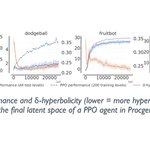
New post with @edo_cet @DrBPChamberlain and @jjh on hyperbolic RL (we are presenting the paper at ICLR tomorrow). This is the first time we use AI-generated illustration from @StabilityAI courtesy of the prompt wizard @hardmaru towardsdatascience.com/hyper…
27
6
90
41,214
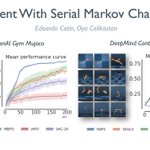
1/Framing action-selection as an iterative 'reasoning' process provides RL agents w/ unlimited expressivity & adaptivity to spend more resources on key decisions. Such benefits yield SotA results on Mujoco & DeepMind Control: Check our #NeurIPS2022 paper: arxiv.org/abs/2210.06766
3
25
3
150
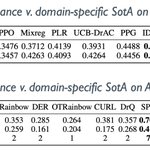
5/To validate the generality of our method, we evaluate across both Mujoco (state-based proprioceptive tasks) and DeepMind Control (pixel-based tasks) benchmarks. Our results show SSPG considerably outperforms all considered SotA algorithms based on the traditional RL framework.
1
9
7/7Check out our paper for all details and many additional results, and do not hesitate to get in touch with any questions! This work was done in collaboration with my incredible supervisor @oyaceliktutan and with help from @JLutzeyer providing great feedback on an early draft😉
2
9