

Lecturer of Visual Perception, University of Edinburgh. Views are my own.
Edinburgh, Scotland
Joined August 2011
- Tweets103
- Following196
- Followers387
- Likes219
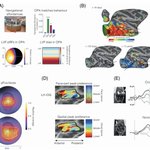
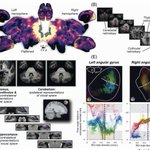



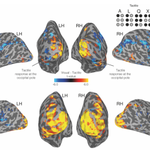
This project was over 3 years in the making, and builds on prior work from ourselves, and many others, to show that retinotopic coding scaffolds the interaction between perception and memory recall - such a fun collaboration!!
This Post is from an account that no longer exists. Learn more
Come and join us in Edinburgh! We’re looking for four permanent positions across a range of disciplines and career stages. Feel free to get in touch for more info.

We’re hiring! Open area search for 4 (!) permanent positions, w/ particular interest in some areas (eg social psych). Feel free to reach out w Qs. Job ad: elxw.fa.em3.oraclecloud.com/…
@SchoolofPPLS @PsychJobs
This was such a fun project with an awesome team @neuro_steel, @RobertsonNeuro and Brenda! Make sure you check Adam’s talk out at VSS!
This Post is from an account that no longer exists. Learn more
This is an amazing opportunity with a wonderful research team - Apply now!!!

✨️ Please RT ✨️
If you're interested in doing a #PhD with me, Prof Meese and @TonyMorland2 then check out the link below 🤩
warwick.ac.uk/fac/cross_fac/…

What a fantastic resource this is. Congratulations @martin_hebart !

Very happy to announce THINGS-data, three massive datasets of fMRI, MEG and similarity ratings of thousands of object images. THINGS-data offers a uniquely broad, systematic and multimodal sampling of object space. For early access please reach out! biorxiv.org/content/10.1101/…

Awesome work by @neuro_steel again! Thanks for including me.
This Post is from an account that no longer exists. Learn more
Couldn’t think of anyone more deserving than Susan. Wonderful scientist, colleague and friend. Congratulations @susanwardle !
This Post is from an account that no longer exists. Learn more
What a fantastic opportunity. Can wholeheartedly recommend this position!
This Post is from an account that no longer exists. Learn more
Amazing work here! The precise mapping of selectivity converges nicely with the more coarse scale retinotopic bias we identified in the human hippocampus.

Very cool! Ties in nicely with recent work in the fMRI literature showing retinotopic encoding of visual stimuli in human hippocampus by @edsilson @Chris_I_Baker @Tknapen and @corticalpete jneurosci.org/content/41/11/…
Ed Silson retweeted

Interested in barriers to hearing technology uptake? Applications are open for a funded PhD @EdinburghNapier. Find out more and apply at findaphd.com/phds/project/ha…
A fitting award for an exceptional scientist and mentor. Well done Chris!

And the 2021 NIH Directors award from NIMH goes to @Chris_I_Baker. “For exceptional impact on the field of cognitive neuroscience, by conducting innovative experiments, developing shared resources, and providing novel….“ Congratulations Chris! directorsawards.hr.nih.gov/2…
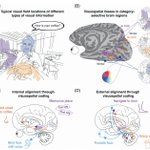
So pleased this lockdown project is now out in @TrendsCognSci! With @iris_groen, @TesDekker & @Tknapen we review evidence for visuospatial coding throughout the brain. We argue that visuospatial coding comes in two main forms: retinotopic maps and visual field biases 1/5


We propose that visuospatial coding (our window onto the world) is not thrown away by the brain but rather is retained to facilitate the exchange of visual information with other functional systems to the benefit of cognition. 5/5
Hope you enjoy it!
authors.elsevier.com/a/1e5F-…
Ed Silson retweeted

Just out in PLOS ONE: an open source tool for mapping the blind spot, based on @psychopy. Created by the incredible Xiao Ling (MSc), co-supervised with the redoubtable @edsilson
Xiao is now a PhD researcher in Biomedical Engineering at U Minnesota
journals.plos.org/plosone/ar…
1/7

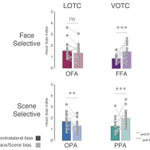
Glad to see this out with @iris_groen & @Chris_I_Baker. We directly compared the strength of 1) contralateral biases and 2) categorical preferences within scene- and face-selective regions on the lateral (i.e. OFA/OPA) and ventral (i.e. FFA/PPA) surface. 1/4

Importantly, this pattern wasn't only in our ROIs but was present throughout visual cortex. In general, contralateral biases dominated posteriorly with categorical biases winning out anteriorly. But again with different transitions across the lateral and ventral surfaces. 3/4

Together, these findings support distinct functional roles for the lateral and ventral visual cortex in terms of the relative importance of the spatial location of stimuli during visual information processing. doi.org/10.1007/s00429-021-0….