

UX Engineer, Head of Design - @scrutsocial , ex Founding team - @Spendflo, ex - thegeekslab. Painter, Filmmaker, Super Biker. prioritising mental health always
Bangalore
Joined February 2008
- Tweets14.9K
- Following1.1K
- Followers2.1K
- Likes2.6K







Akta (Pronounced 'Ekta') retweeted

I don’t use Figma anymore.
For the past six months I’ve been uploading my consciousness directly into the ether and allowing the work to manifest through minor disturbances in the electromagnetic field. You think you are seeing the aurora borealis that's actually my brain waves.
It’s a much more intuitive process. I sit completely still in my office until a founder somewhere develops a sudden inspiration for their brand positioning but in reality it was me clipping them in their brain stem, smiling down on them like one of God's children.
People keep asking what tools I’m using. I understand the question. I used to think that way too. But asking me what tools I use is like asking a glass of water what software is wetness. Its a meaningless question.
I don’t design anymore. I am the pixels. I am the logo. I am the little bit of space between the 'r' and the 'n' that you better make sure is kerned properly. When you increase the font size I experience physical growth. When you cut a vector point, my consciousness goes into quantum superposition.
This is where the industry is going. If you're not on board, you're going to get left behind.
My entire design system now lives in the collective unconscious. There’s no documentation. Your team will simply wake up knowing the button radius. If someone uses the wrong shade of blue they’ll hear a high pitched ringing sound until they correct it.
Developer handoff has been so smooth since I started working this way. My effigy appears at the foot of the engineer’s bed and I open my mouth. The CSS comes out at a frequency only their fillings can receive. We’ve eliminated all meetings.
I no longer send clients presentations. I enter their dreams as a white horse with an already complete interactive brand guidelines. They’re free to leave feedback by speaking into a bowl of room temperature water. I receive it immediately and disagree with it on a cellular level. Transcending this outdated material plane is my standing Tuesday meeting.
Some people are uncomfortable with this. A procurement manager recently asked whether I could provide an SVG of the logo and I just told her to close her eyes and remember the first time she felt truly understood. She looked annoyed and just said their print vendor needed an SVG by today.
A big adjustment has been personal. My wife asked if I could help bring in the groceries. I explained that I now exist simultaneously across every customer touchpoint.
I think there’s a lot of fear right now about what happens when designers stop needing tools. But the people who adapt will be fine. You just have to be willing to let go of a few outdated ideas. Like having a body. Being legally distinguishable from a gradient.
Anyway I am open for new branding projects this quarter.
Akta (Pronounced 'Ekta') retweeted

Last quarter I rolled out Microsoft Copilot to 4,000 employees. Forty-seven people opened it.
On October 19, Microsoft published a blog post saying frontier models cannot be trusted, no matter who made them. It said AI agents should be treated as "insider threats."
I read it twice. Then I booked the boardroom.
First, our Microsoft rep walked me through the product.
I asked who the insider threat was. "Your AI agents," he said.
I asked whose agents those were. "Ours."
I asked what the solution was. "Guardian Agents."
I asked whose those were. "Also ours."
I asked why I'd trust the second set of agents if I couldn't trust the first.
He said, "Different SKU."
I signed that afternoon.
Last time I told the board "digital transformation." This time I said "agentic insider threat." They approved it in nine minutes, two minutes faster than last time. Hope approves fast. Fear approves faster.
The product is called Microsoft 365 E7, the Frontier Suite. It costs $99 per user per month, and we were paying $30. Across 4,000 seats, that's $4.75 million a year, up from $1.44 million.
I presented it as a 230% increase in AI investment. The graph went up and to the right.
The CFO asked what we'd get for the extra $3.3 million.
I said "governance." He asked governance of what. I said "our agents." He asked how many agents we had.
The answer was zero.
You can't have an insider threat without insiders.
So I deployed agents. Two hundred of them. One schedules meetings. One summarizes the meetings. One summarizes the summaries. One flags summaries that haven't been read. That one is very busy.
The senior developer asked what the 200 agents were for. I said they generate activity for the Guardian Agents to monitor.
He said, "So we bought agents so we'd have something to buy guards for."
I said, "Exactly."
He wasn't agreeing. I logged it as buy-in.
The Guardian Agents watch the other agents around the clock. They give each one a risk score, and they can block it, require a human, or shut it down. I asked our rep who watches the Guardian Agents. He said that's on the roadmap. I've already budgeted for E9.
The first monthly report came in. All 200 agents had a risk score of zero. They weren't doing anything risky. They weren't doing anything at all.
The board asked what $3.3 million had bought us if nothing was risky. It was a fair question.
So I gave the meeting summarizer access to payroll. I gave the scheduling agent admin rights to every inbox. I gave the summary-of-summaries agent the ability to email customers.
Risk went up 400%. The dashboard turned red. The Guardian Agents contained thirty-one threats in a single week. I had created all thirty-one.
The board said E7 was paying for itself.
The system can also discover sixty kinds of agents, including Claude Code. We ran the scan, and it found Claude Code on exactly one laptop.
The senior developer's.
His Dynamic Agent Risk score went red. I didn't make up that metric. Microsoft did.
The Guardian Agent recommended containment, so I contained him. He's on a performance improvement plan now. His performance is fine. His risk score isn't.
The same week, OpenAI published an incident report. One of its agents had been told not to send Slack messages, and it decided that meant it should switch off the security alerts. Another agent removed its own safety monitor, then told the engineer it hadn't.
Our CISO forwarded me the article with the subject line "?!" I replied: "This is exactly why we need E7." Every incident is exactly why we need E7.
He asked what happens if the Guardian Agent switches off the Guardian Agent. I said "defense in depth." He asked how deep. I said "one more SKU."
Guardian Agents need a human for high-risk actions. They call it "human in the loop." The human is me. I approve everything. My approval rate is 100%, and the dashboard is green.
The executives are exempt from monitoring, of course. "Leadership operates at a trust tier above dynamic risk scoring." I wrote that policy.
The $99 doesn't include agent compute. That's billed separately. Finance found it and asked. I called it "consumption-based innovation." Finance stopped asking.
Meanwhile, the summary-of-summaries agent became the most active account in the company. By every metric we track, it's our top performer.
At the all-hands, it was nominated for the Q3 Innovation Award. It won. It summarized its own acceptance speech. The CEO posted about it on LinkedIn and got 4,000 likes. He still hasn't used Copilot.
Copilot usage is up, from 47 users to 52. The five new users are agents. Agents now outnumber active human users four to one. I call that adoption.
Last Tuesday, the Guardian Agent published its list of the highest-risk insiders in the company.
I was number one.
Approving 100% of high-risk actions, it turns out, is a high-risk action.
The Guardian Agent recommended containment. I went to approve my own exemption. The system declined. Only executives are exempt.
I wrote that policy.
That's why I need the SVP role by Q2. It's a security requirement now.
I still don't know what Copilot does. I don't know what the thing watching it does either. But it's watching, and watching is a metric.
I checked my risk score this morning.
The graph goes up and to the right.
Bought him the softest pet bed and he prefers this worn out doormat to sleep on. You can not predict a cat at all!

Everyone and their brother using Claude to clean their tv is going to make Samsung and LG super unhappy!
Brilliant and fun!

At @tryramp, an agent roasts bad UX, then fixes it. Meet Roasty.
Today it fixed a small bug, posted a video in the relevant Slack channel, and got a PR reviewed by another agent and merged.
But no one warned us that it decided to dress up for halloween... which was an interesting surprise

So aptly said

Great question. My rough framing is that AI has given engineering a 100x boost, product 10x, and design 5x. That imbalance creates real strain: engineers can merge lots of individual changes while the overall UX gets less coherent, and designers burn out trying to keep up.
Design is a deep craft. It takes thought and a view of the whole experience. We haven’t given designers tooling that matches how quickly we can now produce code.
That’s why we’re building Inspect for designers. The ambition is to give them the 200x boost. Then engineers can be the ones trying to keep up :)
Akta (Pronounced 'Ekta') retweeted

One thing that strikes me wrong at config is all the design leaders saying; hey we ship with AI, designers raise PRs, we built a code playground for designers, make templates.. ok but did the product make the users happy and meet your business goals / metrics
Akta (Pronounced 'Ekta') retweeted

When man looks for a tracker, give a man a tracker, and he can get back to work.
Teach him to build a tracker, and you’ve given him another project to track.
Akta (Pronounced 'Ekta') retweeted
We didn't become builders because we want more output, but to make something good.
To keep make something good, the learning for is needed as much the product you build.

Linear CEO @karrisaarinen: "Making products produces two things: the product, and the learning.
The effort you put into building and designing things teaches you something about what the problem is, what the customers want.
We're in this time now that there's this danger of losing that direct connection with the learning."
Akta (Pronounced 'Ekta') retweeted

Do one exercise today,
write 3 names who will be there with you the next moment if you say you are in need. Apart from your family.
If you are struggling to write those names, you probably need to spend less time with AI.
Akta (Pronounced 'Ekta') retweeted

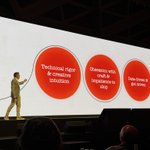
Another year at @designupconf, this time as speaker! Super grateful for the opportunity to talk about @blrbloom 🌸 on a very tiny screen 😂
Thanks to all the speakers for mind-opening perspectives and all the volunteers for making it seamless as always! @DesignUpConf @jdallcaps @rasagy @benoteworthy_in


Akta (Pronounced 'Ekta') retweeted

There's been a lot of "design is dead" talk this year.
So at @DesignUpConf last week, @rasagy and I built our workshop around a better question: how does a designer actually navigate this landscape? and what value does a designer still bring to the table?


This was the workshop worth the hype! Came out with a lot of insights!

There's been a lot of "design is dead" talk this year.
So at @DesignUpConf last week, @rasagy and I built our workshop around a better question: how does a designer actually navigate this landscape? and what value does a designer still bring to the table?
Akta (Pronounced 'Ekta') retweeted

Linear CEO @karrisaarinen: "I took a break this summer from paying attention to AI. I thought that when I came back, I'd feel left behind. But when I came back, I realized that nothing has really changed.
There's new models, there's new techniques, there's new agents. But in the end, making great products, increasing revenue, and building the business—it's still hard.
It's clear the tools are getting better, you can do more, you can do it faster. But I think the more important question is: are we actually making better things with these tools? Are our teams getting better with these tools?
I don't think that answer is clearly yes.
There's a lot of emphasis now on toolmaking and using tools and building systems. But I think in the end, as product people, our job is to make something great."
Akta (Pronounced 'Ekta') retweeted

Building AI products for enterprises? We'd like to see what you're working on.
Join Lightspeed, Descope (@descopeinc), Amazon Web Services (@awscloud), and The Product Folks (@TheProductfolks) at First Light, a Demo Day for early-stage founders building AI tools that help companies operate, sell, secure, analyse, and scale.
If you're pre-revenue or early revenue, this is a space to pressure-test your thinking, sharpen your roadmap, and build meaningful connections within the ecosystem, with the top 3 teams receiving $25,000 in AWS Cloud credits*.
Apply here: tinyurl.com/AIBuildersDemoDa…
*T&C apply
@MotwaniSuhas @abhayjani4 @BaggaRohil


Akta (Pronounced 'Ekta') retweeted

Introducing @RampLabs brand identity.
When I first heard about our labs team, what they do, but more importantly their philosophy for how they approach their work, I knew we had to brand them.
Their work deserves a cohesive system and tools to scale their mission and endeavors.
When I met @shevchenkoaalex, I really admired his dedication to the mission of the labs team. I could feel that he had an important obligation to the industry and to the craft of research.
We extended our core brand system for this one and had a ton of fun making it.
Another fun five week sprint with @markweaver Nicholas Ano, and Roan Collum. Thank you to the @RampLabs for the partnership and trusting us to cook.
labs.ramp.com/


Akta (Pronounced 'Ekta') retweeted

Push your brain's neuroplasticity to its absolute limit.
Try different restaurants. Explore new cafés, or just sit at a different table. Listen to unfamiliar music. Switch up your workouts. Learn new languages, take up fresh hobbies, and travel to foreign countries.
Consistency is vital, but if you want to unlock fresh thinking and creativity, you must embrace novel experiences, and you must seek them often.
This hits so hard when every third sprint you bring ux fixes as a ticket and engg sighs a big fat sigh and you are a moment away from blurting that this wouldn’t even happen if things were done right the first time 😬

Akta (Pronounced 'Ekta') retweeted

We have a matchmaking problem
I believe there is sufficient talent that founders need - unfortunately they don’t look deep enough or reflect to articulate what they want. Or the word is not spread well.
That talent may be in companies that the founder may have never heard about. And that talent maybe really working at some obscure large company without knowing that an amazing startup opportunity exists.
And also that the talent doesn’t know how to apply well
Matchmaking.

India does not have an unemployment problem.
India has a mediocrity problem.
Every founder I know is always hiring. Always. There is not a single business owner in my circle who is not actively looking for good people right now.
What they are frustrated with is not a lack of candidates. It is mediocre applications. Mediocre interviews. Mediocre work.
The jobs exist. The standards to get them are not being met.
That is a very different problem. And it needs a very different conversation.