

PhD Candidate, Scientific Computing (KNUST) | Optimization and Machine Learning for Healthcare Operations | Hospital Scheduling, Queueing Models, Patient Flow.
kumasi
Joined April 2014
- Tweets505
- Following133
- Followers64
- Likes269







Pinned Tweet
Hi, I started this fundraiser, Support LovCom's Mission for Clean Water in Dedenya, on GoFundMe and it would mean a lot to me if you’d be able to share or donate to it.
gofund.me/bedc4fb1
Fleet allocation is an optimization problem.
4: Measure what matters
A 23-minute bus ride is impressive.
But speed alone isn't the right performance measure.
We should measure:
✅ Passenger waiting time
✅ Total door-to-door travel time
✅ Service reliability
✅ Passenger throughput
✅ Delays imposed on other road users
Contra-flow is a bold start.
But the next step is just as important:
✅ Published stop-level timetables
✅ Consistent dispatch intervals
✅ Demand-based fleet allocation
✅ Public waiting-time data
Infrastructure creates speed. Scheduling creates reliability.
If you knew exactly when the next Aayalolo bus would arrive, would you leave your car at home?
#Aayalolo #OperationsResearch #UrbanMobility
#CitiCBS #CitiFM #LocalGovernment #CommunityDevelopment #GhanaDevelopment
3: Do the fleet arithmetic
How many buses do we need?
Fleet size ≈ Round-trip time / Headway
Assume a 60-minute round trip:
• Every 6 minutes → 10 buses
• Every 3 minutes → 20 buses
That's before allowing for recovery time and operational disruptions.
Accra's contra-flow buses made the road faster.
Scheduling is what will make them reliable.
Aayalolo's new contra-flow system reveals an important lesson in urban transport:
A faster bus doesn't necessarily mean a faster journey.
Here's why. 👇
2: Schedule every stop
A timetable shouldn't cover only the terminal.
Every stop needs an estimated arrival time.
For example:
🚌 Terminal: 6:00
📍 Stop 1: 6:10
📍 Stop 2: 6:22
📍 Stop 3: 6:36
🏁 Accra: 6:47
These are illustrative times, not actual Aayalolo schedules.
The mathematics
If buses depart every h minutes and passengers arrive randomly, the expected wait is approximately:
E[W] = h/2
For a 6-minute headway:
E[W] = 6/2 = 3 minutes
That's the power of a reliable timetable.
Of course, buses must have enough capacity.
1: Leave on the clock
Most trotro stations operate on a fill-and-go system.
The bus leaves when it's full, not at a scheduled time.
This protects revenue but makes waiting unpredictable.
What if peak-hour buses departed every 6 minutes, full or not?
One commuter reportedly waited TWO HOURS at the station before her bus departed.
Think about that:
⏳ Station wait: 120 minutes
🚌 Bus journey: 23 minutes
🕒 Total journey: 143 minutes
The road became faster.
The passenger's journey barely did.
That's a scheduling problem.
Since 29 September, Aayalolo buses have used contra-flow lanes on corridors including Adenta, Amasaman and Kasoa.
On day one, GAPTE reported that the Adenta–Accra journey took about 23 minutes, down from roughly 2.5 hours.
Impressive. But there's a catch.
Why can a bus leave the terminal on time and still arrive late?
Why can a hospital have many doctors and nurses, yet patients wait for hours?
Why can one delayed flight disrupt several others?
🤖 Made with AI

And it is everywhere: buses, hospitals, airlines, universities, factories, and staff rosters.
Over the next few weeks, I'll explore real scheduling problems, especially ones we live with in Ghana, using ideas from operations research, optimization, and mathematics.
Some problems have obvious solutions. Others will surprise you.
Welcome to my new series: Scheduling the Real World.
What scheduling problem do you deal with every week? Reply below 👇.
#Scheduling #OperationsResearch
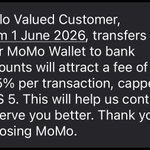
Money I haven’t even spent yet, I’m transferring from my MoMo wallet to my own bank account, and now I’m being charged for it? Someone explain this to me.
Who is protecting Ghanaian citizens from these endless charges?
@MTNGhana

This feels like being charged just to access your own money. I’ve been wondering how companies like Zelle work, where people can transfer money to others without being charged.
@MTNGhana
And though I must now throw you into the laundry basket of eternity,
Know this
You shall live on...
In every photo.
Every memory.
Every sock you were paired with (even the wrong ones).
And in the space of my wardrobe where no other pair dares to hang.