
Professional reference class tennis player. I like non-fillet frozen fish, packaged medicaments, and other oily seeds.
Joined June 2013
- Tweets3.2K
- Following135
- Followers2K
- Likes5.1K


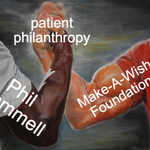

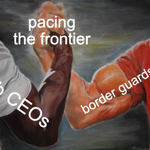


Ken Paxton isn't doing this out of the goodness of his heart. He's doing it because he's in a close race and he realizes that Republicans' coziness with big AI is politically untenable.

Eric Neyman retweeted

We have two good candidates for Congress in San Francisco, but I'm voting for @Scott_Wiener. He's been a tireless fighter for the city, first as a supervisor and then in the State Senate. He takes climate change and clean energy seriously, and he's focused on bringing down costs for Californians.
Just incredibly reprehensible behavior from OpenAI here, at least if the Wall Street Journal article is right.

Based on this article, OpenAI has made false accusations about me. The three researchers fired from OpenAI were told I facilitated architecture leaks to The Information. This is false.
A journalist from The Information did reach out to me shortly before that article came out. I did not comment at all beyond asking the journalist to make it clear that a blog post I wrote which was referenced in the article was preexisting and public.
The article also mentions an internal OpenAI monitorability proposal. I have heard that this memo contained highly sensitive architecture information, and that OpenAI accused me of accessing and reading it. This accusation is also false.
As reported in the article, I viewed a version of the proposal that did not have sensitive IP and was approved for sharing with me. I believe OpenAI now knows this accusation was based on a conflation of these two documents, though I do not know if they have clearly retracted that accusation.
I do not and have never solicited proprietary information, and the three employees who were recently fired from OpenAI never leaked IP to me. As the article mentions, I did have Signal chats with them that had disappearing messages on; they’re professional contacts that I’ve had on Signal for a while, and use of Signal is common in the tech industry. During the Hugging Face investigation, I was careful to avoid sending Signal messages with confidential information, though I did sometimes discuss high level things on Signal calls. As far as I understood, this was normal.
Eric Neyman retweeted

First ad I've seen so explicitly targeting the obvious financial conflicts around the Trump administration's AI accelerationism

Eric Neyman retweeted

For those interested in seeing the second term Trump and second term George W. Bush net approval ratings in one figure:


The counter-protest should adopt the slogan "And God said, 'let there be light'"

🇫🇷 “Bismillah, c’est les ténèbres,” roughly translating to “In the name of God, its darkness,” has become a viral slogan at France’s student protests.
The phrase originated in a bizarre Snapchat message allegedly sent by an undercover police officer posing as a student to infiltrate groups organizing school blockades. The message, awkwardly mixing Arabic expressions, French youth slang, and Algerian flag emojis was asking about protest plans.
Students seized on the apparent attempt to imitate them, and have turned the phrase into a meme to mock suspected police infiltration and racial stereotyping. It now appears on protest signs and is chanted at demonstrations. Swedish activist Greta Thunberg also joined in, repeating the slogan during a visit to striking students at a high school outside Paris on October 13. The identity of the sender and police involvement remain unverified.

Eric Neyman retweeted

Recently, a draft leaked of federal bill text being circulated by Anthropic. The bill does have some good elements, many of which have been seen before in state legislation (for example in Massachusetts) that Anthropic also supported in the past. I previously wrote about many of those elements here: xitter.cf/Thomas_Woodside/status….
Overall, however, this bill would be bad if passed into law, and I believe that circulating it has been counterproductive for federal AI safety discussions. I wish that Anthropic were embracing something closer to our policy suggestions here: secureaiproject.org/californ….
Here are my concerns about the bill’s content in more detail:
1. No minimum safety standards: The bill does not authorize any agency to create minimum safety standards requiring AI developers to implement any practice. This should be an important component of any federal framework; otherwise, all decisions are made purely by ad hoc court orders, which is not a good way to ensure safety. It does allow the agency to designate (but not create) security (not safety) standards.
2. Weak “blocking orders:” the government can only block a model if a risk is imminent, and the bar for showing that is high. There are many procedural requirements, such as the requirement that the agency head personally certify a lot of the filing, that would make it challenging to use this blocking power. In my view, an agency should be able to issue orders that take effect immediately if there is an imminent need for action (an imminent need for action differs from an imminent risk because it would include instances when an action is necessary soon to stop a risk, even if the harm itself would occur at an indeterminate point in the future). The agency should not have to wait for a court in such cases, although a court should of course be able to review quickly.
3. Evaluator shopping: We’ve previously said that at least some evaluators need to be selected by the government, not just chosen by the companies they are evaluating. This bill doesn’t even provide an accreditation system for evaluators, much less government selection. Instead, it provides only a rating system, which developers can feel free to ignore, except once the agency is doing a blocking order proceeding.
4. No “pacing:” This bill doesn’t go far enough in terms of pacing. If Anthropic does not embrace robust minimum standards, we think it’s especially important that something like compute-pacing be included. See our pacing proposal here: secureaiproject.org/californ….
5. No embedded evaluators: There isn’t a requirement that evaluators be embedded at AI companies or that they continuously assess risk. They do have a requirement to produce rapid reports in certain circumstances, but without a duty to actually constantly assess whether they actually should produce a rapid report, it’s unclear whether they’ll do so.
6. No dispute resolution process: If an evaluator lacks information that it needs from a developer and the developer refuses to provide it, there isn’t a clear process to resolve the dispute. For example, there could be a process that permits the agency to order the information handed over, with a court review if a party disagrees. At present, the agency has to bring an action for a violation, which is very time consuming and would likely only happen in egregious cases.
7. Weak incident reporting: The definition of what is required to be reported is written very narrowly. It would not even cover incidents like Hugging Face unless they cause $250,000+ in damages (only the number of such incidents would have to be reported annually).
8. No preventing coercive control of government/secret loyalties: The bill doesn’t have provisions aimed at preventing insiders at AI companies from using powerful AI systems to coercively take control of government or otherwise provide themselves with significant advances.
10. No reporting of AI R&D automation: While covered as a risk factor, there are no reporting requirements to allow the public to understand how AI is being used to automate AI research and development unless the developer assesses this poses another “enumerated risk.”
To be clear, I don’t think it’s necessary for every draft bill to have all of the above policies in it. That would be an unrealistic standard. It’s possible to have narrow, tight bills focused on particular problems that make a solid contribution to the discourse. That said, not everything in this bill is executed well, such as the blocking orders.
More importantly, because it includes preemption, floating a bill this weak will likely have a detrimental effect on the political discourse. When a bill includes state preemption, it must be interpreted as the proposer’s view of what is “worth” that preemption. This is how everyone in DC will interpret it, so the proposer needs to propose it in that light. Anthropic is seen by many as being in favor of strong regulation (and state regulation), and portrays themselves that way. Their bill draft could give the false impression that this is what strong regulation looks like, anchoring future discussions and negotiations in a very suboptimal place. I do not think that the policy Anthropic has put forward is worth preempting all state frontier AI disclosure, evaluation, incident reporting, and possibly (the drafting seems to contain an error) model blocking laws.
Anthropic representatives have said they circulated this in part because “it’s important to get early feedback from policymakers.” However, in my view, floating language like this signals to policymakers that Anthropic is prepared to support it as is. And as is, it is a bad bill.

It's not my #1 issue, but I do support the repeal of the Onion Futures Act!

University of Chicago Students to Protest at Chicago Mercantile Exchange, Demand End to Federal Ban on Onion Futures
Student-led group For Our Futures will rally Monday morning to call for repeal of the 1958 Onion Futures Act
On Monday, October 19, at 8:30 a.m., members of For Our Futures, a student-led organization from @UChicago, will gather outside the Chicago Mercantile Exchange (@CMEGroup) headquarters to demand the repeal of the Onion Futures Act of 1958, a nearly 70-year-old federal law prohibiting futures trading in onions.
The Onion Futures Act, enacted following allegations of market manipulation in the 1950s, singled out onions for a prohibition on futures contracts that remains in effect today. For Our Futures is calling on Congress to repeal the ban and restore the ability of onion growers, buyers, and traders to participate in a regulated futures market. Onions remain the only commodity banned from futures trading in the United States.
The protest will feature a giant inflatable onion costume, protest signs, and dozens of students, and will take place outside the headquarters of CME Group, one of the world's largest derivatives marketplaces and the historic center of American onion futures trading.
DM for details
cc: @pointsnfigures1 @CharlesFLehman @matt_levine @nbcchicago @ABC7Chicago @cbsnewschicago @WGNNews @fox32news @WBEZ @Suntimes @BlockClubCHI @chalkbeatCHI @SeanCasten @mansourtarek_

ALT The "onion man" visits a meeting of the UChicago Democrats. Not affiliated with any party, candidate, or candidate committee. We are a bipartisan movement.

I don't believe that 65% of Americans know who Dario Amodei is.

If you ever needed evidence that perceptions in AI world ≠ perceptions in the outside world, it's this polling in today's POLITICO Decoded newsletter by @calder_mchugh, @MuiChristine and @samjsutton.
Most American voters think:
-- Dario Amodei is a Republican
-- that Anthropic employees lean Republican
In fact, US voters are now so pre-disposed to see the AI sector as right-leaning that even a fake tech CEO that pollsters invented was pegged as Republican.
And btw: A third of those polled don't even know who Sam Altman and Dario Amodei are.
politico.com/newsletters/dec…

Eric Neyman retweeted

Anthropic’s AI safety proposal falls far short of protecting public health and safety. Congress must go further.
We’re facing huge risk from even the current generation of frontier AI models, and that risk will only escalate with further model development. Government’s most basic obligation is to protect public health and safety. In the context of AI, that means Congress must ensure that AI benefits people and doesn’t harm people. Quick, effective, robust regulation is essential.
Several provisions in Anthropic’s proposal go beyond what has been proposed in Congress so far, but big picture, this proposal is insufficient to manage the catastrophic AI risks about which Anthropic, other companies, and many experts are warning us.
Anthropic’s proposal contains no minimum standards for AI companies’ safety plans or for third party auditors, and the proposal would make it even harder for the federal government or states to nimbly regulate and act to prevent severe harms. If we’re going to have safety standards and auditors — and we must — it’s essential that regulators have flexible authority to ensure they are actually protecting people.
The proposal also uses a definition from SB 53 that was intended for risk disclosures — not for broader regulation — and extends that definition to dramatically limit the situations in which the federal government can stop model deployments. SB 53 was the first AI safety regulation in the country. It is a transparency law, and we intended it to be the first step, not the final step, to protect people from catastrophic risk. Misuse of that law’s definition would effectively gut the emergency shutdown provisions in this proposal.
The state law preemption in Anthropic’s proposal also goes too far. Given the abuse we’ve seen by the Trump administration — toward Anthropic earlier this year and more recently when Trump and Musk colluded to disable Starlink/Starshield for Ukraine, as part of their corrupt love affair with Putin — it’s perfectly reasonable to be concerned about corrupt government actors using shutdown powers to attack disfavored companies. Yet, given the scale of the risks about which these companies and many others are warning us, as well as the turbulence of our federal politics, tying the hands of regulators in California and other states is not a good idea.
There are several stronger policy proposals, around auditing, creation of a regulator, and various other issues, that are under development now. Policymakers should look to these proposals as the basis for action in the coming weeks and months.
We have very little time to get this right, and we must act with urgency. We must ensure Congressional action protects public health and safety and doesn’t undermine it.

Anthropic quietly pitches its own AI safety bill to lawmakers politi.co/4zxDFhl

Eric Neyman retweeted

I have a lot of concerns with this bill. I understand it's a draft and might have silly mistakes. But this bill looks like it came from a culture where the top priority is making sure the government doesn't getting in the way of making money, even at the cost of safety. That is a very dangerous culture.
Specifically, the bill says that states would not be able to have AI regulation that touches frontier-risk disclosure, third-party evaluation, and incident reporting. This one federal bill would replace almost all of SB53 and the RAISE Act. And it's a pretty weak federal bill: I agree with others that it's weaker than the FRONTIER Act, a relevant and politically viable bill introduced back in July.
Anthropic quietly pitches its own AI safety bill to lawmakers politi.co/4zxDFhl


This is not reassuring. "I won't do the bad thing because I'll get caught" is the kind of reasoning that breaks down once you're smart enough to not get caught.


As predicted [I say, with way more confidence than is actually warranted at this point]: xitter.cf/ericneyman/status/2108…

Eric Neyman retweeted

the researchers at all the labs would tell you in private and sometimes in public that alignment has not been solved. if this is true, then racing into RSI is a folly that is unprecedented in world history. we will need to significantly slow the frontier of research very soon
Eric Neyman retweeted

Make no mistake, Josh Vlasto and his boss Marc Andreessen have always had one plan:
To force through federal preemption of state AI laws alongside the weakest possible federal AI framework they can get away with.
Don't fall for this act.

Everyone involved in the debate over AI policy needs to focus on facts and reality. This is too important to let partisanship grind progress to a halt.
We have an opportunity to pass a smart, strong national regulatory framework that creates American jobs, drives economic growth, expands access to the benefits of AI for all Americans, establishes meaningful frontier model safety standards, and protects users, kids and communities.
Extreme voices and partisanship will derail efforts to pass regulation that can actually become law and be implemented.
We need to tune out the noise, reject fearmongering, and not allow narrow corporate agendas masquerading as altruism to stand in the way of real progress.
finance.yahoo.com/technology…
