

Always learning how to “be water” and flow like water flows. 🐋👤
New Haven, CT
Joined November 2008
- Tweets91.3K
- Following3.6K
- Followers4.8K
- Likes107K





Pinned Tweet
Miró's women, birds and stars. Miró instills life into his characters in his drawings.
Femme, oiseau, étoile July 28, 1942
Femme et oiseaux devant le soleil August 4, 1942
Femme devant le soleil, August 5, 1942
Femmes et oiseaux devant le soleil August 8, 1942


Buenas noches
François Couperin: 'Pièces de Viole', Suite in A major for Viola da Gamba youtu.be/A0IcNjRaCqE?si=4bH-…
eduardo urios 🌊 retweeted

Moral Ambiguity in Film Noir
One of the defining characteristics of film noir is moral ambiguity: the erosion of clear distinctions between innocence and guilt, virtue and corruption, freedom and complicity.
Unlike the traditional Hollywood hero, whose moral identity is generally stable, the noir protagonist inhabits a world in which ethical judgment is continually compromised by desire, ambition, fear, or self-deception. His tragedy often lies not in his inability to recognize wrongdoing, but in his willingness to participate in it.
Four representative films:
1. Double Indemnity (1944) Billy Wilder
In Double Indemnity, moral corruption emerges from the intersection of desire, greed, and the illusion of control. Neff’s intelligence becomes an instrument of his own destruction: the very qualities that make him professionally competent enable him to rationalize murder. His moral failure is inseparable from his belief that he can manipulate circumstances without becoming their victim.
Wilder exposes the fragility of masculine confidence and the seductive appeal of transgression. Walter’s downfall is not simply the consequence of a femme fatale’s manipulation, but of his own desire to experience himself as a man capable of defying both moral and social conventions.
2.Out of the Past (1947) Jacques Tourneur
In Out of the Past, moral ambiguity arises from the distance between knowledge and action. Jeff Bailey recognizes deception and anticipates betrayal, yet repeatedly allows desire to override his judgment. His apparent detachment conceals a profound vulnerability: he understands the forces that compromise his freedom without being able, or entirely willing, to resist them.
It complicates the relationship between fate and responsibility. Jeff is pursued by his past, but that past is partly the consequence of his own decisions. His tragedy lies in the recognition that moral clarity does not necessarily restore freedom or erase responsibility.
3. The Postman Always Rings Twice (1946) Tay Garnett
In this movie, passion becomes the means through which the protagonists attempt to escape the limitations of their ordinary lives. Their pursuit of freedom, however, depends on an act that destroys the possibility of innocence.
The film exposes the contradiction between desire and moral responsibility. Frank and Cora imagine that eliminating an obstacle will allow them to construct a different future, but their transgression transforms the relationship itself. Love becomes inseparable from suspicion, guilt, and mutual dependence.
The central irony is that their attempt to liberate themselves produces a more profound captivity. What begins as a rebellion against circumstance becomes submission to the consequences of their own choices.
4. The Killers (1946) Robert Siodmak
In The Killers, moral ambiguity is inseparable from passivity and the gradual surrender of individual agency. The Swede’s resignation suggests a man who has ceased to believe that his actions can alter the course of his life.
Siodmak presents fatalism not merely as an external force but as a psychological condition. The protagonist’s vulnerability emerges from the collapse of his capacity for judgment and resistance, particularly when desire and betrayal become entangled.
The film also complicates the idea of moral responsibility through its fragmented narrative. The Swede’s identity is reconstructed through the memories and testimony of others, making him simultaneously an object of sympathy, suspicion, and judgment. No single perspective entirely explains his downfall.
What connects these four films is the instability of moral agency.
Their protagonists are neither simply innocent victims nor conventional villains. They recognize, resist, rationalize, or surrender to the forces that compromise them. Their actions expose the contradictions between what individuals believe about themselves and what their choices reveal. #Noirvember #FilmNoir


eduardo urios 🌊 retweeted

Vincent Vega wasn't supposed to be John Travolta. Tarantino had Michael Madsen in mind.
Madsen had just played Vic Vega, Mr. Blonde, in Reservoir Dogs, and Vincent was meant to be his brother. Tarantino even talked about a movie with the two Vega brothers that never got made.
But Madsen was already committed to Wyatt Earp, Kevin Costner's western, so he said no.
The role went to Travolta, whose career at that point was mostly family comedies like Look Who's Talking. Pulp Fiction brought him back and got him an Oscar nomination.
Madsen never held a grudge. He said nobody had ever seen Travolta with a gun, and that was a big reason the movie worked.
eduardo urios 🌊 retweeted

I’d say this and Shampoo are among the best works depicting how disorienting the sexual revolution was from the people who were actually on the ground watching it happen.

One of Jack Nicholson's lesser-known films, Carnal Knowledge (1971) features an outstanding ensemble cast, including Art Garfunkel, Ann-Margret, Candice Bergen, Rita Moreno and Carol Kane. Directed by Mike Nichols, it is a provocative portrait of changing male-female relations, romantic disillusionment and the inability to truly connect.
Nichols deliberately manipulated the audience's gaze, explaining: "I wanted them to be thinking of something else, Ann-Margret's top, for instance." He wanted viewers to become complicit in the objectification of Bobbie, played by Ann-Margret. Ann-Margret delivered a remarkably vulnerable performance, earning the film's sole Academy Award nomination for Best Supporting Actress at the 1972 Oscars.
In a humorous behind-the-scenes-related anecdote, Candice Bergen later joked about her on-screen romantic encounter with Nicholson:
"Always wear a double layer of underpants when you're doing a bed scene with Jack Nicholson."

eduardo urios 🌊 retweeted

Nude in broken mirror, New York City, ca. 1944 - by Erwin Blumenfeld (1897 - 1969), German/American

eduardo urios 🌊 retweeted

A Pier Paolo Pasolini lo asesinaron un día como hoy.
Lo asesinó la ultra derecha. Lo asesinaron por ser un artista, por ser una protesta viva.
Pasolini desafió al fascismo, denunció la podredumbre del poder y desnudó la hipocresía de unas élites capaces de convertir la explotación de los jóvenes en privilegio.
Comunista, homosexual, militante y profundamente libre, hizo de su vida y su obra una rebelión contra la opresión.
En 1975 fue Saló. Hoy, el caso Epstein vuelve a poner frente a nosotros una realidad que Pasolini comprendió profundamente hace 5 décadas : cuando el poder se sabe impune, convierte a los seres humanos en objetos y a la crueldad en un privilegio.
eduardo urios 🌊 retweeted

Me encanta leer elogios internacionales a Lola Dueñas por "La bola negra". Habría que potenciar seriamente su campaña al Oscar como actriz secundaria. Dos Goyas y un talento inmenso. Además, el público internacional la conoce por sus trabajos con Almodóvar y Mar adentro...
eduardo urios 🌊 retweeted
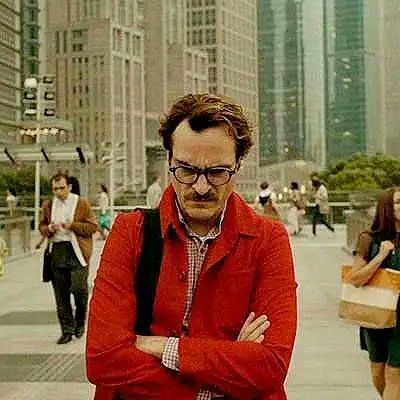
AMERICAN GANGSTER turns 19 today.
Denzel Washington spent time with the real Frank Lucas on set, observing him closely to understand his mannerisms. Lucas later praised his portrayal, saying nobody in the world was as good as Denzel.
eduardo urios 🌊 retweeted

Oggi, 2 novembre 2026, a cinquantuno anni esatti dal brutale assassinio avvenuto all'Idroscalo di Ostia nella notte tra l'1 e il 2 novembre 1975, la Procura di Roma ha ufficialmente riaperto le indagini sull'omicidio di Pier Paolo Pasolini.
rainews.it/articoli/2026/11/…

eduardo urios 🌊 retweeted

The Killers (1946), directed by Robert Siodmak, is one of film noir's defining achievements. Based on Ernest Hemingway's short story, it expands its mysterious opening into a gripping tale of betrayal, obsession and doomed love. It also marked the screen debuts of Burt Lancaster and William Conrad, while giving Ava Gardner her first major starring role. Lancaster is particularly impressive as the Swede, a former boxer whose attraction to Gardner's Kitty Collins leads to his downfall.
Hemingway reportedly considered it the finest film adaptation of his work, even keeping a print at his Cuban home and showing it to visitors. The screenplay also benefited from uncredited contributions by John Huston and Richard Brooks. Behind the camera, Siodmak's expressionist lighting and Woody Bredell's striking black-and-white cinematography create an unforgettable atmosphere. The celebrated robbery sequence, filmed in a single continuous take, is another technical highlight.
Siodmak believed that "Art is nothing more than the elimination of non-essential details." Producer Mark Hellinger was equally impressed, remarking that while most directors might bring out 85% of a screenplay's potential, Siodmak could deliver "125%." With its remarkable opening, intricate flashbacks and haunting score by Miklós Rózsa, The Killers remains a landmark of classic film noir.

eduardo urios 🌊 retweeted

"Pienso que es necesario educar a las nuevas generaciones en el valor de la derrota. En manejarse en ella. En la humanidad que de ella emerge. En construir una identidad capaz de advertir una comunidad de destino, en la que se pueda fracasar y volver a empezar sin que el valor y la dignidad se vean afectados. En no ser un trepador social, en no pasar sobre el cuerpo de los otros para llegar el primero. Ante este mundo de ganadores vulgares y deshonestos, de prevaricadores falsos y oportunistas, de gente importante, que ocupa el poder, que escamotea el presente, ni qué decir el futuro, de todos los neuróticos del éxito, del figurar, del llegar a ser. Ante esta antropología del ganador de lejos prefiero al que pierde. Es un ejercicio que me parece bueno y que me reconcilia conmigo mismo. Soy un hombre que prefiere perder más que ganar con maneras injustas y crueles. Grave culpa mía, lo sé. Lo mejor es que tengo la insolencia de defender esta culpa, y considerarla casi una virtud".
Pier Paolo Pasolini

eduardo urios 🌊 retweeted
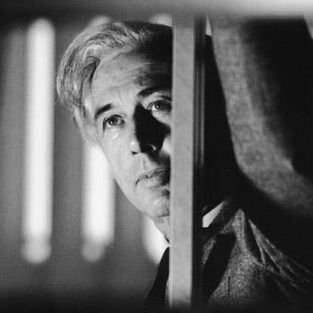
Two days before, I said that it will be tough for me to post Film-Noir recommendations throughout the month as I used to on Noirvember. But look what I found:
Top 60 Noirs recommended by Martin Scorsese.
It has a good mix of popular and B Noirs. There isn't a movie here in the list that I dislike. If you are new to the genre, I think it is a good list to start with.
I have seen 44 of movies in it and I mean to see the rest soon. How many films have you seen from this list?


eduardo urios 🌊 retweeted

Burt Lancaster was the first star to have his name added to the Hollywood Walk of Fame. After a 45-year acting career, his final film role was “Moonlight” Graham in Field of Dreams.
Ray Liotta’s “Hey, Rookie. You were good.” remains one of cinema’s most gut-punching moments.
eduardo urios 🌊 retweeted

Few scenes have disturbed me as much as the dinner sequence in Sicario (2015). The way Benicio del Toro remains completely composed makes everything so much more frightening. Villeneuve understands that silence can be more terrifying than violence.


eduardo urios 🌊 retweeted

“La bola negra” suma un estimado de 418.000$ desde 38 cines en Estados Unidos, y acumula más de 1,2 millones de dólares.
La película de Javier Ambrossi y Javier Calvo aumenta un 64% sus ingresos respecto a la pasada semana y presenta la mejor media por sala del fin de semana, 11.000$.
Gran parte de su crecimiento está vinculado a que pasa de los 9 cines a los 38 pero el hecho de que su media se mantiene alta incluso en un mal fin de semana como este es relevante.
La semana que viene llegará a más de 70 poblaciones, seguramente con más de 400 copias.
Con los datos de España, Australia, y Nueva Zelanda, #LaBolaNegra ya superan los 40M$ en todo el mundo.
eduardo urios 🌊 retweeted

“If culture is capable of anything, then it is finding that which unites us all. And there are so many things which unite people... Feelings are what link people together, because the word ‘love’ has the same meaning for everybody. Or ‘fear’, or ‘suffering’. We all fear the same way and the same things. And we all love in the same way.”
— Krzysztof Kieślowski
A Short Film about Love (Krótki Film o Miłości, 1988)


eduardo urios 🌊 retweeted

STARRING GENE TIERNEY ❤️ Now playing on the Criterion Channel! bit.ly/4BEizzK
With her porcelain beauty and a cool sophistication that seemed to conceal turbulent emotional depths, Tierney emerged as one of the most arresting stars of Hollywood's golden age.