





⭕chuk⭕ ® retweeted

E be like say, dem done update Dan Bello say money dey organised protest.
Industry plants!

Sowore, Dan Bello, Adeyanju Lead #PoliceProtest , Demand N500,000 Monthly Salary For Police Officer
⭕chuk⭕ ® retweeted
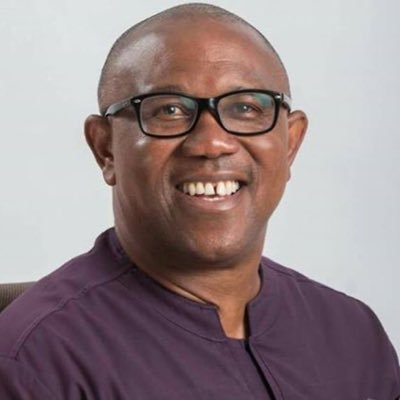
CHRIST THE KING COLLEGE, ONITSHA: CELEBRATING MY HERITAGE AND ENCOURAGING THE NEXT GENERATION
Each year, my alma mater, Christ the King College (CKC), Onitsha, invites me to its celebration of the Feast of Christ the King, scheduled for this Sunday, November 22. Although my demanding campaign schedule will prevent me from attending this year's ceremony, I made a brief visit to the school today while on my way to engage with traders and residents of Onitsha.
It was a warm and memorable visit, and I was graciously received by the School Administrator and Senior Prefect. In my interaction with the students, I emphasised the importance of education, urged them to remain focused and dedicated, and reminded them that Nigeria's future President could emerge from among them.
I also inspected the newly constructed Teachers' House, a project I facilitated with the support of friends to strengthen the school's teaching and learning environment.
CKC remains an enduring part of my life's journey, having shaped my values, discipline and sense of responsibility. I remain grateful for this lasting bond.
Wherever life takes us, the values of our alma mater remain with us. CKC will forever be home. -PO


⭕chuk⭕ ® retweeted

Yeah, yeah "Nigerians can not pay the real cost of electricity" and yeah, "remove subsidy because it is suffocating revenue".

Wike.....Wike...Wikeeee
You too sabi abeg🥰🥰🥰🥰
FCT Traditional Rulers Get New Status, Vehicles as Wike Promises More Upgrades, Palaces
…Tinubu ends 29-year wait for elevation of traditional stools – Wike
…Senators, monarchs hail FCT minister over recognition of traditional institution
The Federal Capital Territory (FCT) Minister, Barr. Nyesom Wike, has announced plans to upgrade more traditional chiefdoms in the territory and provide befitting palaces for first-class traditional rulers in the 2027 budget, as the administration moves to strengthen traditional institutions and grassroots governance.
Wike also pledged to extend official vehicles and other logistical support to traditional rulers, stressing that the interventions were aimed at restoring the dignity of the traditional institution and enhancing its capacity to promote peace, security and development across the FCT.
The minister made the disclosures on Friday in Abuja during the presentation of certificates, letters of office, staff of office and brand-new sports utility vehicles (SUVs) to newly upgraded first- and second-class traditional rulers from the 16 chiefdoms in the territory.
The ceremony, which attracted senators, traditional rulers, political leaders and other stakeholders, marked a significant milestone in the history of the FCT traditional institution, following nearly three decades of demands for the elevation of traditional stools.
Wike recalled that since the establishment of the FCT Traditional Rulers Council in 1997, only the stool of the Ona of Abaji had been elevated, leaving other traditional rulers waiting for recognition despite their contributions to community development.
He said the latest exercise was made possible by President Bola Tinubu's approval under the Renewed Hope Agenda, describing it as a demonstration of the administration's commitment to inclusive governance.
"Today is 29 years after the creation of the FCT Traditional Rulers Council. Since 1997, there's only one stool that was elevated, and that is the Ona of Abaji. Since that period, no stool has been elevated.
"Mr President, as part of his programme of inclusivity under the Renewed Hope Agenda, thought it wise to bring the traditional rulers close, for them to also stand and be part of the governance process. Mr President approved the elevation of the various stools," he said.
The minister said the excitement among the traditional rulers and their communities underscored the importance of recognising institutions that contribute to governance, adding that leadership should be measured by its ability to make people happy and address their needs.
Defending the provision of official vehicles to the royal fathers, Wike dismissed criticisms that the gesture amounted to bribery, describing such arguments as an indication of the failure to appreciate the critical role traditional institutions play in society.
He questioned why ministers, political appointees and other government officials were entitled to official vehicles while traditional rulers, who are responsible for community mobilisation, conflict resolution and grassroots security, should be denied similar support.
"I've had so many people ranting in the various media houses that we intend to pay them bribe. It's unfortunate. Chief press secretaries to area council chairmen, deputies to vice chairmen, ministers and special assistants to the President have vehicles. But the traditional institution should not have vehicles. Giving them vehicles means to pay them bribe," he said.
He added: "That's how we have kept our traditional institution so low, that you see a traditional ruler in a car or on a tricycle. That's what we want for our system. If this is paying bribe, we'll continue to pay it."


⭕chuk⭕ ® retweeted

Sunday November 15, 2026, the obstetric emergency unit of the labour ward at Obafemi Awolowo University Teaching Hospital (OAUTH).
A drip stand anchored by the leg of a standing fan. This is what our leaders have reduced our health system to. We are in big trouble.
By the way, in the antenatal ward, drip stands are scarce. I was told the patient with the standing-fan-drip-stand can actually consider themselves lucky!

⭕chuk⭕ ® retweeted
NIGERIANS, GO AND VERIFY (5)
CONNECTING COMMUNITIES, UNLOCKING PROSPERITY: OUR ROAD INFRASTRUCTURE RECORD
Peter Obi
Another critical foundation of development is infrastructure, particularly road construction and maintenance.
Infrastructure is not just about constructing roads, bridges, and buildings. It is about connecting people, opening up economic opportunities, reducing poverty, and enhancing the well-being of ordinary citizens. A road that connects a farmer to a market, a patient to a hospital, a child to a school, or a manufacturer to a distribution centre is an investment in economic and human development.
This thinking informed our approach under the Anambra Integrated Development Strategy (ANIDS). We set out to connect all 177 communities in the State with motorable roads, paying particular attention to rural communities that had suffered years of neglect. Our objective was to build an interconnected road network that served the entire State, rather than concentrate projects in major cities or politically important locations.
I. The Road Revolution: Over 900 Kilometres of Road Projects
Between March 2006 and March 2014, during my two-term tenure in office, my administration asphalted over 900 kilometers of roads. These projects were deliberately distributed across the three senatorial zones of Anambra State to connect communities, facilitate commerce, and enhance transportation.
I acknowledge that Dr. Chris Ngige started the road revolution in Anambra State, and I commend the efforts his administration made in initiating several road projects. When we assumed office in 2006, we recognised the importance of continuing worthwhile projects rather than abandoning them simply because they had been initiated by a previous administration.
Among the roads we inherited from Ngige and completed were the Owerri–Ezukala–Umunze–Umuchu–Amesi–Uga–Igboukwu Road, where his administration stopped around Umuchu and we continued through Amesi, Uga, and onward to Igboukwu; the Iseke–Orsumoghu–Ukpor–Utu–Nnewi–Awka-Etiti Road, where his administration stopped at Ukpor and we continued towards Awka-Etiti; and the Ideani-Otuocha where work stopped around Awkuzu before our administration continued the project from Nteje to Otuocha.
There were also roads, such as Mmili John and Nkwelle Ezunaka bypass, which had been awarded before we took over, but on which no payment had been made by the time we assumed office. We took over these projects, assessed their status, and proceeded with the work. This was our approach to continuity in governance: acknowledging what had been started, distinguishing between projects merely awarded and those on which work and payment had actually commenced, and ensuring that important infrastructure projects were carried forward.
Some of the major roads and corridors included Amansea–Ebenebe Road; Aguleri–Umueze Anam–Mmiata Road; Nnewi–Ozubulu–Okija Road; and the Old Onitsha–Awka Road.
Other important projects included:
Awka and its Environs: Zik’s Avenue, Awka; Adazi-Nnukwu–Obeledu–Neni Road; 33 Junction–Nwafor Orizu College of Education Road; roads within the Awka Government Reserved Area (GRA); and the Old Nkpor–Amawbia Road.
Nnewi and Surrounding Communities: Nnobi–Nnewi Road; roads within Nnewi town; Akwaeze–Oraeri–Igboukwu Road; and Ekwulobia–Nkpologwu–Akpo–Achina–Umuchu Road.
Onitsha and its Environs: Bridge Head–Umunya Road; over 30 roads in other parts of Onitsha; more than 25 roads within the Onitsha GRA; over 20 stone-based roads within Harbour Industrial Estate, Onitsha; and the Nkwele Ezunaka Bypass.
Other Communities and Strategic Corridors: Awgbu–Amaokpala Road, with the Odor Bridge; Aguluezechukwu–Ogboji–Ajalli Road; Awkuzu–Igbariam Road, passing through the university; Owerri–Ezukala–Umuchukwu Road; Ugwuoba–Obosi Road; and Lilu Road.
⭕chuk⭕ ® retweeted

I’ll be on @channelstv The Morning Brief tomorrow at 8:30 a.m. to discuss the possibility of publishing collation documents on IReV portal and why it matters for electoral transparency.
Tune in!

Yesterday, @inecnigeria said ward collation results can’t go on IReV because the feature hasn’t been built or tested, and that it would take a while.
We disagree.
It’s not rocket science, so we built it. In one evening. On IReV’s own data.
Left: IReV today.
Right: IReV with Form EC8B. 🧵👇


⭕chuk⭕ ® retweeted
Our analysis of the 2023 elections in Rivers State shows why publishing only polling-unit results on IReV is not enough.
In Obio/Akpor, the polling-unit sheets on IReV give the Labour Party HOR candidate 67,320 votes. The declared result gives him 18,766. Those two records cannot both be right. Somewhere between the polling unit and the declaration, during collation, 48,554 of his votes disappeared while his opponent's total rose by 24,357.
Collation is meant to add up polling-unit results, not override them.
The public cannot see where this happened, because the ward and constituency collation sheets have never been published.
We are not asking INEC to replace its collation process. We are asking it to publish every document that process produces, so that no figure can be changed between one stage and the next without anyone being able to see it real time.

⭕chuk⭕ ® retweeted
NIGERIANS, GO AND VERIFY (4)
Building a Healthy Nation: Our Health Sector Record in Anambra
Peter Obi
In the previous instalment of this series, I discussed our investments in education and explained why we considered human capital development central to the progress of Anambra State. Another sector that received considerable attention under our administration was healthcare. We understood that education gives people the tools to build their future, while good healthcare enables them to live healthy and productive lives.
When we assumed office in 2006, the healthcare system in Anambra faced serious challenges. Our health institutions required rehabilitation, medical equipment was inadequate, many communities lacked accessible primary healthcare facilities, and several medical training institutions had not secured accreditation. We therefore decided to approach healthcare as a comprehensive development priority, rather than concentrate resources on a few prominent hospitals.
Under our Anambra Integrated Development Strategy (ANIDS), we invested simultaneously in primary, secondary, and tertiary healthcare, medical training, maternal and child health, medical equipment, and partnerships with religious and private institutions.
Our approach was simple: healthcare should be accessible to people wherever they live, and the quality of treatment they receive should not depend on their status or whether they live in a city or a rural community.
Building a Teaching Hospital and College of Medicine
One of our most significant achievements was the establishment of the Chukwuemeka Odumegwu Ojukwu University Teaching Hospital at Awka.
We initiated, constructed, equipped, and secured accreditation for the institution, building it virtually from scratch. When I discovered that the state university was admitting medical students without having a teaching hospital through which they could complete their training, possibly with the intention of assigning them elsewhere, I considered the situation unacceptable. We therefore embarked on the construction of a modern teaching hospital to address this deficiency.
We constructed more than 25 buildings and provided facilities for the College of Medicine, laboratories, pathology, accident and emergency services, pediatrics, male and female wards, special wards, consultant clinics, and other essential departments.
We also provided vehicles, including ambulances and staff buses, to support the hospital and the College of Medicine as part of the accreditation requirements.
The objective was not merely to build another hospital but to establish an institution capable of providing specialist healthcare while training the next generation of Nigerian medical doctors.
Rehabilitating General Hospitals
We also recognized that a teaching hospital alone could not meet the healthcare needs of the population. General hospitals had to function effectively because they provide the essential link between primary healthcare and specialist treatment.
We rehabilitated and resuscitated 15 general hospitals across the three senatorial zones of Anambra State. We undertook substantial improvements in their buildings, wards, equipment, and general facilities.
In 2013, we provided ₦400 million for the ongoing renovation of 11 selected general hospitals, alongside other healthcare interventions.
Our intention was to ensure that people did not have to travel unnecessarily long distances to obtain basic secondary medical care.
Taking Primary Healthcare to the Communities
We believed that the best healthcare system is one that prevents illnesses and treats people early, rather than one that waits until minor health problems become emergencies.
That informed our extensive investment in primary healthcare. We built over 120 primary healthcare centers across communities in the 177 autonomous communities of Anambra State and rehabilitated existing facilities.
⭕chuk⭕ ® retweeted

I unequivocally deny the claim that Nigeria’s government nor anyone else in Nigeria paid me $4.5 million. I went to Nigeria to interview President Tinubu @officialABAT for parts of a documentary and see Nigeria for myself. This SMEAR CAMPAIGN can make noise, but can’t change the facts or stop me from speaking the truth.
Readers added context they thought people might want to know
Reports of $4.5M refer to payments to DCI Group. DOJ FARA filings list her as working on DCI's Republic of Nigeria account since Dec 2025, and show DCI paid her company, London Global Strategies, $662,000 from it.
efile.fara.gov/docs/6278-Supp…
efile.fara.gov/docs/6278-Supp…
efile.fara.gov/docs/7736-Exhi…





⭕chuk⭕ ® retweeted

@SaharaReporters: Soon & very soon, I won't be surprise to see Lagos State turn to Tinubu State. A dictator of the highest order in the West
⭕chuk⭕ ® retweeted
CLARIFICATION: MY MEETING WITH US CONGRESSIONAL LEADERS WAS NOT AN ENDORSEMENT-SEEKING MISSION
I wish to address the inaccurate interpretation presented in certain media reports concerning my recent engagements with members of the United States Congress in Washington, DC.
As I expressly noted in my remarks, my visit to the United States was not intended to secure an endorsement, and I did not characterise my meetings as endorsements of my political aspirations by the US Congress or any of its members.
The primary purpose of the visit was to engage with congressional leaders and other influential American stakeholders, exchange perspectives, and discuss matters related to Nigeria’s development, the welfare of our citizens and, most importantly, the consolidation of our democracy.
I am especially concerned with strengthening democratic institutions, advancing accountability, and ensuring that Nigeria’s electoral process produces elections that are free, fair, transparent and credible. These matters should concern every Nigerian who is committed to our country’s future.
I consider engagements of this kind valuable, and I encourage other Nigerian political leaders, especially those seeking public office, to pursue similar discussions with international stakeholders. Our democracy can be strengthened through constructive dialogue, the exchange of experiences and a shared commitment to credible elections.
Nigeria’s democratic future is far too consequential to be distorted by sensational headlines or inaccurate interpretations. My mission centred on Nigeria, its people and the future of our democracy—not on endorsing any individual. -PO
⭕chuk⭕ ® retweeted
NIGERIANS, GO AND VERIFY (3)
Building the Future Through Education
Peter Obi
In the first two instalments of this series, I explained how we approached the task of building strong institutions and laying a solid foundation for the development of Anambra State. One of the most important institutions we invested in was education.
For me, education was not a political game or a convenient political promise. Even before I ventured into politics, I had always regarded it as the foundation of meaningful development and the most enduring investment any government can make in its people. I believe that the future of any society depends largely on the quality of its educational institutions, teachers, learning environment, and opportunities available to its young people.
This conviction informed our decision to invest across the entire educational spectrum, from primary schools to universities, technical institutions, and adult education.
Basic and Secondary Education
One of our first major decisions was to return mission and privately owned primary and secondary schools to their original proprietors while retaining government support. We also provided billions of naira to assist in rehabilitating the returned schools, restoring the partnership between government and religious institutions that had historically contributed to educational excellence.
This policy attracted international attention. Professor Paul Collier, the Oxford economist and World Bank consultant, led a World Bank-commissioned study of Anambra’s educational transformation. His team examined our decision to return schools to their original missionary owners while retaining government responsibility for funding teachers’ salaries and supporting infrastructure. The team described the partnership model as a revolution in public service delivery and recommended it as a model that could be replicated by other Nigerian states and developing countries. We believed then, as we do now, that government does not necessarily have to own every institution to discharge its responsibility effectively. What matters is ensuring that every child has access to quality education.
For those who claim that we built no schools, I invite them to verify our records. We constructed five-classroom blocks in virtually all of the 177 communities in Anambra State, one of the most extensive community-based school infrastructure programmes undertaken by any state government. The town union chairmen and community leaders of that period can attest to this.
We also renovated hundreds of dilapidated schools, including some where trees had literally grown through abandoned buildings. Comprehensive Secondary School, Onitsha, and Oraukwu Grammar School are examples.
Beyond infrastructure, we distributed approximately 40,000 computers to schools, including more than 22,500 HP laptops. We equipped secondary schools with Microsoft Academies and connected schools across the state to the internet. We supplied generators, established and stocked libraries, revived school sporting activities, and installed boreholes in over 300 schools, including all girls’ schools. We also provided funding to support sporting activities in all our secondary schools.
These technology investments attracted remarkable international recognition. Mr Fabrice Campoy, Managing Director of the Personal Systems Group at HP Inc., described our procurement and distribution of over 22,500 HP laptops as the biggest project of its kind in the Middle East and Africa. Similarly, Mr Ken Spann, then Country Manager and Head of Microsoft Nigeria, described the establishment of Microsoft Academies in more than 500 Anambra secondary schools as the most extensive deployment of its kind in Africa at the time.
⭕chuk⭕ ® retweeted

Diana London, American right-wing lobbyist who interviewed Tinubu at Aso Rock, was paid $4.5 million by Nuhu Ribadu: Documents
gazettengr.com/diana-london-…


⭕chuk⭕ ® retweeted
Dear @AbdulMahmud01, as Governor, I was not constitutionally empowered to arm SARS or any unit of the Nigeria Police Force or the Army. So, we never bought arms and ammunition for them because we were not legally empowered to do so.

Dear @PeterObi, with this, can you now come clean on your role in arming SARS, while turning your face the other way as CSP Nwafor murdered Anambrarians under your watch as Governor?
Silence is not Golden, Sir!
⭕chuk⭕ ® retweeted

Gov Peter Obi pays N1.2bn to Anambra pensioners making it N33bn committed to clearing arrears owed since 1996
