






ALT Code of the gate that refuses to run the calc engine until every input is filled and the engineer confirms the assumptions, with a terminal run of three cases

ALT Request and response code of the footing API, with a real run showing footing size, rebar, the checks, pending items and engineer review not done

ALT README describing the decision file required for every change that moves a user-visible number

ALT Code where a half-filled optional input pair stays pending, plus terminal output

ALT GitHub Actions usage alert: 2,000 of 2,000 included minutes used this billing cycle, with a full progress bar.

ALT Code that picks the governing check, putting a firm failure ahead of a pending one

ALT File listing intentional conservative choices in the foundation tool

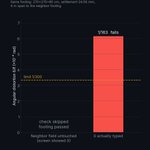
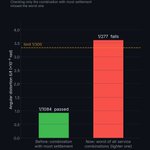
ALT Chart of angular distortion per service combination against the 1/300 limit

ALT Code where the load origin stays pending until the user picks it, plus terminal output

ALT Core diagram for a footing with eccentricity on both axes: the diamond eA/A + eB/B ≤ 1/6 and the edge pressure comparison

ALT Editor showing the Vesić bearing capacity function with the guard that returns 0 when phi is below 0 or above 50 degrees. Terminal below: capacity computed for phi 30, 45 and 50 degrees, and 0 for 50.01, 52, 55, 70 and -1.

ALT Screenshot of OpenAI's GPT-6.1 Terra announcement page. The title "GPT-6.1 Terra" is shown next to an image of Earth. Below it is the first paragraph, with the phrase "drafting proposals and interpreting technical drawings" highlighted. Source: openai.com/index/introducing-gpt-6-1-terra, 26 Oct 2026.

ALT Editor showing run.ts, where the run id is a canonical hash of engine version, module, methods and input. Terminal below: same input with keys reordered gives the same id, changing N or the engine version gives a different one.

ALT Code editor showing a TypeScript rounding helper that applies toPrecision(12) before Math.round, and a terminal run where the pixel height goes from 56 to 57 and 201.24999999999997 rounds to 201.3