


Frank G retweeted

Cray defined the vector computing architecture in which one instruction effects an operation across a huge set of registers in parallel. It was released two year before the first mainstream personal computer, the Apple II. The NVIDIA architecture is Cray's spiritual descendant.


Frank G retweeted

I am excited to share this new single-header C library I have been working on for a while now: vecmath.h, a comprehensive vector/matrix math library for graphics/games/3d.
It allows you to write vector math code in C that looks like this:

Frank G retweeted

Introduction to Markov Chain Monte Carlo (MCMC) Methods: medium.com/towards-data-scie…
➕
Detailed example (with code) of MCMC Simulation: bookdown.org/kevin_davisross…
➕
A book: amzn.to/3QfDQus
➕
See the thread below by @selcukorkmaz
⬇️ ⬇️ ⬇️


Explaining Markov Chain Monte Carlo (MCMC) to a Layperson
1/ 🧐 Introduction
Ever wonder how scientists make educated guesses about complex things, like predicting the weather or understanding the spread of a disease? They often use a method called MCMC. Let's break it down!
2/ 🎲 Start with a Simple Analogy
Imagine you're in a room blindfolded, and you're trying to map out the furniture without seeing it. You take small steps in random directions. If you bump into something, you know there's an object there. Over time, you get a sense of the room's layout.
3/ 🔄 Markov Chain
This is the idea behind the 'Markov Chain' in MCMC. You take many, many steps starting from a certain position, and your next step only depends on where you currently are. The 'chain' is the path you walk.
4/ 🎰 Monte Carlo
Now, think about casinos. The Monte Carlo method, named after the famous casino town, is about using randomness (like rolling dice) to solve problems. In our context, it's like using random steps to explore and understand a complex system.
5/ 🤔 So, What's MCMC Together?
MCMC combines the Markov Chain (the walking around) and Monte Carlo (the randomness) to make educated guesses about systems that are hard to figure out directly.
6/ 📊 Sampling & Distributions
Here's the magic! After taking many steps, the places you've been most often give us a good idea about the 'shape' or 'distribution' of what we're trying to understand. It's like understanding the furniture layout in the blindfolded room analogy.
7/ 👥 Why is MCMC Useful?
It's super useful in situations where directly calculating the answer is tough or impossible. Scientists use it to estimate things like climate patterns, stock market changes, or even the structure of galaxies!
8/ 🔍 In Summary
MCMC is a clever method that combines walking around (Markov Chain) with randomness (Monte Carlo) to make educated guesses about complex systems. Think of it as mapping out a room blindfolded using small, random steps.
9/ 📚 Keep Exploring
If you're curious, there's a world of math, statistics, and stories behind MCMC. But at its heart, it's about understanding the unknown through randomness and persistence.
🔚 End of Thread.
If you enjoyed this explanation, feel free to share and comment! #DataScience #ScienceForEveryone 🌍

ALT https://www.youtube.com/watch?v=yApmR-c_hKU
Frank G retweeted
NO FEES on web transactions. Game over for the Apple Tax.
Apple’s 15-30% junk fees are now just as dead here in the United States of America as they are in Europe under the Digital Markets Act. Unlawful here, unlawful there.
4 years 4 months 17 days.


Frank G retweeted
I thought I'd share this, for thos who'd like to try making a game without using a library, just with the windows win32 API directly.
This code here (link to it in reply) is probably the minimum needed to create a window and set up a screen buffer that you can plot pixels to

Frank G retweeted

In the fall of 1972, President Nixon announced that "the rate of increase of inflation was decreasing". Probably the first time a sitting president used the 3rd derivative to increase the chances of reelection.

Frank G retweeted
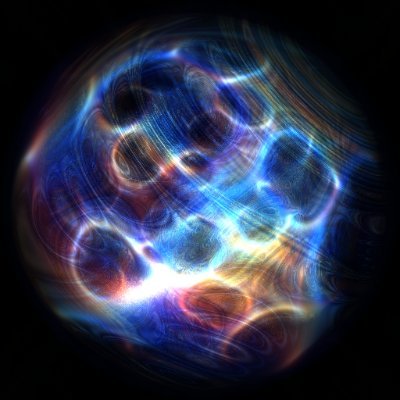
249 chars of #GLSL:
vec2 p=(FC.xy-r*.5)/r.y*mat2(8,-6,6,8),v;for(float i,f=3.+snoise2D(p+vec2(t*7.,0));i++<50.;o+=(cos(sin(i)*vec4(1,2,3,1))+1.)*exp(sin(i*i+t))/length(max(v,vec2(v.x*f*.02,v.y))))v=p+cos(i*i+(t+p.x*.1)*.03+i*vec2(11,9))*5.;o=tanh(pow(o/1e2,vec4(1.5)));


Frank G retweeted

"Yeah Steve absent mindedly bent this paperclip during a meeting. Anyway it's the best performing antenna we've ever produced. Don't ask me why"
Any sufficiently advanced RF engineering is indistinguishable from magic


Frank G retweeted

NASA has released a compelling video illustrating **carbon dioxide emissions and absorption** on Earth. **Orange clouds** represent CO₂ emissions, while **blue and green dots** mark absorption areas. Although **wildfires** emit less CO₂ than fossil fuels, they significantly impact ecosystems' future carbon capture ability...


Frank G retweeted

Reference #DesignoftheDay
TIDA-01063: High Accuracy AC Current Measurement Reference Design using PCB Rogowski Coil Sensor
📸: @tx_instruments
🔎: bit.ly/3zBo9ay
#ReferenceDesign 📚


Frank G retweeted

The #Bitcoin network has been functional for 99.99% of the time since its inception on January 3, 2009.
