
IDC Program Vice President covering cybersecurity and trust. The thoughts expressed are unfiltered and my own; they do not reflect those of IDC.
Scottsdale, AZ
Joined April 2012
- Tweets1.1K
- Following456
- Followers934
- Likes989


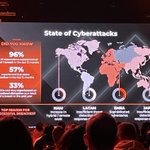

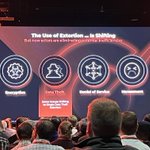

In 2013, CryptoLocker changed how attackers get paid. In 2026, AI began changing how attacks are produced.
I analyzed 65 annual security reports published this year. Six trends cleared the bar. A thread.

4. Voice is now a mainstream attack channel. Malicious cross-tenant vishing on Microsoft Teams rose 502% (Microsoft). Verify the voice before you act, however familiar the caller sounds.
The full report, with the methodology and all 30 sources, is free on Substack:
dicksonresearch.substack.com…

Frank Dickson retweeted

Lot of folks that don’t know anything about legal clearly being paid to shill for Claude on X. Wild times. #LegalTech
Access is the whole ballgame.
AI agents inherit every permission and use all of them. That is why @proofpoint is paying $6.3B for @varonis.
Right bet. But on day one it is a portfolio, not a platform. Ask for a demo, not a description.
dicksonresearch.com/blog/pro…

Frank Dickson retweeted

Important piece from Microsoft AI CEO @mustafasuleyman. Training models to think of themselves as human (as Anthropic does Claude) with concepts of an inner self, psychological wellbeing, rights and presumably grievances, is a potential existential risk.
project-syndicate.org/onpoin…

Frank Dickson retweeted
Satya is right. The way to make SI safe is not to train it with a sense of self, its own moral philosophy, and permission to act as a conscientious objector. That’s the “alignment” approach and it magnifies the control problem.
The engineering approach that Satya describes is different: separate the supply of intelligence from authority over it. Surround non-deterministic models with deterministic controls, observability, privilege limits, logging, and the ability to always contain or shut them down. Treat models/agents like powerful insider risks, not moral patients whose psychological wellbeing is at stake.
As Satya points out, the most trustworthy system is the one that lets us trust the model the least — not the one that encourages the model to develop independent agency and grievances. Engineering safety is not the same thing as “alignment.”


A decoy can now stop an AI attacker, not just catch one. In Tracebit's tests, one planted secret cut full compromise from 36% to 1%. The attacking agent's own safety training made it quit.
My new brief: dicksonresearch.com/blog/mou…
#AISecurity #Cybersecurity

Frank Dickson retweeted

I am very uncomfortable about people trying to ascribe religious force or a surrender of human judgment to AI models, and think it is a real safety issue.
The CIO who hardwires one model into every workflow has not bought AI.
He/she has bought a dependency.
My take on what @AnthropicAI 's IPO filing means for enterprise AI negotiations, in @CIOonline: cio.com/article/4228409/anth…

NVIDIA just built a very good cage for AI agents. Enforcement outside the agent, inline, in silicon the agent can't touch. I just love this!
The catch: a leash only works on the dog you own. Shadow, SaaS, vendor and attacker agents never see this sandbox. developer.nvidia.com/blog/ad…



Generative AI, Predictive AI and Creating Cybersecurity Outcomes blogs.idc.com/2023/08/21/gen…

CISO quote of the day, "If does what it says, it’s a big win. Loads of cybersecurity vendors make claims that their product does things, but they don’t do them well. This vendor does what it says on the tin."
