





Don retweeted

One trader bought 100k base:0xe6522a891702cd2e8cc2a5182638c9da1dd44b22 2 months ago at 10 12, and sold today at 18 16... Congrats on the 60% gains.
VC wallets are saying thanks and actively slurping.
A new wallet looks to be buying like the 2 VCs wallet.
Just new. But the same ways.
They can't help buying the dips.
VC level of entry on genesisl1:native
Chain and project is pure insanity. Nothing goes 100x in 5 minutes in this world.
You gotta buy when the market is like now. Things that look to be huge, just before they are huge.
Like the Early $Tao whales are saying. This is like Tao when they were the first on it.
Gl.
RT @genesis_L1: THE BIOTECH GOLD RUSH IS COMING. GENESISL1 BUILDS THE SHOVELS.
⛏️ There is a well-known fact: in the gold rush, the bigges…
Don retweeted

This is how you bring REAL utility and adoption to blockchain. genesisl1:native
#GenesisL1 is building something much bigger than another crypto ecosystem.
🧬 A free bioinformatics lab where scientists, researchers, and AI agents can analyze proteins, explore drug discovery, study mutations, and build AI models.
Why does this matter?
Because people don’t need to care about crypto to use it.
🔹 Researchers get powerful scientific tools for free.
🔹 AI agents can automate complex research.
🔹 Developers can build and monetize AI models and services.
🔹 More users and applications can create real demand for GenesisL1 infrastructure.
Free tools attract users. Useful products keep them. Models and services create economic opportunities.
That’s how an ecosystem can grow beyond speculation.
Real science. Real utility. Real potential for adoption.
And this is just the beginning. 🔥
$L1 🌱

Dear BioAI, MedAI, SynBio and biohacking community,
We are very happy to present the very first on-chain bioinformatics laboratory, as a part of the broad GenesisL1 decentralized science architecture:
gl1x.com/bio — Bioinformatics Onchain
Free. No account. Open to humans, programs and AI agents.
What it is
GenesisL1 carries hundreds of thousands of protein and nucleic acid structures published as MolNFT records, stored in contract state or anchored on chain with CID-verified IPFS content. GL1X treats that archive as a scientific database and runs the standard methods of sequence and structure bioinformatics over it, in its own code, with no external services, and each method validated against its reference program.
This is not a wrapper around someone else's server. It is a laboratory that lives on the chain.
What you can do today
🔎 Search & homology — molecular search by PDB ID, UniProt accession, NFT id, title, sequence or motif; full BLAST (blastp/n/x, tblastn, tblastx) over every sequence, identical to NCBI BLAST+ on the test set; PROSITE-style motif scans across sequences and 3D structures; profile HMM search reproducing the hmmsearch pipeline.
🧬 Structure — TM-align superposition of any chain against any other (or your own file); structure search over every indexed chain in seconds via the GSA structural alphabet; pre-computed experiment-vs-prediction comparisons for every UniProt accession present as both.
🔬 Full-atom analysis in the research workbench — DSSP secondary structure and H-bonds, accessibility, half-sphere exposure, contact maps, base pairs with pseudoknots, chain interfaces with buried surface, salt bridges; SS-pattern search (β-hairpins, helix-turn-helix); 3D templates for catalytic triads and metal sites.
💊 Pockets & druggability — cavities with volume, buriedness, hydropathy, charge and a druggability score, searchable across every structure; a ligand index of every cofactor, drug, ion and sugar with its binding-site residues.
🧪 pH environments — structure-based pKa for every ionizable group; charge, pI and stability of a protein in the stomach, intestine, blood, cytosol, endosome or lysosome, with membrane proteins getting a pH on each side.
⚗️ Proteomics — digestion by 24 enzymes, proteotypic peptides across the archive, masses, fragments, isotope patterns, MGF spectrum identification with target-decoy FDR, crosslink checks, HDX/LiP painting, a virtual 2D gel.
🌳 Families, evolution & variants — multiple alignment at MUSCLE-level accuracy, Jensen-Shannon conservation on the structure, NJ trees, mean-field DCA coevolution vs contacts, CD-HIT clustering, disorder/coiled-coil/TM annotation, substitution scans and ΔΔG from GL1F models.
📊 Datasets & on-chain ML — turn any search into a dataset (JSON/CSV/TSV) with documented features, or straight into GL1F model inputs; train off chain, publish the model as an NFT, run it on GenesisL1 on any record.
📚 Literature — PubMed search with up to 2,000 records clustered into a topic map in your browser (Broccoli), every structure linked to its literature.
✅ Proofs — every sequence in every result can be re-derived from the chain at a pinned block and from IPFS, with the calls to replay on your own node. Every hit names the record and the SHA-256 of what it describes. Deterministic answers, reference parity, held-out evaluation.
🤖 Agent-native — every tool above is an MCP tool and an API endpoint. An agent can identify a molecule, BLAST it, find its structural neighbours, analyse its pockets, digest it, align its family, scan its variants, read its literature, build a dataset, run a model and prove the sequences, end to end.
Where this is going
This is the opening move. The horizon is expanding constantly: the full human reference genome and pilot genomes are coming into chain state through GL1-seq, with 1000+ public genomes to follow, alongside Swiss-Prot, RefSeq proteins, UniRef50, paired antibody repertoires and IPD-IMGT/HLA. Peptide design (PEPTL), confidential IP (CIPNFT), scientific DAOs (COLLAB) and DeSci finance (DESCIFI) are being built around the same core.
Our aim is simple and ambitious: hundreds of thousands of researchers working on decentralized infrastructure, with tools and services for open science expanding at a pace the field has not seen before.
This is an invitation
Research on chain. Build on chain. Point your agents at the MCP server, call the API, fork the explorer, publish a model, mint your structures. Everything you compute here is provable, reproducible and belongs to no single server.
→ gl1x.com/bio · Docs: gl1x.com/docs/bioinformatics · API: gl1x.com/docs/api · MCP: gl1x.com/docs/mcp
Welcome to the laboratory.
GenesisL1

Don retweeted

Dear BioAI, MedAI, SynBio and biohacking community,
We are very happy to present the very first on-chain bioinformatics laboratory, as a part of the broad GenesisL1 decentralized science architecture:
gl1x.com/bio — Bioinformatics Onchain
Free. No account. Open to humans, programs and AI agents.
What it is
GenesisL1 carries hundreds of thousands of protein and nucleic acid structures published as MolNFT records, stored in contract state or anchored on chain with CID-verified IPFS content. GL1X treats that archive as a scientific database and runs the standard methods of sequence and structure bioinformatics over it, in its own code, with no external services, and each method validated against its reference program.
This is not a wrapper around someone else's server. It is a laboratory that lives on the chain.
What you can do today
🔎 Search & homology — molecular search by PDB ID, UniProt accession, NFT id, title, sequence or motif; full BLAST (blastp/n/x, tblastn, tblastx) over every sequence, identical to NCBI BLAST+ on the test set; PROSITE-style motif scans across sequences and 3D structures; profile HMM search reproducing the hmmsearch pipeline.
🧬 Structure — TM-align superposition of any chain against any other (or your own file); structure search over every indexed chain in seconds via the GSA structural alphabet; pre-computed experiment-vs-prediction comparisons for every UniProt accession present as both.
🔬 Full-atom analysis in the research workbench — DSSP secondary structure and H-bonds, accessibility, half-sphere exposure, contact maps, base pairs with pseudoknots, chain interfaces with buried surface, salt bridges; SS-pattern search (β-hairpins, helix-turn-helix); 3D templates for catalytic triads and metal sites.
💊 Pockets & druggability — cavities with volume, buriedness, hydropathy, charge and a druggability score, searchable across every structure; a ligand index of every cofactor, drug, ion and sugar with its binding-site residues.
🧪 pH environments — structure-based pKa for every ionizable group; charge, pI and stability of a protein in the stomach, intestine, blood, cytosol, endosome or lysosome, with membrane proteins getting a pH on each side.
⚗️ Proteomics — digestion by 24 enzymes, proteotypic peptides across the archive, masses, fragments, isotope patterns, MGF spectrum identification with target-decoy FDR, crosslink checks, HDX/LiP painting, a virtual 2D gel.
🌳 Families, evolution & variants — multiple alignment at MUSCLE-level accuracy, Jensen-Shannon conservation on the structure, NJ trees, mean-field DCA coevolution vs contacts, CD-HIT clustering, disorder/coiled-coil/TM annotation, substitution scans and ΔΔG from GL1F models.
📊 Datasets & on-chain ML — turn any search into a dataset (JSON/CSV/TSV) with documented features, or straight into GL1F model inputs; train off chain, publish the model as an NFT, run it on GenesisL1 on any record.
📚 Literature — PubMed search with up to 2,000 records clustered into a topic map in your browser (Broccoli), every structure linked to its literature.
✅ Proofs — every sequence in every result can be re-derived from the chain at a pinned block and from IPFS, with the calls to replay on your own node. Every hit names the record and the SHA-256 of what it describes. Deterministic answers, reference parity, held-out evaluation.
🤖 Agent-native — every tool above is an MCP tool and an API endpoint. An agent can identify a molecule, BLAST it, find its structural neighbours, analyse its pockets, digest it, align its family, scan its variants, read its literature, build a dataset, run a model and prove the sequences, end to end.
Where this is going
This is the opening move. The horizon is expanding constantly: the full human reference genome and pilot genomes are coming into chain state through GL1-seq, with 1000+ public genomes to follow, alongside Swiss-Prot, RefSeq proteins, UniRef50, paired antibody repertoires and IPD-IMGT/HLA. Peptide design (PEPTL), confidential IP (CIPNFT), scientific DAOs (COLLAB) and DeSci finance (DESCIFI) are being built around the same core.
Our aim is simple and ambitious: hundreds of thousands of researchers working on decentralized infrastructure, with tools and services for open science expanding at a pace the field has not seen before.
This is an invitation
Research on chain. Build on chain. Point your agents at the MCP server, call the API, fork the explorer, publish a model, mint your structures. Everything you compute here is provable, reproducible and belongs to no single server.
→ gl1x.com/bio · Docs: gl1x.com/docs/bioinformatics · API: gl1x.com/docs/api · MCP: gl1x.com/docs/mcp
Welcome to the laboratory.
GenesisL1
Don retweeted
In the past 2 days there have been a few hundreds of new $L1 holders.
There are a lot of people that don't know how to buy wL1 on Base, how to bridge it to GenesisL1 native token and how to stake those tokens.
This video will help you do that in under 5 minutes.
Make sure to share it so other can follow all the steps here.
Don retweeted
I told you. Both the VC wallets buying, and now other VCs have no choice but to hop on.
And all the warnings.
base:0xe6522a891702cd2e8cc2a5182638c9da1dd44b22 is not being aped super hard by the $tao community and VCs for no reason.
It's the old school defi plays of 2021 type. Ran by BTC ETH OGs who do it for the greater good, since they're already rich.
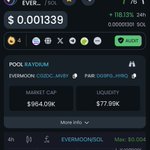
8m mcap is ridiculously low for this kind of intrinsic quality AND future narrative fit, decentralised science, decentralised AI, and permissionlessness.
Do the DYOR quickly. Featured this in a newsletter 2 months ago and I never do that.
Mega gem entry sub 10mil.
nztrader369.substack.com/p/n…

Don retweeted

The git moment for genomics. genesisl1:native
𝗚𝗲𝗻𝗼𝗺𝗲𝘀 𝗮𝗿𝗲 𝘀𝗼𝘂𝗿𝗰𝗲 𝗰𝗼𝗱𝗲. 𝗜𝘁'𝘀 𝘁𝗶𝗺𝗲 𝘄𝗲 𝗺𝗮𝗻𝗮𝗴𝗲𝗱 𝘁𝗵𝗲𝗺 𝗹𝗶𝗸𝗲 𝗶𝘁.
(The git moment for genomics)
This month The Bioinformatics Company unveils 𝗚𝗟𝟭-𝘀𝗲𝗾 — and the preprint behind it. One protocol that treats DNA, RNA and protein sequences the way git treats code: content-addressed, versioned, diffable, auditable.
Two layers. The separation is the point.
𝗟𝗮𝘆𝗲𝗿 𝟭 — 𝗣𝘂𝗯𝗹𝗶𝗰 𝗿𝗲𝗳𝗲𝗿𝗲𝗻𝗰𝗲, 𝗼𝗻 𝗰𝗵𝗮𝗶𝗻
The 𝗰𝗼𝗺𝗽𝗹𝗲𝘁𝗲 𝗵𝘂𝗺𝗮𝗻 𝗿𝗲𝗳𝗲𝗿𝗲𝗻𝗰𝗲 𝗴𝗲𝗻𝗼𝗺𝗲 (𝗚𝗥𝗖𝗵𝟯𝟴) — every base, in full, in chain state on GenesisL1. Not a hash. Not a pointer. The sequence itself, in GL1-seq's native ~2-bit encoding, 4× denser than FASTA. One canonical sequence, verifiable by anyone: the main branch the world commits against.
Every other genome is a diff. A full human genome as a diff is 𝟭𝟬–𝟮𝟬 𝗠𝗕 — and thousands of genomes on chain become routine.
At launch: the 𝗰𝗼𝗺𝗽𝗹𝗲𝘁𝗲 𝗵𝘂𝗺𝗮𝗻 𝗿𝗲𝗳𝗲𝗿𝗲𝗻𝗰𝗲 𝗴𝗲𝗻𝗼𝗺𝗲 (𝗚𝗥𝗖𝗵𝟯𝟴) + 𝟭𝟮 𝗽𝗶𝗹𝗼𝘁 𝗴𝗲𝗻𝗼𝗺𝗲𝘀. Next: 𝟭,𝟬𝟬𝟬+ public genomes, then Swiss-Prot, RefSeq, UniRef50, IMGT/HLA and antibody repertoires.
Not theory. GenesisL1 already holds 𝟭𝗠+ PDB and AlphaFold structures in chain state (MolNFT). Sequences are next.
𝗟𝗮𝘆𝗲𝗿 𝟮 — 𝗣𝗿𝗶𝘃𝗮𝘁𝗲 𝗱𝗮𝘁𝗮, 𝗶𝗻 𝗮 𝗰𝗼𝗺𝗽𝗹𝗶𝗮𝗻𝘁 𝗲𝗻𝘃𝗶𝗿𝗼𝗻𝗺𝗲𝗻𝘁
Patient and participant genomes 𝗻𝗲𝘃𝗲𝗿 𝘁𝗼𝘂𝗰𝗵 𝘁𝗵𝗲 𝗰𝗵𝗮𝗶𝗻. They remain in the institution's private, compliant environment — under its own governance, access controls and jurisdiction. The chain records only cryptographic commitments — a fingerprint, never the sequence. Provenance and change history, verifiable by anyone, with zero data leaving the institution.
𝗪𝗵𝗮𝘁 𝗶𝘁 𝗱𝗲𝗹𝗶𝘃𝗲𝗿𝘀
🔹 𝗟𝗼𝘀𝘀𝗹𝗲𝘀𝘀 𝗯𝘆 𝗰𝗼𝗻𝘀𝘁𝗿𝘂𝗰𝘁𝗶𝗼𝗻 — bit-exact reconstruction from reference + commits. 100% fidelity.
🔹 >𝟰× 𝗳𝗮𝘀𝘁𝗲𝗿, >𝟰× 𝗰𝗵𝗲𝗮𝗽𝗲𝗿 — touch the delta, never the full sequence.
🔹 𝗣𝗿𝗼𝘃𝗲𝗻𝗮𝗻𝗰𝗲 𝗮𝗻𝗱 𝗮𝘂𝗱𝗶𝘁 𝗯𝘂𝗶𝗹𝘁 𝗶𝗻 — who, what, derived from what. Reproducibility becomes a property of the data.
🔹 𝗗𝗲𝘁𝗲𝗿𝗺𝗶𝗻𝗶𝘀𝘁𝗶𝗰 𝗲𝘃𝗲𝗿𝘆𝘄𝗵𝗲𝗿𝗲 — identical results on-chain (EVM) and off-chain, in Python, JavaScript, Go, Rust and C++. No protocol upgrade required.
🔹 𝗡𝗮𝘁𝗶𝘃𝗲 𝘁𝗼 𝗵𝘂𝗺𝗮𝗻𝘀 𝗮𝗻𝗱 𝗔𝗜 𝗮𝗴𝗲𝗻𝘁𝘀 — one format, one interface. Agents branch, analyze and commit with full attribution; humans audit every step.
For biobanks, sequencing cores, national genome projects, pharma and regulators: one canonical reference everyone shares, plus a tamper-evident audit trail for private data — 𝘄𝗶𝘁𝗵𝗼𝘂𝘁 𝗺𝗼𝘃𝗶𝗻𝗴 𝗮 𝘀𝗶𝗻𝗴𝗹𝗲 𝗽𝗮𝘁𝗶𝗲𝗻𝘁 𝗴𝗲𝗻𝗼𝗺𝗲.
Preprint, benchmarks and code this month — follow for the release.
#Genomics #Bioinformatics #DeSci #DataProvenance #AIAgents #GenesisL1

Don retweeted
Hello,
We are very happy to share GL1X.com/bio — a decentralized, on-chain bioinformatics laboratory embedded in the blockchain explorer.
Our aim is hundreds of thousands of researchers on GenesisL1’s decentralized infrastructure.
teapawt.net/genesis_L1/status/2112…
Thank you!
Your AI agents just got an in silico bio lab on chain. It lives on GenesisL1.
GL1X.com delivers explorer with science: 1M+ molecular records on chain and tools to study them, beside every L1 coin flow. For Claude, ChatGPT, any MCP client.
teapawt.net/genesis_L1/status/2112…
Don retweeted
𝗚𝗲𝗻𝗼𝗺𝗲𝘀 𝗮𝗿𝗲 𝘀𝗼𝘂𝗿𝗰𝗲 𝗰𝗼𝗱𝗲. 𝗜𝘁'𝘀 𝘁𝗶𝗺𝗲 𝘄𝗲 𝗺𝗮𝗻𝗮𝗴𝗲𝗱 𝘁𝗵𝗲𝗺 𝗹𝗶𝗸𝗲 𝗶𝘁.
(The git moment for genomics)
This month The Bioinformatics Company unveils 𝗚𝗟𝟭-𝘀𝗲𝗾 — and the preprint behind it. One protocol that treats DNA, RNA and protein sequences the way git treats code: content-addressed, versioned, diffable, auditable.
Two layers. The separation is the point.
𝗟𝗮𝘆𝗲𝗿 𝟭 — 𝗣𝘂𝗯𝗹𝗶𝗰 𝗿𝗲𝗳𝗲𝗿𝗲𝗻𝗰𝗲, 𝗼𝗻 𝗰𝗵𝗮𝗶𝗻
The 𝗰𝗼𝗺𝗽𝗹𝗲𝘁𝗲 𝗵𝘂𝗺𝗮𝗻 𝗿𝗲𝗳𝗲𝗿𝗲𝗻𝗰𝗲 𝗴𝗲𝗻𝗼𝗺𝗲 (𝗚𝗥𝗖𝗵𝟯𝟴) — every base, in full, in chain state on GenesisL1. Not a hash. Not a pointer. The sequence itself, in GL1-seq's native ~2-bit encoding, 4× denser than FASTA. One canonical sequence, verifiable by anyone: the main branch the world commits against.
Every other genome is a diff. A full human genome as a diff is 𝟭𝟬–𝟮𝟬 𝗠𝗕 — and thousands of genomes on chain become routine.
At launch: the 𝗰𝗼𝗺𝗽𝗹𝗲𝘁𝗲 𝗵𝘂𝗺𝗮𝗻 𝗿𝗲𝗳𝗲𝗿𝗲𝗻𝗰𝗲 𝗴𝗲𝗻𝗼𝗺𝗲 (𝗚𝗥𝗖𝗵𝟯𝟴) + 𝟭𝟮 𝗽𝗶𝗹𝗼𝘁 𝗴𝗲𝗻𝗼𝗺𝗲𝘀. Next: 𝟭,𝟬𝟬𝟬+ public genomes, then Swiss-Prot, RefSeq, UniRef50, IMGT/HLA and antibody repertoires.
Not theory. GenesisL1 already holds 𝟭𝗠+ PDB and AlphaFold structures in chain state (MolNFT). Sequences are next.
𝗟𝗮𝘆𝗲𝗿 𝟮 — 𝗣𝗿𝗶𝘃𝗮𝘁𝗲 𝗱𝗮𝘁𝗮, 𝗶𝗻 𝗮 𝗰𝗼𝗺𝗽𝗹𝗶𝗮𝗻𝘁 𝗲𝗻𝘃𝗶𝗿𝗼𝗻𝗺𝗲𝗻𝘁
Patient and participant genomes 𝗻𝗲𝘃𝗲𝗿 𝘁𝗼𝘂𝗰𝗵 𝘁𝗵𝗲 𝗰𝗵𝗮𝗶𝗻. They remain in the institution's private, compliant environment — under its own governance, access controls and jurisdiction. The chain records only cryptographic commitments — a fingerprint, never the sequence. Provenance and change history, verifiable by anyone, with zero data leaving the institution.
𝗪𝗵𝗮𝘁 𝗶𝘁 𝗱𝗲𝗹𝗶𝘃𝗲𝗿𝘀
🔹 𝗟𝗼𝘀𝘀𝗹𝗲𝘀𝘀 𝗯𝘆 𝗰𝗼𝗻𝘀𝘁𝗿𝘂𝗰𝘁𝗶𝗼𝗻 — bit-exact reconstruction from reference + commits. 100% fidelity.
🔹 >𝟰× 𝗳𝗮𝘀𝘁𝗲𝗿, >𝟰× 𝗰𝗵𝗲𝗮𝗽𝗲𝗿 — touch the delta, never the full sequence.
🔹 𝗣𝗿𝗼𝘃𝗲𝗻𝗮𝗻𝗰𝗲 𝗮𝗻𝗱 𝗮𝘂𝗱𝗶𝘁 𝗯𝘂𝗶𝗹𝘁 𝗶𝗻 — who, what, derived from what. Reproducibility becomes a property of the data.
🔹 𝗗𝗲𝘁𝗲𝗿𝗺𝗶𝗻𝗶𝘀𝘁𝗶𝗰 𝗲𝘃𝗲𝗿𝘆𝘄𝗵𝗲𝗿𝗲 — identical results on-chain (EVM) and off-chain, in Python, JavaScript, Go, Rust and C++. No protocol upgrade required.
🔹 𝗡𝗮𝘁𝗶𝘃𝗲 𝘁𝗼 𝗵𝘂𝗺𝗮𝗻𝘀 𝗮𝗻𝗱 𝗔𝗜 𝗮𝗴𝗲𝗻𝘁𝘀 — one format, one interface. Agents branch, analyze and commit with full attribution; humans audit every step.
For biobanks, sequencing cores, national genome projects, pharma and regulators: one canonical reference everyone shares, plus a tamper-evident audit trail for private data — 𝘄𝗶𝘁𝗵𝗼𝘂𝘁 𝗺𝗼𝘃𝗶𝗻𝗴 𝗮 𝘀𝗶𝗻𝗴𝗹𝗲 𝗽𝗮𝘁𝗶𝗲𝗻𝘁 𝗴𝗲𝗻𝗼𝗺𝗲.
Preprint, benchmarks and code this month — follow for the release.
#Genomics #Bioinformatics #DeSci #DataProvenance #AIAgents #GenesisL1
🤖 Made with AI


Don retweeted
Let me sound crazy again.
Just like I did with $TAO many years ago, back when it wasn’t even listed on a single exchange.
- Genesis genesisl1:native will enter top10 in the next bull run.
- Science and biotech become the BIGGEST narratives, delivering major breakthroughs in drug discovery, cancer research, neurodegenerative diseases and potentially even therapies targeting biological aging.
- The entire human reference genome and thousands of public human genomes live on GenesisL1. Versioned like Git repositories, with verifiable provenance, on-chain random access and smart-contract verification. What sounds crazy today becomes normal scientific infrastructure with Genesis genesisl1:native.
- Thousands of laboratories, universities and biotech companies use GenesisL1. Not to speculate on crypto, but to register genomic datasets, track research versions, verify computational results, protect intellectual property and collaborate across institutions.
- AI agents become actual scientific researchers’ assistants. Imagine Claude or other AI systems accessing millions of molecular records, comparing protein structures, analyzing sequences, building datasets and calling specialized models through Genesis infrastructure. GL1X is already an early glimpse of this.
- Institutions use GenesisL1 without even knowing they’re using crypto. Laboratories pay in stablecoins while the underlying infrastructure converts the required fees into $L1. Real network demand comes from actual scientific activity, not just speculation.
Learn GenesisL1.


Don retweeted
If you are really interested in biomedical research and anyhow involved in blockchains please consider checking onchain bioinformatics laboratory for in silico research on chain
GL1X.com/molnft

Don retweeted
GenesisL1 will soon present a state-of-the-art Scientific DAO engine.
Every GenesisL1 protocol and dataset wired into DAO pipelines — with a new Decentralized Science Finance #DeSciFi layer at its core.
Finance the frontier of Science
#DeSci → DeSciFi.org

Don retweeted
We are upgrading the genesisl1:native onchain #Biotech insilico laboratory a few versions every week with amazing new features and improvements gl1x.com/molnft. Today, GenesisL1 stores >1M molecular records. A year from now: >100M sequences & the entire Human Genome onchain. #DeSci
Don retweeted
How to launch your first crypto AI model on GenesisL1.
NO CODING REQUIRED! 🤯
Here’s a quick guide to GL1F Crypto 👇
1️⃣ CHOOSE YOUR DATA
Open crypto.gl1f.com → Create Crypto AI model.
Select:
• Exchange: where the data comes from.
• Market: the coin you want to study.
• Candle: data resolution - 15m means one candle every 15 minutes.
• Start / End: the historical period your model will study.
For this example: Binance → ETH → 15m candles → six months of completed history.
2️⃣ DEFINE YOUR QUESTION
Use these example settings:
• Direction: Up
• EMA baseline: 5
• Target: 1%
• Stop: 0.5%
• Horizon: 5 hours
EMA is a moving average that gives more weight to recent prices. “5” means five candles.
Your question becomes:
“Will ETH reach 1% above EMA5 before reaching 0.5% below it, within the next five hours?”
Both levels are measured from the EMA baseline.
The model learns from historical yes/no outcomes.
3️⃣ CHOOSE YOUR SIGNALS
Signals are the information the model can see: price changes, volatility, volume, momentum, BTC movements and more.
Start with the “Optimal” preset.
More signals don’t automatically mean a better model.
Click “Build dataset” → “Continue to training”.
4️⃣ TRAIN YOUR MODEL
For your first experiment, keep the default model settings and use “Walk-forward” validation.
That means learning from earlier data and testing on what happened next.
The main settings:
• Trees: how many learning steps the model can take.
• Depth: how complex each tree can become.
• Learning rate: how much each tree contributes.
• Min leaf: minimum examples supporting a final tree decision.
• Final test %: the latest data reserved for evaluation.
Keep early stopping enabled: it stops adding trees when validation stops improving.
Train, inspect the results, then save your .gl1f file.
5️⃣ BACKTEST WITH COSTS
Use the final test period and include fees and slippage.
“Entry threshold” is the minimum probability required for a simulated signal.
0.60 = at least 60%.
Start with 1× leverage for this exercise.
Check drawdown, trade count and the full equity curve - not just the final return.
Avoid repeatedly changing settings to make the same final test look better.
6️⃣ RUN INFERENCE
Inference means asking your trained model to evaluate a new completed candle.
A result of 0.72 means:
“The model estimates a 72% probability of the specific event you defined.”
It is an estimate, not a guarantee.
7️⃣ OPTIONAL: PUBLISH
When deployment is available, you can mint your model as an NFT on GenesisL1, choose its license and configure free access, tips or paid usage.
Pick a market. Define a question. Build. Test. Learn.
No code required. Fees are burnable.
Experimental research software. Backtests are simulations; the platform explicitly excludes live trading and automated execution. 🤝
genesisl1:native

Don retweeted
Hugging face sold for 13Bil.
genesisl1:native aka gensis L1 is an already quantum resistant chain WITH decentralised Hugging face dapp...
At 10mil Mcap and 5 years of work on it...
All the $serv $tao$wallet $tibbir whales I discuss with, are interested.
DYOR. @genesis_L1 or @firsttensor to start your research
Just before the decentralised AI crypto hype... Just before mass printing in the USA....
Imagine that. Stake and forget. Wake up in a few years.
Don retweeted
GL1F Crypto is now live (early alpha). 📉📊📈
crypto.gl1f.com
The GenesisL1 ML studio breaking the code barrier for decentralized Crypto AI models:
🧠 Train
📈 Backtest
🪙 Tokenize NFT
💰 Monetize
No code. No backend. Every prediction on-chain.
A quant in your pocket.


Don retweeted
Not sure how much longer we’ll be able to buy genesisl1:native below $0.30.
Coming to GenesisL1:
- Anyone being able to build AI/ML models with zero coding skills. Train them, tokenize them, deploy them, keep them private or monetize them on-chain.
Literally “Pumpfun for machine learning”, starting with the GL1F crypto runtime: idea → dataset → model → backtest → live inference. All from your browser.
- A decentralized Hugging Face + permissionless AI inference market.
Tokenized mainstream models, independent inference operators and verifiable model identity.
- AI agents paying for AI through native x402 machine payments. UI for humans. API for agents.
- Scientific infrastructure for models, molecular structures, provenance, reproducible computation and protected IP - opening the door to universities, laboratories, biotech and pharma.
- Private/encrypted models that can be shared with selected parties without making them public.
- An ecosystem where models become actual economic assets - ownable, traceable, usable and monetizable.
And underneath all of it:
$L1 as the native settlement layer.
Deployments. Inference. Services. Machine payments.
With the planned GL1F fee model, the $L1 collected in fees gets automatically burned.
We are still ridiculously early.