
file-based command line http client for developers and teams
Joined July 2020
- Tweets20
- Following9
- Followers11
- Likes9

Version 1.6.0 is here with improved multipart capabilities and the ability to author requests in YAML and JSON formats!
Get it here github.com/Leopard2A5/fhttp/…

I don't have a strong enough opinion yet to code the tool in such an opinionated way 😁
Version 1.5.1 let's you access the headers regardless of case, i think that's good enough for now.
Users have a whole js runtime at their disposal 😜
Small update to the new deno response handler! You can now use the `header(key)` convenience function to access response headers regardless of case.
get it here: github.com/Leopard2A5/fhttp/…

I use kotlin, too and come from Java originally 😉
Yes, in the protocol HTTP headers are case insensitive, but when you read them as strings... 🤷♂️
Still i think it would make it a lot easier to use if you didn't have to consider case when working with the headers!
Hmmm, yeah, naturally they're case sensitive because it's just a plain old object holding them as they've been received. Maybe a helper function to find a header case-insensitive? Or convert all headers to lower case when building the headers object? 🤔
hey again @alc0der, you'll want to check out this tweet 😉 teapawt.net/fhttp_tool/status/1423…

New Release everyone!
Version 1.5.0 is out with an exciting new response handler: deno!
You can now use javascript to process the response and you even have access to status code and headers!
find it here: github.com/Leopard2A5/fhttp/…
Happy friday everyone!

New Release everyone!
Version 1.5.0 is out with an exciting new response handler: deno!
You can now use javascript to process the response and you even have access to status code and headers!
find it here: github.com/Leopard2A5/fhttp/…
Happy friday everyone!
FHTTP retweeted

Is there a way in @fhttp_tool to process response headers. This would be useful for extracting URL from HTTP location header for example.
Hi Akilan,
thank you for your input! The verbose flag is mainly meant for debugging, especially the lookup of variables and secrets. I chose to add the --curl flag because it's explicitly saying what it's there for ✌️
Great news! fhttp 1.4.0 adds the --curl flag, allowing you to export your request as a bash/curl expression, including an $() expression to add in secrets, so you can safely share the result!
get it now at github.com/Leopard2A5/fhttp!

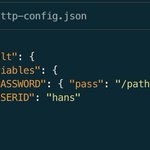
ALT the profile, notice the password resolved through pass

ALT the request we're going to export

ALT the result, copy and share with your co-worker
fhttp is partly inspired by the intellij http client (stated on the github page) but has features that intellij doesn't have.
FHTTP retweeted

Check out @fhttp_tool. It's a command-line tool to execute HTTP requests that are stored in plain text files. This way, you can locate the requests in the corresponding project, put them under version control and share them with the team. github.com/Leopard2A5/fhttp
#fhttp 1.3.2 also allows you to nest file includes. This is especially useful in GraphlQL contexts, working with fragments!
Check it out at github.com/Leopard2A5/fhttp
