

Official X for Firecode. Coding Interview Prep - Done Right. See what the hype is about at https://teapawt.net/t.co/ATzwG2aScM
San Francisco, CA
Joined April 2015
- Tweets763
- Following99
- Followers3.2K
- Likes473




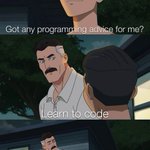




Coding interview tip: say the brute force out loud first.
The interviewer isn't grading whether you jump straight to O(n). They're watching you get from O(n²) to O(n) and say why.
Brute force, its cost, the bottleneck, the fix. Four sentences, and you've shown them how you think.
46

Less LeetCode. More job offers.
Firecode is 50% off for life until Nov 30. Practice the patterns, and Firecode brings each one back right before you'd forget it, so it's still there on interview day.

ALT Black Friday, ends Nov 30: 50% off. A Firecode dashboard with a streak, weekly goals and problem progress, Firebot the fireball mascot, and the line: Less LeetCode. More job offers.
1
37
Firecode retweeted

My prediction for software engineering over the next 3 to 5 years.
Computer science and software engineering fundamentals will become far more valuable than knowing the latest frameworks.
If AI can write code in almost any language, knowing the nuance of another framework becomes less of a competitive advantage.
But understanding algorithms, data structures, networking, operating systems, databases, architecture and security?
That's a different story.
You still need to know:
- Why a particular architecture is appropriate.
- Why an API might fail.
- Why a database won't scale.
- Why an apparently working solution might be insecure.
A coding agent can build a solution.
But you need the knowledge to evaluate the trade-offs and recognise when it's wrong.
So, I think we'll see a renewed emphasis on the fundamentals of computer science and software engineering.
TL/DR: Learning how computers and software systems work will matter more than memorising how to use them.
What do you think?
Look at the timestamps 😂 This is really sad @Microsoft , can we please aggressively hire some cracked SREs to fix this? firecode.io has a huge pipeline of cracked engineers, hit us up if you need a hookup

2
151
AI-allowed interview rounds make fundamentals matter more, not less. When everyone has the same assistant, the difference is who can tell when it's wrong.
1
2
90
Coding interviews in 2026: a historical reenactment where you play a 2019 engineer, the interviewer plays the compiler, and nobody's allowed to mention what year it is 😅

writing code in an interview is now larping in the literal sense. like you are straight up live action roleplaying a historical reenactment of what it was like to be a software engineer.
1
107
Yesterday's poll: the answer is (b).
A problem you solved last month and can't solve today was never learned, only seen. Interviews test what you can still do on the day.
82
Onsite in two weeks. What do you do?
(a) 100 new problems
(b) redo the 50 you already solved
(c) refresh the job board again
Reply with a letter.
2
80


Binary search has two correct templates, and most bugs come from mixing them.
lo <= hi with hi = mid - 1
lo < hi with hi = mid
Mix them and you loop forever or skip the answer. Pick one and never switch.
74
That intuition gets built the slow way: write it yourself, get it wrong, find out why. The next generation can still get it. It just has to be on purpose now, because the job won't force it on them anymore.

Software engineers have been adapting to technology changes and paradigm shifts for decades (compare your SWE stack today with what it was 20 years ago). In this regard, we were much more prepared for AI to dramatically change how we build software (i.e., we almost write no code manually anymore).
AI can produce very high-quality code, especially if you know how to guide it well. However, I'm worried about one thing: The people getting most value out of LLMs and AI coding agents today are the experienced software engineers who cut their teeth writing code manually for decades and have good intuitions on how to build good software.
I wonder what will happen to the next generation of SWEs who never wrote code and their entire experience was prompting AI agents to build stuff, add features, and fix bugs.
77
We are absolutely and irreparably cooked: terminal2shell.com

1
183
Problem 1: I will deeply understand every solution.
Problem 140: it's two pointers, next.
The interview, on a problem I've solved twice: …
70
If the AI passes your coding test, test the two things it still fumbles: explaining why the solution is correct, and catching the case where it isn't.
That was always the real interview. The typing was just the visible part.

Coding interviews are changing faster than most people realize.
I recently read a post by Felix Rieseberg, an engineering manager at Anthropic who led engineering on claude[.]ai, cowork and claude code desktop.
He has stopped giving coding interviews.
His reason claude is now better at them than the candidates.
Here's what that means for how engineers get hired
1. The coding interview has lost its signal
For years, small coding challenges were a weak but real predictor. If you could define a problem quickly and find a clean solution, you'd probably do well on his team. That's no longer true.
In his words, there's no more point in a React challenge than in quizzing people about assembly, because claude is better at both. He also says his most impactful engineers succeed regardless of how they'd score on these tests. If the tool passes your test, the test isn't measuring the candidate.
2. Newcomers notice what veterans stopped seeing
When Felix interviewed at Notion, they asked him to design offline mode. He later learned it was a "trick" question. Everyone believed the CEO would never allow the experience it required. It turned out nobody had ever checked. He was new, so he simply asked.
A year later it happened the other way around. He'd wanted dashboard TVs for the teams, hit resistance, and gave up. A new hire had the same idea, and Felix told him not to bother. The new hire had already asked, and the TVs arrived the next day. In one year, Felix had become the person who assumes things can't be done.
New people spot problems and opportunities that everyone else has stopped noticing.
3. The catch: nobody listens to the new person
Newcomers have the fresh view but no influence. In most companies, you need years of credibility before anyone backs your idea, because building things used to be expensive. So juniors were expected to finish tickets faster, not to propose ambitious ideas.
That has changed. Building things is now cheap. Two relatively new Anthropic engineers built a prototype of a desktop app for Claude Code in one weekend, and the first public version shipped about 8 days later. They skipped the PRD, the approval meetings, and the wait for design resources. They built the thing and showed it.
4. His playbook for engineers without status
First, start from business impact, not your backlog. Figure out what the company actually needs. A useful shortcut is to learn what your manager's manager is trying to achieve.
Second, pick one ambitious idea that would significantly move that goal.
Third, build a working prototype over a weekend.
Fourth, keep it to one idea. His most common criticism of juniors is that they hide three great ideas among twenty bad ones in a single prototype. The prototype should make leadership understand the opportunity and see that you're the one who can run it.
Fifth, use your fresh perspective. You still experience the product the way users do, and you haven't yet learned all the reasons something is supposed to be "impossible."
5. What I'd test instead of LeetCode
Felix says he hasn't figured out the replacement yet. For now he looks for small prototypes that show taste, empathy and principled thinking. Here's what I'd add:
Give candidates a vague problem with no spec and watch which questions they ask before building anything. Give them a 300-line PR written by an agent with three subtle bugs and see if they find them, since most of the job is now reviewing AI output. Give them 60 minutes with any agent they want and watch when they trust it, when they step in, and when they throw work away. Then show them two working solutions and ask which one should ship and why. None of these have an answer key, and that's what makes them useful.
6. Why this is good news for juniors
Felix says he's seeing comparatively new engineers overtake people who are probably better coders and have been around much longer. AI closed most of the output gap. It didn't close the judgment gap. A junior who ships one focused, well-reasoned prototype now has more to show than someone who solved 500 LeetCode problems.
7. The uncomfortable part
"Hunger beats tenure" is easier when you have free weekends, savings, and no second job. Weekend prototypes favor people who already have time and a financial safety net. And "hunger" can easily become an excuse to push out experienced engineers. The playbook is good. Hiring should still measure judgment, not hours worked.
LeetCode tested whether you could write the code.
The new interview tests whether you know which code not to write.
1
92
One more for the list: "The AI's solution passes the examples. Find the input that breaks it."
That question is basically the coding round now, and it rewards the same fundamentals LeetCode did.

Interview questions I'd prep for in 2026 (now that AI writes half the code) 👀
→ "Your AI agent broke prod. How do you find what changed ?"
→ "Walk me through a PR you reviewed. What did you catch ?"
→ "Explain this code you didn't write."
→ "When would you NOT use AI for this ?"
→ "Build a small feature end to end, out loud."
The LeetCode-only grind is lowkey cooked
What did they ask in your last interview ?
80