

Trying/building things and logging them on: https://teapawt.net/t.co/g3OZMcWBgn
Edmonton, Alberta
Joined August 2011
- Tweets132
- Following665
- Followers84
- Likes268


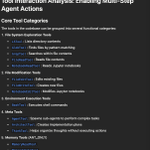

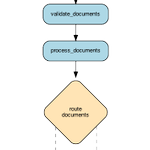
If you are interested in top of the field Code Mode overview, you should do 2 things:
- Listen to @NextTokenShow latest episode on Code Mode
- Use the gist below to digest every aspect of how rich this conversation is
LLM enriched learning is underhyped


Programming used to be a walled garden.
Harness engineering is the new programming.
The wall isn't gone — it just moved.
For now.
One of this year’s best learning decisions has been:
Using my 30 min lunch breaks to read a (full or partial) chapter of @ramalhoorg Fluent Python book
Suddenly, with all AI available, it makes more sense to know what is really good use of the language
Having a blast using Toad @willmcgugan ! This looks so good + the markdown rendering is so well done.
Last week's experiment: 𝗮𝘀𝘆𝗻𝗰 𝗲𝗻𝘃𝗶𝗿𝗼𝗻𝗺𝗲𝗻𝘁 𝘁𝗼 𝘀𝗶𝗺𝘂𝗹𝗮𝘁𝗲 𝗮 𝗦𝘂𝗽𝗲𝗿𝘃𝗶𝘀𝗼𝗿 → 𝗪𝗼𝗿𝗸𝗲𝗿𝘀 𝘀𝗲𝘁𝘂𝗽 𝘄𝗶𝘁𝗵 𝗿𝗲𝗮𝗹-𝘁𝗶𝗺𝗲 𝗿𝗲𝘃𝗶𝗲𝘄 𝗮𝗻𝗱 𝗳𝗼𝗹𝗹𝗼𝘄-𝘂𝗽 𝗮𝘀𝘀𝗶𝗴𝗻𝗺𝗲𝗻𝘁𝘀.
The main motivators for me to try this approach arise from production challenges like:
- Increase inference efficiency for multi-step tasks
- Create context windows that allow the agent to focus on a very specific part of the process
- Enable flexibility to craft specific workflows for isolated parts of a multi-step task
- Leverage async environments to create more dynamic exchanges between agents
If you want to run/try it yourself: github.com/fmeiraf/spec_agen…
In the midst of so much information—new models, post-training strategies (read: RL), and others—I found myself very excited when I first read the blog post about the RLM (alexzhang13.github.io/blog/2…) approach. The reason is simple: inference strategies are mostly overlooked and non-sexy in terms of discussion, yet very present in AI engineering day-to-day (Chain of Thought, ReAct, etc.).
For most practitioners out there, at this point context engineering is not just jargon anymore, and everyone is taking context rot (research.trychroma.com/conte…) somewhat seriously (if you are not, you should!). Keeping the context controlled and relevant is definitely one of the main engineering tasks when building performant agents. For this reason, strategies at inference time are something I really look forward to whenever something different shows up in the wild—and that’s the case for RLM.
I’ll be very straight to the point here: from the many things discussed in the RLM blog post and idea, for me the one that is most interesting is having the REPL as the main environment for agent actions.
I tried it myself over the last week, and I want to share below some of the things I found.
> The good, and the not-so-good
The thoughts logged here came from interacting with the repo published by the authors, to which I only added LiteLLM and enabled some async operations for my own use cases (github.com/fmeiraf/rlm).
>> The good
Quoting from the authors:
“The natural solution is something along the lines of, ‘well maybe if I split the context into two model calls, then combine them in a third model call, I’d avoid this degradation issue’. We take this intuition as the basis for a recursive language model.”
From this, there are two obvious things the RLM approach enables:
- Dealing with context rot (by outsourcing a lot of the info to the REPL).
- Helping with very large context (letting the LLM use native programming-language resources to parse and break down the understanding as variables).
There are a few things that are not so obvious from the above, but are enabled by the REPL environment idea:
- It enables the model to think and spend tokens mostly on coding—which we already know these models do somewhat well (or well enough for the tasks we assign them).
- (The most interesting to me) it enables the model to create its own tools on the fly.
From the blog post, and from my own interactions, it’s clear to see an interesting pattern:
LLMs try to get ahead in the REPL, running many commands at once, which to me seemed like an interesting way to compress information gathering, making it more efficient and rich.
As I said, the REPL idea is something I really found interesting, but from the tests, the positives above can kind of backfire…
>> The bad
This is only my opinion after a week of a few interactions with this idea, mostly for a coding task: generating data visualizations.
- LLMs doing more coding: with the REPL, most of the LLM interactions involve coding responses that will be parsed and executed. If you’ve used LLMs for coding tasks, you know errors happen quite often—which isn’t different here, which leads to…
- REPL management: as you start getting errors, dealing with the REPL starts getting somewhat complex. Depending on the error location, you could have some variables from the proposed code added to the REPL, but further lines that didn’t execute might not be, and I’ve seen this confuse LLMs quite a bit. I believe you could prompt/RL this out and/or improve context management for REPL information, but instead of feeling like this makes context gathering go fast, when it goes wrong, it actually gets very slow—and annoying.
- Tool-creation automation: this one sounds very attractive, but I have the feeling it might not play out well in production agents. The reason is simple: for tasks that are well-defined/scoped, you tend to see consolidation in how the task is performed, which means you’ll have at least one well-defined tool that helps the LLM achieve good results most of the time. If you’re not adding these functions to the REPL globals—and, as a consequence, to the prompts—you’ll be relying on the randomness of the model to create these tools from scratch every time.
> Conclusion
The verdict is that I find the REPL idea very interesting, and I’ll definitely follow more closely other people doing work with this going forward. For now, it doesn’t seem like a clear replacement for the normal ways (read: for-loops and context management in templated prompts).
From my tests so far, the frustrations with code execution and handling the REPL are not trivial to overcome. On the same note, dealing with code suggests you might be better off with handcrafted functions—which puts you back into the traditional tool loop all over again.


Fighting the FOMO of going all-in on RL with my current side project, but I can't deny how much learning and improvement can be done with pre-RL fine-tuning and context engineering.
Experiments have also provided a lot of learning so far, such as:

- Providers are not very focused on vision skills for the SOTA models, and you can barely see much difference between the big, mini, and nano versions (I will post data on that soon).