
Software Developer at @JetBrains
Munich, Germany
Joined July 2025
- Tweets86
- Following65
- Followers38
- Likes61





Forketyfork retweeted

We've reimagined JetBrains IDEs to become the ultimate agentic workbench.
Air is an open hub for agents inside your IDE:
-Any agents to run (Claude, Codex & many more)
-Agents are more efficient with IDE intelligence
-Free Junie Lite agent bundled
-Cloud runs via Air Teams
⬇️

Forketyfork retweeted

I’m opening my workshop “Concurrent Programming Fundamentals for the AI Era” to external teams for the first time.
Concurrency isn’t really about algorithms or APIs. It’s about being able to look at code and see what can happen between threads or coroutines, and how to prevent possible races and bad interleavings.
This intuition is the hardest thing to teach. Over the past 8+ years, I’ve taught concurrency at universities and later turned that experience into internal workshops at JetBrains. I ran the workshop several times for 250+ colleagues and received overwhelmingly positive feedback, with many participants saying it changed the way they reason about concurrent code.
In the AI era, this skill matters even more. AI can generate code quickly and confidently, but subtle concurrency bugs still need human understanding, careful testing, and debugging intuition.
It’s a 4-day, hands-on workshop for JVM developers. Participants implement classic and modern concurrent data structures, dissect tricky bugs, and learn practical testing and debugging techniques in Java or Kotlin.
I’m now looking for the first external teams who’d like to try it. If your team works with backend systems, infrastructure, databases, developer tools, coroutines, virtual threads, or other concurrency-heavy software, I’d be happy to talk.
👉 Details: nikitakoval.org/workshop

Forketyfork retweeted

Mellum started with code completion.
Mellum2 is built for more – handling both natural language and code.
A 12B-parameter open-source LLM for routing, RAG, and sub-agents, optimized for ultra-low-latency inference.
Now on @huggingface.
Learn more: jb.gg/zpb9dp

Forketyfork retweeted
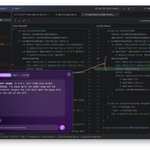
Understanding code is a big challenge in the AI era, which is why our colleague @forketyfork has built Walkthrough.
This experimental plugin gives AI agents an MCP tool for walking you through code in a JetBrains IDE in a visual way rather than using walls of text.
Check it out: plugins.jetbrains.com/plugin…


Forketyfork retweeted

On DeepWiki and increasing malleability of software.
This starts as partially a post on appreciation to DeepWiki, which I routinely find very useful and I think more people would find useful to know about. I went through a few iterations of use:
Their first feature was that it auto-builds wiki pages for github repos (e.g. nanochat here) with quick Q&A:
deepwiki.com/karpathy/nanoch…
Just swap "github" to "deepwiki" in the URL for any repo and you can instantly Q&A against it. For example, yesterday I was curious about "how does torchao implement fp8 training?". I find that in *many* cases, library docs can be spotty and outdated and bad, but directly asking questions to the code via DeepWiki works very well. The code is the source of truth and LLMs are increasingly able to understand it.
But then I realized that in many cases it's even a lot more powerful not being the direct (human) consumer of this information/functionality, but giving your agent access to DeepWiki via MCP. So e.g. yesterday I faced some annoyances with using torchao library for fp8 training and I had the suspicion that the whole thing really shouldn't be that complicated (wait shouldn't this be a Function like Linear except with a few extra casts and 3 calls to torch._scaled_mm?) so I tried:
"Use DeepWiki MCP and Github CLI to look at how torchao implements fp8 training. Is it possible to 'rip out' the functionality? Implement nanochat/fp8.py that has identical API but is fully self-contained"
Claude went off for 5 minutes and came back with 150 lines of clean code that worked out of the box, with tests proving equivalent results, which allowed me to delete torchao as repo dependency, and for some reason I still don't fully understand (I think it has to do with internals of torch compile) - this simple version runs 3% faster. The agent also found a lot of tiny implementation details that actually do matter, that I may have naively missed otherwise and that would have been very hard for maintainers to keep docs about. Tricks around numerics, dtypes, autocast, meta device, torch compile interactions so I learned a lot from the process too. So this is now the default fp8 training implementation for nanochat
github.com/karpathy/nanochat…
Anyway TLDR I find this combo of DeepWiki MCP + GitHub CLI is quite powerful to "rip out" any specific functionality from any github repo and target it for the very specific use case that you have in mind, and it actually kind of works now in some cases. Maybe you don't download, configure and take dependency on a giant monolithic library, maybe you point your agent at it and rip out the exact part you need. Maybe this informs how we write software more generally to actively encourage this workflow - e.g. building more "bacterial code", code that is less tangled, more self-contained, more dependency-free, more stateless, much easier to rip out from the repo (xitter.cf/karpathy/status/194161…)
There's obvious downsides and risks to this, but it is fundamentally a new option that was not possible or economical before (it would have cost too much time) but now with agents, it is. Software might become a lot more fluid and malleable. "Libraries are over, LLMs are the new compiler" :). And does your project really need its 100MB of dependencies?


How to build a thriving open source community by writing code like bacteria do 🦠. Bacterial code (genomes) are:
- small (each line of code costs energy)
- modular (organized into groups of swappable operons)
- self-contained (easily "copy paste-able" via horizontal gene transfer)
If chunks of code are small, modular, self-contained and trivial to copy-and-paste, the community can thrive via horizontal gene transfer. For any function (gene) or class (operon) that you write: can you imagine someone going "yoink" without knowing the rest of your code or having to import anything new, to gain a benefit? Could your code be a trending GitHub gist?
This coding style guide has allowed bacteria to colonize every ecological nook from cold to hot to acidic or alkaline in the depths of the Earth and the vacuum of space, along with an insane diversity of carbon anabolism, energy metabolism, etc. It excels at rapid prototyping but... it can't build complex life. By comparison, the eukaryotic genome is a significantly larger, more complex, organized and coupled monorepo. Significantly less inventive but necessary for complex life - for building entire organs and coordinating their activity. With our advantage of intelligent design, it should possible to take advantage of both. Build a eukaryotic monorepo backbone if you have to, but maximize bacterial DNA.



Forketyfork retweeted

Teamwork is finally fun again.
Matter by JetBrains makes product development faster, smoother and yes, more enjoyable.
Designers, PMs and devs can now build in one place, together.
Join the waitlist bit.ly/474dcN7
Forketyfork retweeted
Not every developer task requires a general-purpose LLM.
We’re betting on specialized focal LLMs – smaller, faster, and focused.
Join @jetbrains and @huggingface for a livestream on how focal models like Mellum will shape the industry.
📅 July 29, 6 pm CET
👉 Save your spot: jb.gg/45n7t8

Forketyfork retweeted
✨ Koog 0.3.0 is out! This release brings powerful new capabilities for building scalable and production-ready AI agents, including:
💾 Agent persistence
🗂️ Vector document storage
🔭 Native OpenTelemetry support
🍃 Spring Boot integration
🌟 And more!
Get started with Koog: jb.gg/7vq4r4
