

🧠 🪄 Neurologist, Neurointensivist. Professor, Educator, & Researcher. Digital Health/Space/AI-ML advocate. NSICU & STR-X founder. Author. Tweets mine. 🚫 DM
US
Joined October 2009
- Tweets6K
- Following2.4K
- Followers2.6K
- Likes13.4K


Pinned Tweet
The 18th Annual Stroke & Cerebrovascular Disease Review is coming to The Ritz-Carlton Amelia Island this October 14-17.
This year’s curriculum map:
🧠 Large vessel occlusion dynamics — from MeVO/M2 to basilar
💊 ICH reversal timing — when the 4-hour clock matters
🔬 CREST-2 keynote — the investigators, in person @Demaerschalk @ThomasBrott
⚡ Status epilepticus /stroke mimics— beyond first-line, Rapid EEG
🫀 Occult AF detection & management
🏥 Prehospital stroke systems of care
🔄 Minimally invasive ICH surgery — ARCH trial update
🧬 Cerebral amyloid angiopathy — emerging therapeutics
🏥 Stroke Economics and Social Determinants of Health (SDOH)
Jointly accredited: CME / Pharmacy CE / Nursing CE. Built for the whole team — neurologists, neurosurgeons, APPs, nurses, pharmacists.
Registration details below. 👇🏽
Save the dates: October 14-17, 2026.
ce.mayo.edu/stroke2026
@tamrar1 @RabihTawkMD @wchrisfox
@ThienHuynh15
#StrokeAmeliaIsland #MayoCPD #Stroke #Neurology #CME #NeuroCriticalCare
🤖 Made with AI
@SpaceX 🚀 🪼

ALT The launch 🚀 shot with iPhone 16PROMAX

ALT The launch 🚀 shot with iPhone 16PROMAX

ALT Infinity ♾️ kind of look


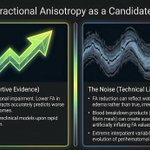
🧠 Beyond ischemia: Could a "mechanical penumbra" hold the key to saving brain tissue after intracerebral hemorrhage (ICH)?
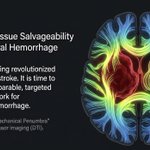
While penumbral imaging revolutionized ischemic stroke care, acute ICH treatment has lacked a similar imaging-guided target for intervention. A paper in Neurology introduces a compelling framework for perihematomal tissue recovery.
Here is what you need to know:
🩸 1. Rethinking the Penumbra in ICH
Previous models focused on ischemic or metabolic penumbrae, but evidence demonstrates perihematomal blood flow is often oligemic due to reduced metabolic demand, rather than primary ischemia. Instead, physical compression by the hematoma exerts mass effect directly on surrounding tissue.
🏗️ 2. What is the Mechanical Penumbra?
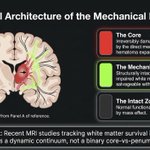
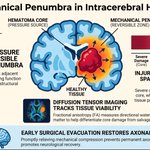
It refers to perilesional white matter compressed by physical hematoma forces. These axons remain structurally intact but functionally impaired. If decompression occurs in a timely manner, tissue can recover—analogous to relieving a compressed peripheral nerve.
📐 3. Spatial and Temporal Gradients
- Core Axons: Irreversibly damaged axons closest to the hematoma.
- Penumbral Axons: Compressed, nonfunctioning, but salvageable white matter tracts.
- Time Window: Persistent compression leads to permanent axonal loss, whereas timely evacuation restores integrity.
🔬 4. Imaging the Target via DTI
Diffusion Tensor Imaging (DTI) and Fractional Anisotropy (FA) offer promising biomarkers to map axonal integrity. By evaluating spatial and temporal FA gradients around subcortical hemorrhages, clinicians could identify patients who stand to benefit most from surgical evacuation.
💡 Key Takeaway
Developing validated imaging biomarkers of the mechanical penumbra could transform ICH trials (such as REACH and MINUTE) and shift treatment toward precision surgical selection.
📚 Reference:
Koch S, Romano JG, Zhao W, Alkhachroum A. The mechanical penumbra in intracerebral hemorrhage. Neurology. 2026;107:e218592. doi:10.1212/WNL.0000000000218592
🔗 Article URL:
doi.org/10.1212/WNL.00000000…


Slides 3/3
We’re less than a week before MCSCVDR 18 at Amelia Island.
ce.mayo.edu/stroke2026
Looking forward to some great challenging cases and debates ! @RabihTawkMD @wchrisfox @tamrar1 @berejah @babaksjahromi
CODEICH johnnysandhu
Penumbra = “tissue at risk”
Time is Brain for ICH too 🧠 🩸


W David Freeman, MD, FRSM, FNCS, FAAN retweeted

#ResearchTuesday: In patients with IVH or SAH, active CSF exchange (neuroendoscopic lavage/IRRAflow) demonstrated superior outcomes compared to EVD, significantly improving hematoma clearance and functional recovery while reducing shunt dependency and infections #SkimwithSVIN
@SVINjournal
@freemanwd @RabihTawkMD @babaksjahromi @berejah
Full article at zurl.co/APZEh


Good to see MedGemma, a unified, open, transparent foundation model by @Google published @NatureMedicine today, with diverse medical image-language capabilities (Figure), can run on a smartphone, weights @huggingface nature.com/articles/s41591-0…

🧠 Less than 3 weeks to the 18th Annual Stroke & Cerebrovascular Disease Review at Amelia Island, Oct 14–17 | Live + Livestream
Lots of stroke and Cerebrovascular topics and trials to review !
A few highlights:
→ Dr George Harston: Can AI Improve Health Equity in Stroke Care at Global Scale?
→ ARCH Trial update @berejah
→ MIND Trial results @babaksjahromi
→ Hands-on skills fair
In person or livestream.
Register: ce.mayo.edu/neurology-and-ne…
W David Freeman, MD, FRSM, FNCS, FAAN retweeted

Today we have set out how we’re building AI to accelerate science and improve people’s lives. Just some examples in the last week or so:
- Mapped all 9B possible single letter genetic changes across the human genome with AlphaGenome Atlas and made it openly available to researchers.
- Billions of decisions depend on weather predictions so we introduced WeatherNext 3, our most accurate and capable global weather AI model to date.
- We published AI & Economy ATLAS, a comprehensive open-access look at how people are using AI globally.
- AI has enabled extraordinary advances in language translation. Today our services are available in nearly 300 languages, spoken by 7B people
We’re focusing our efforts on four key areas: health, natural disaster and weather resilience, learning, and economic opportunity. blog.google/innovation-and-a…

W David Freeman, MD, FRSM, FNCS, FAAN retweeted

Mayo’s @gisellecoelhomd and @freemanwd are exploring how volumetric capture and mixed reality can create immersive surgical simulations and expand training opportunities for clinicians around the world. Read more: education.mayo.edu/schulze-a…
pubmed.ncbi.nlm.nih.gov/4239…

Nimodipine in the catheter flush cuts periprocedural vasospasm by more than half
German Stroke Registry–ET, 25 centers, n = 16,583 — the largest look yet at a habit that varies center to center. Nimodipine-containing flush used in 7,548 (45.5%).
•Vasospasm: IPTW-adjusted 1.8% vs 4.8%; OR 0.38 (95% CI 0.30–0.47), P<0.001
•90-day mRS 0–1: OR 1.23 (1.13–1.34); mRS 0–2: OR 1.16 (1.08–1.25), both P<0.001
Caveat: registry, not randomized — flush composition correlates with center culture, and IPTW can't fix unmeasured operator skill. But the cost of adopting it is low.
Reference:
📄 J NeuroInterventional Surg, 2026 Sep 11 · DOI: 10.1136/jnis-2026-025972 · PMID 42728086 pubmed.ncbi.nlm.nih.gov/4272…
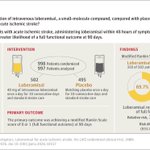
🚨 IV Loberamisal for Acute Ischemic Stroke Neuroprotection within 48hrs 🧠
The Phase 3 LAIS Trial was just published, evaluating intravenous loberamisal for patients with acute ischemic stroke treated within 48 hours of symptom onset.
Key findings at 90 days:
✅ 69.7% of the loberamisal group achieved full functional recovery (mRS 0-1) compared to 56.3% on placebo.
✅ The treatment was safe, with no increase in serious adverse events or mortality.
This novel drug dually targets the PSD-95 pathway and the α2-GABAA receptor, offering a promising neuroprotective strategy to complement standard stroke care.
Reference:
Li S, Feng B, He D, et al. Loberamisal for Acute Ischemic Stroke: The LAIS Randomized Clinical Trial. JAMA. Published online September 10, 2026. doi:10.1001/jama.2026.16557.
doi.org/10.1001/jama.2026.16…

💬 Editorial Insight: A Tantalizing Prospect in Stroke Care 🧠
Dr. Jeffrey Saver’s JAMA editorial contextualizes the LAIS trial results, noting that while reperfusion therapies are reaching their limits, neuroprotective strategies may finally be yielding results.
Key perspectives from the editorial:
👉 Dual-action potential: Loberamisal combines neuroprotective and neuroreparative mechanisms across prereperfusion, postreperfusion, and recovery phases.
👉 Practical window: The 48-hour treatment window accommodates the large proportion of stroke patients who arrive too late for reperfusion therapy.
👉 Scientific caution: The trial defies historical paradigms with a treatment effect size comparable to early thrombolysis, calling for thoughtful evaluation.
👉 Call for replication: Because extraordinary claims require extraordinary evidence, independent multinational trials and participant-level data sharing are critical next steps.
Reference:
Saver JL. Neuroprotective Therapy for Acute Ischemic Stroke: A Tantalizing Prospect. JAMA. Published online September 10, 2026. doi:10.1001/jama.2026.17400
doi.org/10.1001/jama.2026.17…


🧠 Is automated CSF exchange poised to replace standard passive drainage in neurocritical care?
A meta-analysis synthesizing data from 834 patients across 7 studies compares Active Cerebrospinal Fluid (ACE) exchange—including neuroendoscopic lavage and IRRAflow systems—against conventional External Ventricular Drainage (EVD) in intraventricular hemorrhage (IVH) and subarachnoid hemorrhage (SAH).
Key Findings:
🩸 2.7x Higher Hematoma Clearance: ACE significantly accelerated blood clot resolution compared to EVD (OR 2.72 [95% CI, 1.22–6.08], p=0.015).
💪 66% Better Functional Recovery: Patients treated with ACE achieved higher odds of favorable neurological outcomes (mRS score <= 3) (OR 1.66 [95% CI, 1.12–2.48], p=0.012).
🛡️ 78% Lower Infection Rate: Continuous active irrigation and drainage markedly decreased post-procedural infections (OR 0.22 [95% CI, 0.12–0.42], p<0.001).
🔌 78% Lower Shunt Dependency: Rapid blood evacuation significantly reduced chronic hydrocephalus and permanent shunt placement (OR 0.22 [95% CI, 0.10–0.50], p<0.001).
⚖️ Comparable Safety Profile: No statistically significant differences were observed between ACE and EVD regarding mortality (p=0.716), rebleeding risk (p=0.257), or length of ICU stay (p=0.447).
Subgroup Highlights:
• Neuroendoscopic lavage demonstrated the highest efficacy for hematoma clearance (OR 3.70, p=0.010).
• IRRAflow systems provided superior infection reduction (OR 0.24, p<0.001) [6].
• Younger patients (<60 years) derived the greatest benefits in clot clearance and functional recovery.
💡 Bottom Line: Active CSF exchange represents a promising advance over passive EVD, accelerating clot evacuation while reducing infection and permanent shunt dependency.
What are your thoughts on adopting automated active irrigation in the neuro-ICU? Let us know your perspective below! 👇
Reference:
Bahadori AR, Röblom A, Niemelä M, et al. Active Cerebrospinal Fluid Exchange Versus External Ventricular Drainage in IVH and SAH: A Meta-Analysis. Stroke Vasc Interv Neurol. 2026. ahajournals.org/doi/suppl/10…
@berejah @babaksjahromi @RabihTawkMD

ALT Graphical Abstract from the article
“Time is Brain” for SAH 🩸 too!
Does the aSAH clock start at the door, or at the first headache?
A 7-center cohort from China says the prehospital window is the outcome lever we keep undercounting.
726 adults with aneurysmal SAH. Rapid transfer (to an endovascular-capable hospital in 8 hours or less) vs delayed (after 8 hours):
🚑 386 made it in 8 hours (53%). 340 did not.
🧠 6-month mRS >2: 8% vs 23% (adjusted OR 5.3)
💔 12-month death: 4.9% vs 8.8% (adjusted OR 2.6)
⚠️ Delayed transfer also tracked with more herniation, hydrocephalus, ischemic stroke, and rebleeding
Only about half of this network hit the 8-hour window.
If your region still treats aSAH transfer as get-there-sometime-today, this is the number to take to the transfer committee.
What cutoff does your system actually hit?
Drop your comments below 👇🏽
Reference:
Mi S, Xiao ZK, Wang B, Duan Y, Liu A. The impact of rapid transfer on the prognosis of aneurysmal subarachnoid hemorrhage: a multicenter cohort study. World Neurosurg. 2026. doi:10.1016/j.wneu.2026.125269
doi.org/10.1016/j.wneu.2026.…

ALT Infographic by GrokBot of the study
🚨 Why does blood pressure spike during an ischemic stroke, and what is the optimal BP during thrombectomy? 🧠
When a large blood vessel is blocked, the nervous system triggers heightened sympathetic activation to preserve blood flow to the brain. Clinically, this protective spike is known as the acute hypertensive response, acting as a variant of Cushing's reflex.
Since this elevated BP is a natural mechanism to push blood past the clot, should we maintain this high, individualized baseline during mechanical thrombectomy surgery? 🏥
The DETERMINE trial [1] tested this exact hypothesis by comparing two management strategies:
🔹 Individualized BP: Keeping mean arterial pressure within 10% of the patient's elevated, natural baseline.
🔹 Standard BP: Targeting a flat systolic BP of 140-180 mmHg.
The Results:
❌ No clinical benefit. A favorable 90-day functional outcome was seen in 44.2% of the individualized group vs 48.8% of the standard group .
⚠️ Safety, including mortality and symptomatic brain bleeds, was virtually identical.
Why did the physiologic approach fail?
Because managing the body's acute hemodynamic instability is incredibly difficult. Patients in the individualized group only spent a median of 58.1% of the procedure in their precise target zone.
The Takeaway:
While supporting the brain's acute hypertensive response makes physiologic sense [2], trying to maintain those exact individualized targets during surgery is too complex right now. Standard BP targets remain the most practical strategy until we develop real-time, dynamic autoregulation monitoring.
Read the full study and physiology review below: 👇🏽
1. Mäıer B, Gory B, Chabanne R, et al. Individualized vs Standard Blood Pressure Control During Thrombectomy for Ischemic Stroke: The DETERMINE Randomized Clinical Trial. Neurology. 2026;107:e218420. doi:10.1212/WNL.0000000000218420
doi.org/10.1212/WNL.00000000…
2. Qureshi A. Acute Hypertensive Response in Patients With Stroke: Pathophysiology and Management. Circulation.
ahajournals.org/doi/10.1161/…

ALT Infographic made with Gemini notebookLM 📓 based on the article