

Ph.D. student at NICS-EFC Lab, Tsinghua University; visiting student at InfiniAI Lab, CMU.
Tsinghua University
Joined October 2023
- Tweets68
- Following119
- Followers116
- Likes356




Pinned Tweet
Check out our new paper on multi-LLM communication!
Welcome to any questions or discussions 🙌

Wow, language models can talk without words.
A new framework, Cache-to-Cache (C2C), lets multiple LLMs communicate directly through their KV-caches instead of text, transferring deep semantics without token-by-token generation.
It fuses cache representations via a neural projector and gating mechanism for efficient inter-model exchange.
The payoff: up to 10% higher accuracy, 3–5% gains over text-based communication, and 2× faster responses.
Cache-to-Cache: Direct Semantic Communication Between Large Language Models
Code: github.com/thu-nics/C2C
Project: github.com/thu-nics
Paper: arxiv.org/abs/2510.03215
Our report: mp.weixin.qq.com/s/tjDq99VrE…
📬 #PapersAccepted by Jiqizhixin

2
5
764
Tianyu Fu retweeted

High-quality data is limiting modern pretraining. But it turns out you can reach the same performance with far less data, in 4 lines of code.
Introducing 𝐋𝐚𝐭𝐞𝐧𝐭 𝐅𝐞𝐞𝐝𝐛𝐚𝐜𝐤 𝐈𝐬 𝐚 𝐂𝐨𝐦𝐩𝐮𝐭𝐞 𝐚𝐧𝐝 𝐃𝐚𝐭𝐚 𝐀𝐦𝐩𝐥𝐢𝐟𝐢𝐞𝐫.
Feed a Transformer's own top-layer states back in as input, and every token and every FLOP counts for more. The more data each parameter sees, the more you save.
TL;DR:
- On the same data, latent feedback reaches the same loss with 15% 𝐥𝐞𝐬𝐬 𝐭𝐫𝐚𝐢𝐧𝐢𝐧𝐠 𝐜𝐨𝐦𝐩𝐮𝐭𝐞 at 100 unique tokens per parameter, and 46% less at 400 (2-epoch budget)
- At the same number of epochs, it reaches the same loss with 10% 𝐥𝐞𝐬𝐬 𝐮𝐧𝐢𝐪𝐮𝐞 𝐝𝐚𝐭𝐚 at 60M parameters, and 20% less at 778M (1 epoch, 50 unique tokens per parameter)
- Downstream (109 tasks in 37 suites): ahead in all 17 settings at a 4-epoch budget
- Our fitted scaling law predicts the savings keep growing with model size. On a 2-epoch budget, the compute saving goes from 15% at 271M parameters (measured) to 34% at 10B and 45% at 100B (predicted)
🧵 𝐏𝐚𝐩𝐞𝐫, 𝐜𝐨𝐝𝐞 𝐚𝐧𝐝 𝐜𝐡𝐞𝐜𝐤𝐩𝐨𝐢𝐧𝐭𝐬 𝐚𝐭 𝐭𝐡𝐞 𝐞𝐧𝐝

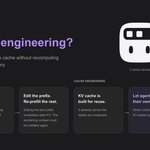
Thanks @dair_ai for discussing our paper on Cache Engineering. Looking forward to seeing what the community can build on it. 🙌
github.com/thu-nics/AKV


The Top AI Papers of the Week (October 19 - 25):
- DiscoveryRSI
- JevAgentHarness
- Object-Oriented Harness
- Evolving Agent Interfaces
- Cache Engineering for Agents
- Gemini Agents Beat Minecraft
- Self-Evolving Continual Learners
Read on for more:
1
4
112
Congratulations to @haizhong_zheng , really nice work!

We’re excited to open-source Hermit! 🐚
A harness evolution framework for continual learning and RSI: train reusable adapters without changing your model or harness. Multiple methods, one framework.
GitHub: github.com/Infini-AI-Lab/her…
#HarnessEvolution #ContinualLearning #RSI #Agent

2
153
Tianyu Fu retweeted
How about having some fun with this "𝐋𝐨𝐨𝐩𝐞𝐝 𝐌𝐨𝐝𝐞𝐥 𝐀𝐭𝐥𝐚𝐬"? 📖
Fold depth into temporal recurrence, watch connections flow like a magic circle, and see how each paper handles its KV cache.
Safe travels! Don't get lost in the Sea of Recurrence 🌀
Link below 👇
Thank you @omarsar0 for mentioning our paper. We have open-sourced our serving system that supports cache engineering. Eager to see what cache policies the community comes up with.
github.com/thu-nics/AKV
huggingface.co/papers/2610.2…

Goodbye, context engineering; hello, cache engineering.
Jokes aside, this paper takes an interesting approach to the problem.
5
139
AKV is a full-stack design, from the agent harness to the serving engine, compatible with OpenAI-style APIs. We leave the LLM weights unchanged (for now), so you can experiment with your own cache strategies. The system handles cache reuse, eviction, and recovery itself.

1
3
73
The code, website and paper are fully open, and we'd love to see what you build with it!
Code: github.com/thu-nics/AKV
Paper: huggingface.co/papers/2610.2…
37
🔥 TokenRouter is out! Efficient token-level LLM routing, now ready for serving.
🚀 2.01–64.15× higher throughput vs. serving baselines
✍️ Just 3 functions: send, receive, route
Bring your routing algorithm. We handle the serving.
github.com/thu-nics/TokenRou…

Tianyu Fu retweeted
🔁 𝐖𝐡𝐚𝐭 𝐢𝐟 𝐥𝐨𝐨𝐩𝐞𝐝 𝐋𝐌𝐬 𝐜𝐨𝐮𝐥𝐝 𝐮𝐬𝐞 𝟑× 𝐟𝐞𝐰𝐞𝐫 𝐩𝐚𝐫𝐚𝐦𝐞𝐭𝐞𝐫𝐬 𝐚𝐧𝐝 𝐚 𝟑× 𝐬𝐦𝐚𝐥𝐥𝐞𝐫 𝐊𝐕 𝐜𝐚𝐜𝐡𝐞 𝐚𝐧𝐝 𝐬𝐭𝐢𝐥𝐥 𝐛𝐞 𝐜𝐨𝐦𝐩𝐚𝐫𝐚𝐛𝐥𝐞 𝐭𝐨 𝐚 𝐬𝐭𝐚𝐧𝐝𝐚𝐫𝐝 𝐓𝐫𝐚𝐧𝐬𝐟𝐨𝐫𝐦𝐞𝐫?
Introducing 𝐑𝐞𝐭𝐡𝐢𝐧𝐤𝐢𝐧𝐠 𝐚𝐭 𝐅𝐢𝐱𝐞𝐝 𝐏𝐨𝐢𝐧𝐭𝐬. We argue that looped LMs don't have to pay for every loop. They can scale by adding FLOPs at constant memory.
The key is the fixed point of the loop. We introduce:
– 𝐅𝐢𝐱𝐞𝐝-𝐏𝐨𝐢𝐧𝐭 𝐒𝐡𝐨𝐫𝐭𝐜𝐮𝐭𝐬: what fixed points buy a looped model in training (pre-training, post-training) and inference (prefill, decoding)
– A 𝐥𝐞𝐚𝐫𝐧𝐞𝐝 𝐝𝐞𝐩𝐭𝐡 𝐩𝐫𝐢𝐨𝐫 and 𝐨𝐫𝐭𝐡𝐨𝐠𝐨𝐧𝐚𝐥 𝐢𝐧𝐣𝐞𝐜𝐭𝐢𝐨𝐧: two ways to shape those fixed points
🧵 Long thread ahead (0/n).

Tianyu Fu retweeted
🥳 xLLM intro video, made entirely by Claude Opus 5.5.
Best viewed on desktop; on mobile, rotate to landscape.
(Sorry, the voice is robotic; better one next time.)

Will looped LLMs perform better than standard reasoning LLMs in terms of test-time scaling?
Yes.
Check out our latest paper Think-at-Hard 2 (TaH2).
huggingface.co/papers/2609.3…
Tianyu Fu retweeted

Can Looped Transformers still help when FLOPs, parameters, and KV cache are all matched?
We introduce SMELT: Scaling Laws for Compute-Matched MoE Looped Transformers.
The answer is yes. And the advantage grows with scale. 🧵 1/8
Paper: arxiv.org/abs/2609.01343

Quite an interesting work! Congratulations

Introducing EdgeBench, a benchmark designed to study how agents learn from environments over at least 12~72-hour runs. We find that performance follows a log-sigmoid function of environment interaction time with high precision.
EdgeBench is built with three ingredients:
- 🌍 Real & Diverse: 134 real-world tasks across 6 task categories, spanning scientific problems, professional knowledge work, software engineering, optimization, formal math, and games.
- ⏳ Ultra-Long-Horizon: Each task supports 12–72 hours of agent work. Recorded human effort averages 57.2 hours.
- 🔁 Informative Feedback: Agents receive real-world feedback for continuous improvement.
After 38,000 hours of agent runs on EdgeBench, a scaling law for learning from environments emerges:
- 📈 As agents interact with task environments over time, their aggregate performance is precisely fit by a log-sigmoid function.
- 🧠 This phenomenon can be explained by an elegant theory of graph exploration.
We are releasing an initial 51 of the 134 tasks, together with the full evaluation framework, to help advance long-horizon agent research. Check our blog & paper for more findings!
Blog edge-bench.org/
Paper edge-bench.org/paper.pdf
GitHub github.com/ByteDance-Seed/Ed…
Dataset huggingface.co/datasets/Byte…
Details below 👇🧵
2
132
Tianyu Fu retweeted
𝐖𝐞𝐢𝐠𝐡𝐭-𝐓𝐢𝐞𝐝 𝐈𝐭𝐞𝐫𝐚𝐭𝐢𝐯𝐞 / 𝐋𝐨𝐨𝐩 𝐌𝐨𝐝𝐞𝐥𝐬 are gaining a lot of momentum, and I’m genuinely excited about this direction.
But before making strong claims, I think we need to face some 𝐮𝐧𝐜𝐨𝐦𝐟𝐨𝐫𝐭𝐚𝐛𝐥𝐞 𝐪𝐮𝐞𝐬𝐭𝐢𝐨𝐧𝐬 around fair baselines, inference cost, missing counterfactuals, and practical advantages over feedforward models.
Today marks the end of my first month working on this model family at a larger scale, so I wanted to share some thoughts in the article below.
Discussions are very welcome!


👀
𝐇𝐨𝐰 𝐝𝐨 𝐰𝐞 𝐠𝐞𝐭 𝐟𝐫𝐨𝐦 𝐚 𝐬𝐭𝐚𝐧𝐝𝐚𝐫𝐝 𝐟𝐞𝐞𝐝𝐟𝐨𝐫𝐰𝐚𝐫𝐝 𝐦𝐨𝐝𝐞𝐥 𝐭𝐨 𝐚 𝐜𝐚𝐩𝐚𝐛𝐥𝐞 𝐢𝐭𝐞𝐫𝐚𝐭𝐢𝐯𝐞 𝐦𝐨𝐝𝐞𝐥?
On Sudoku, we traced the exact path of unlocking neural attractors:
- Feedforward → 2.6%
- Weight-tying → 32.6%
- Online Training → 74.7%
- Hierarchy → 76.5%
- Adaptive Compute → 84.8%
Each jump wasn't just a trick. It was a choice about how to shape the attractor landscape.
Here is what we learned: 🧵👇
#ICML2026

1
122
Interesting work. Congratulations on Benhao :)
🌀 Introducing 𝐄𝐪𝐮𝐢𝐥𝐢𝐛𝐫𝐢𝐮𝐦 𝐑𝐞𝐚𝐬𝐨𝐧𝐞𝐫𝐬 (𝐄𝐪𝐑) !
Feedforward models and weight-tied models behave very differently on hard reasoning generalization.
EqR pushes this difference to the extreme by learning 𝐭𝐚𝐬𝐤-𝐜𝐨𝐧𝐝𝐢𝐭𝐢𝐨𝐧𝐞𝐝 𝐧𝐞𝐮𝐫𝐚𝐥 𝐚𝐭𝐭𝐫𝐚𝐜𝐭𝐨𝐫𝐬 .
• Sudoku-Extreme: 99.8%
• Maze: 93%
#ICML2026
Amazing work! Congratulations to @yi_xin_dong !

Introducing XGrammar-2: structured generation for complex agent harnesses.
Strict tool-calling formats. Built-in DeepSeek-V4 and Qwen-3.6 support. Up to 80x speedup over XGrammar. Ready-to-use integrations with vLLM, SGLang, TensorRT-LLM, and more! ⚡
From Claude Code to OpenClaw, agents are defining more complex harnesses. XGrammar-2 ensures LLMs always interact with them in the right way.
Built in collaboration with DeepSeek, Databricks, and leading frontier AI labs to bring XGrammar-2 into latest models and products.
🧩 Structural Tag: one unified abstraction to describe any format your agent needs
🚀 Scales to 500+ strictly typed tools for complex agent harnesses
🌐 Native APIs in Python, C++, Rust, and JS, running everywhere from cloud to edge
🛠️ Integrated with vLLM, SGLang, TensorRT-LLM, and more
Excited to see what agent builders create with it!
Blog: blog.mlc.ai/2026/05/04/xgram…
GitHub: github.com/mlc-ai/xgrammar

2
101
Awesome looped transformers list from @huskydogewoof . Such a timely addition to the ever-growing looped transformers community!
github.com/huskydoge/Awesome…
teapawt.net/huskydogewoof/status/2…

Introducing 🔁 Awesome-Loop-Models: a curated repo for keeping up with loop models!
Whether you are just entering the field or have been exploring loop models for a while, this repo is built to serve as an actively updated map for mechanism analysis, architecture and algorithm design, applications, and related directions.
🧵 [1/n]

1
4
159