
Economista dominicano. Comentarios y opiniones son exclusivamente personales.
Joined March 2008
- Tweets1.6K
- Following2.1K
- Followers384
- Likes270






Gustavo Camilo retweeted

In the first post of this series, I showed that the order in which returns arrive during your working life determines how much wealth you accumulate by retirement. Two workers making identical contributions to the S&P 500 over 46 years ended up with wealth that was 2.9 times different, purely because of when they were born. In the second post, I showed that the problem is worse in retirement.
Today, I stitch the two halves together and ask a simple question: Can you retire comfortably if you save diligently for 46 years? Suppose you want to spend $100,000 a year in retirement and expect to live 30 years (all figures in real term,s). You start saving $5,000 a year at age 22, increasing your contribution by 1% annually in real terms. After 46 years, you have contributed approximately $290,000. Can you get there?
In the figure below, I run the full life cycle (accumulation and drawdown) for 34 cohorts, one for each starting year from 1945 to 1978. The data are the same as in the previous posts: actual annual real total returns on the S&P 500 and 10-year U.S. Treasuries from 1945 to 2024 (Damodaran, deflated by BLS CPI-U). For years beyond 2024, I use a block bootstrap with 5-year blocks from the 1945–2024 sample. Each cohort is run forward until its capital is exhausted. The year of retirement for each cohort is indicated by a dot.
I consider two accumulation strategies. The first invests 100% in the S&P 500 throughout working life. The second follows a glide path: 90% stocks at age 22, declining linearly to 20% at age 68, with the remainder in 10-year Treasuries. At retirement, both switch to the same drawdown portfolio: 20% stocks, 80% bonds, rebalanced annually, with withdrawals of $100,000 per year in real terms.
Start with 100% equities during accumulation. The dispersion in capital at retirement is enormous. The 1954 cohort retires in 2000 with $3.04 million. They rode the postwar expansion and caught the 1990s bull market in their final decade, when their portfolio was largest. The 1963 cohort retires in 2009 with $1.05 million. They accumulated steadily for decades, then the 2008 crisis destroyed over a third of their portfolio in their last working year.
Now run the drawdown. All 34 cohorts are eventually depleted. But how long the money lasts varies enormously. The 1954 cohort sustains $100,000 withdrawals for 67 years. The 1963 cohort reaches zero by 2021, just 12 years into retirement. They did not choose a reckless withdrawal rate. They chose a $100,000 lifestyle and saved for 46 years. The market chose the rest. Their implicit SWR turned out to be 9.5%, which was never going to work. But they had no way of knowing that in 1963.
The cohorts in between illustrate the gradient. The 1957 cohort retires with $1.43 million and lasts 19 years. The 1968 cohort retires with $1.76 million and lasts 23 years. The 1976 cohort retires with $2.99 million and lasts 41 years. The pattern is clear: your retirement outcome is dominated by two draws from the same source of risk — the returns in the last decade of accumulation (which determine how much you retire with) and the returns in the first decade of drawdown (which determine how fast the portfolio erodes).
Now consider the glide path. It does what it is designed to do during accumulation: reduce the dispersion in terminal wealth. Most cohorts retire with between $1.0 million and $1.3 million. The spread is much smaller. But the cost is severe. Because the glide path shifts heavily into bonds during the second half of the working life, when the portfolio is largest and compounding matters most, it sacrifices a large share of expected returns. The median cohort retires with roughly just $1.1 million.
The drawdown consequences are devastating. At $100,000 per year on a $1.1 million portfolio, the effective SWR is approximately 9%. Every single cohort is depleted within 13 to 15 years. The 1954 cohort, the best under equities, retires under the glide path with $1.11 million instead of $3.04 million. It lasts 14 years instead of 67.
The glide path did not fail because of sequencing risk in retirement. It failed because it accumulated too little capital. A $100,000 withdrawal is not sustainable on $1.1 million regardless of the return sequence.
The 100% equity strategy produced enough capital for most cohorts to sustain $100,000 withdrawals for 20 to 40 years. But not all of them. The unlucky cohorts were depleted within two decades. But the lucky ones lasted half a century or more. The equity strategy does not solve the problem. It generates enough expected wealth that the problem becomes survivable for most cohorts. The glide path does not.
This is the central tension. Higher expected returns during accumulation mean more capital at retirement, a lower effective SWR, and a longer-lasting portfolio. But they also mean more variance: some cohorts accumulate far less than others. You can reduce the variance with a glide path, but the cost in expected return is so large that the typical retiree ends up worse off, not better. The insurance is real. It is also ruinously expensive.
I must emphatically highlight that I picked these two strategies because they bracket the range of outcomes, but do not exhaust it. You can adjust the equity share, the glide path slope, the bond allocation in retirement, or the withdrawal amount. You can implement variable withdrawals, add a cash buffer, or use momentum signals. I have run many such variations. The specific numbers change.
But the fundamental result does not: a large share of the variation in retirement outcomes is driven by the sequence of returns, and no portfolio strategy eliminates that variation without a commensurate sacrifice in expected wealth.
So, if you are going to tell me that you have a different strategy than these two, that nobody should follow a $ 100,000 fixed retirement strategy, etc., you are missing the point. The point is that there is a lot of aggregate risk out there, and insuring against it is really costly.
This is why the structure of a retirement system matters. A fully funded system, where each generation saves and invests for its own retirement, exposes every cohort to the sequencing risk I have documented in these three posts. No portfolio strategy eliminates it.
A pay-as-you-go system, by contrast, transfers resources from current workers to current retirees, so the retirement income of the 1963 cohort does not depend on what the S&P 500 did between 1963 and 2009. It depends on the productivity of the workers employed in 2009. That is a different risk, and crucially, it is not the same risk.
A system that combines both components, a funded pillar that captures the equity premium over long horizons and a pay-as-you-go pillar that provides a floor independent of market outcomes, diversifies across two relatively uncorrelated sources of risk.
Neither pillar alone is sufficient. The funded pillar generates higher expected wealth but leaves retirees exposed to bad draws. The pay-as-you-go pillar provides insurance against those draws but cannot deliver the returns needed for a comfortable retirement. A reasonable system has both.
Defenders of full funding point to the superior expected returns and dismiss pay-as-you-go as a Ponzi scheme. Defenders of pay-as-you-go point to the security it provides and dismiss funded systems as a casino. Both are wrong in the same way: they evaluate return and risk separately rather than jointly.
The funded system has higher expected returns and higher risk. The pay-as-you-go system has lower expected returns and lower risk. This is not a puzzle. It is the most basic tradeoff in finance. Anyone who claims one pillar dominates the other on both dimensions is either ignoring the risk or ignoring the return.
And no, pay-as-you-go is not a Ponzi scheme if the system's expenses grow at the same rate as its revenues. This is exactly what notional defined-contribution systems like Sweden’s achieve: benefits are indexed to the growth of the contribution base, so the system remains solvent by construction, even as the population shrinks.
The right question is not which system is better. It is what mix of the two best serves a society that cannot avoid aggregate risk but can choose how to share it across generations.
And that is why modern economics is so incredibly useful and why I love it so much: it gives you the tools to think carefully about these tradeoffs instead of pretending they do not exist.


Gustavo Camilo retweeted
1/ 🚨🚨 New IPO Alert 🚨🚨 $VTEX #firstlook #brazil #ecommerce #marketplace
$VTEX is the largest locally-grown e-commerce platform (LTM GMV $9.1BN) in Latin America catering to enterprise customers, growing 77% (1Q21, FX neutral), with global expansion plans.

Gustavo Camilo retweeted

Que Feller Rate mejorara la calificación de riesgo de Excel SAFI a “A+af” en un momento que vivimos por la pandemia es un importante reconocimiento al trabajo que venimos realizando en @Excel__RD. #EnExcelSeguimosAvanzando excel.com.do/2021/06/21/fell…

Gustavo Camilo retweeted

Dopegang!
We are excited to announce that we will be conducting a series of 3 airdrops for our awesome community
For the first airdrop, will be picking 500 lucky winners who will *each* get 160 $rDPX tokens airdropped to them
Check the tweet below for more details 👇
Gustavo Camilo retweeted

Some baseball cards have writing that is borderline award-winning level.
This is not one of those cards.

Gustavo Camilo retweeted
The length of China's high speed rail lines has doubled in past five years to 37,900 kilometers. "As of the end of 2019, the country's high-speed railway network has covered 86 percent of the cities with a population of over 500,000."
en.people.cn/n3/2021/0128/c9…
Gustavo Camilo retweeted

Gracias por compartir. ¿Por qué la Filomena Gomez de Coba la han puesto en el mismo sentido que la Agustin Lara? Se complica la entrada al sector Serrallés, ¿no? Me gustaría entender la decisión por favor
Gustavo Camilo retweeted

Good News: Vaccine Coming!
Goal: Available by end 2020
Phase 3, blinded trial starts on 30,000 people
2 shots, 28-d apart
(This vaccine produced antibody levels higher than recovered COVID patients)
Goal to produce 500 million+ doses starting 2021!
medscape.com/viewarticle/934…


Gustavo Camilo retweeted

Interesante artículo de @carlitinpared sobre #AlianzasPúblicoPrivadas
Un tema de gran importancia para el futuro del país
https://teapawt.net/t.co/leTbxBC5Le
La semana pasada tuve el privilegio de participar como expositor en el Curso Modular en Derecho de la Competencia en la República Dominicana en el Instituto OMG con un excelente grupo de abogados, tanto del sector público como privado. El derecho de la co…lnkd.in/eX7eRbj

Gustavo Camilo retweeted

La determinación del mercado relevante es uno de los aspectos esenciales de toda investigación de una practica anticompetitiva. Por primera vez en el país un curso del tema, por dos economistas amigos @gcamilo @Fabriciogm13. Recomendado.

Gustavo Camilo retweeted

Todavía estás a tiempo de inscribirte en el Módulo ll de nuestro Curso Modular en Derecho de la Competencia en la República Dominicana. Recuerda que estos módulos son independientes y no tienen como pre-requisito haber realizado un módulo anterior. #Instituto_OMG #CursosModulares

Gustavo Camilo retweeted

Congratulations to Emi Nakamura of @berkeleyecon, winner of the 2019 John Bates Clark Medal! aeaweb.org/about-aea/honors-…

This FTC meeting re: cross-ownership & antitrust looks like something you might be interested in @matt_levine ftc.gov/news-events/events-c…
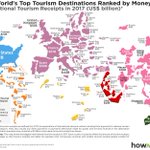
RD fue el segundo país en America Latina en ingresos de turismo en 2017, detras de Mexico, y adelante de Brazil. Mismo tamaño que Israel y Marruecos. howmuch.net/articles/how-muc…

Why is the *number* of stocks so important? The return that we can expect from the market as a whole is what matters and I don't see a good argument for why that should be zero going forward.
This post is from an account that no longer exists. Learn more
Republica Dominicana es estimado como uno de los paises con precios mas bajos de "vicios" por @business. bloomberg.com/news/articles/…

1
1