
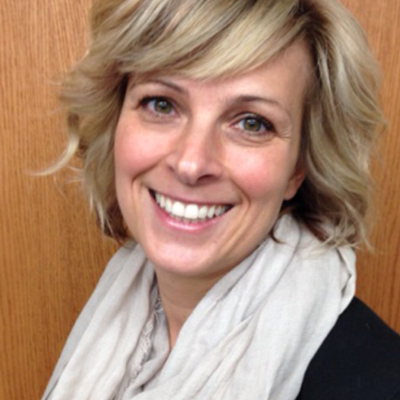
School Mental Health, Belonging, Social & Emotional Intelligence Change Agent. Working to ensure all kids are engaged, supported, empowered & successful.
Calgary Alberta
Joined October 2013
- Tweets21K
- Following5.7K
- Followers4.7K
- Likes15.9K










Dr. Gina Cherkowski retweeted

"So when your gut tells you something, it is usually right. Go with that.
But that doesn’t mean you shouldn’t listen to feedback."
3 Things I Learned About Creativity, Feedback, and the Courage to Share georgecouros.com/creativity-…

Dr. Gina Cherkowski retweeted

5 people who shaped me - my family, my best teacher, @MichaelFullan1 David Hargreaves (no relation) & Ann Lieberman. Want to learn more about them and me, watch the People are Everything podcast with Jo Duthie. youtube.com/watch?v=xovaC76n… @steve_munby @ArcEducation

Dr. Gina Cherkowski retweeted
When you are focused on your own growth and development, there is way less time to criticize others.
There are so many people I could point to who are doing great things, and it inspires me to want to grow myself.
What I have realized is that "growth" is not only a professional thing. It is taking care of your health, your mind, your personal obligations, and your professional career. If you spend your time growing in those areas and any others, your time spent criticizing others will be minimal to nonexistent.
BUT....
Always take time to cheer on others. Make sure if you see something good, you say something good. Too many compliments never leave our mouths, even when they are just the thing someone needs to hear to keep going.
Grow yourself and grow others. That will take up the most important part of your time.
Be sure to join this powerful conversation on the future of education and human flourishing in the age of AI eventbrite.com/e/the-future-…

Dr. Gina Cherkowski retweeted

I’ve been waiting two years to share this post.
My new book, The Wonder Years: How the First 45 Months Shape Your Baby’s Brain… and Who They’ll Become, will be published on July 13, 2027 by Ballantine Books (Penguin Random House).
Not only that, but it’s available for pre-order now. Seems only fitting that a baby book should take nine months to arrive, right? (Ordering info below.)
The Wonder Years is an origin story. Yours.
It traces the wonders of early development from conception to age three - exploring gestation and prenatal learning, the importance of secure attachment, and the development of language, motor skills and more.
It’s for new parents and grandparents… but it’s not just for them. As I say in the introduction, if you’ve ever wondered about the forgotten years that shaped you into who you’ve become, The Wonder Years is not only a book FOR you… it’s a book ABOUT you. No baby required!
I think you’re going to like it a lot.
How can you help? Right now the answer is to PRE-ORDER. This helps retailers know what to promote and how many they need to stock.
If you’re an Amazon user you can check it out at the link in the first comment below, but you can also find it now at Barnes and Noble, Hudson, and all your favorite indies. (I’ll also share a link to bookshop dot org, which allows you to order from any of hundreds of independent bookstores.)
And if you pre-order I have a few special surprises coming your way. Documented pre-orders will receive:
A hand signed bookplate.
Access to an exclusive Zoom Q&A open only to advance purchasers.
And if you preorder before Dec 1 you’ll be entered in a drawing to win one of 10 signed copies of my book The Daycare Myth.
To claim your bookplate and get added to the pre-order list, send a screenshot confirming your order to dwuori at gmail dot com. Be sure to include your mailing address, so I can send your bookplate - which will be mailed in July so you can stick it directly in your book.
I’d be so grateful!
BTW if you’re a friend outside the US, know that the book will also have a dedicated UK release from Quercus Books, which you can now preorder via Waterstones and Amazon UK. It will also have a German translation which is available for preorder now and a Spanish language version soon to post.
Can’t wait to get it into your hands!


Dr. Gina Cherkowski retweeted

Restricting student access to phones is associated with significantly higher academic performance.
science.org/doi/10.1126/scie…


Dr. Gina Cherkowski retweeted
Four days in nature with no phones improved creative problem-solving by 50%.
Your next idea is outside.

Dr. Gina Cherkowski retweeted
On @UNESCO WorldTeachers Day, here's why I think teachers matter on the opening page of my new book - out in December with @TCPress & @BloomsburyBooks. @eduint @CTFFCE @TeacherToolkit @rweingarten @pasi_sahlberg @UofGCfTE @uOttawaEdu @bclynchschool


Dr. Gina Cherkowski retweeted
Changing Teachers for Challenging Times in HK - today I made the first of 3 soft launches (HK, Kazakhstan & Chile) of the release of my upcoming book at the end of the year. I congratulate the audience on sitting through a 50 minute slide-free presentation. @FEHD_EdUHK @pasi_sahlberg @uOttawaEdu @bclynchschool @TCPress @BloomsburyBooks


Dr. Gina Cherkowski retweeted

Congratulations to @DavidWerklund on receiving the Lifetime Achievement Award from the Canadian Chamber of Commerce 👏 Dean Dianne Gereluk and the entire Werklund School of Education community are proud to celebrate this well-deserved recognition!

Dr. Gina Cherkowski retweeted
Good article from @TeacherToolkit. Learning outdoors is a big part of education in much of N Europe. It builds responsibility, leadership, memories - and joy!. I just took my grandson turning 14 across the Alps for several days up to 8000 feet and the boy who came back was not entirely the same as the one who left. teachertoolkit.co.uk/2026/09… @FrankWNorris @steve_munby @perfinker

Dr. Gina Cherkowski retweeted

Elementary children should not go hours without an opportunity to move, play, and reset.
One recess during a seven-hour school day is not enough.
The American Academy of Pediatrics emphasizes the importance of regular breaks from concentrated instruction. In countries including Finland, Denmark, Japan, Australia, and the United Kingdom, multiple breaks are commonly built into the school day, sometimes following approximately 45–50 minutes of instruction.
There is a reason for that.
Children's attention needs to reset. Their bodies need to move. They need opportunities to play, interact, explore, and develop the self-regulation and social skills that support learning.
Research also shows that recess and physical activity can improve attention, concentration, memory, and on-task behavior.
Yet we sometimes ask a six-year-old to sit through long stretches of academic instruction and then treat restlessness as a behavior problem.
And I have to ask: Who looks at a schedule where a six-year-old is expected to sit and focus for hours with little opportunity to move or play and decides that is developmentally appropriate?
We would never design a day like that based on what we know about how young children develop. Yet somehow, we have normalized it in the name of academics.
Elementary children should have opportunities for movement and meaningful breaks throughout the day, ideally around every 45–60 minutes for our youngest learners.
Stop designing elementary schools around how long adults want children to sit and start designing them around how children actually learn and develop.
Children often learn better on their feet than in their seats.
Dr. Gina Cherkowski retweeted
Relational awareness is the foundational skill of leadership.
It’s knowing your people, what they need, what brings out their best, and how it feels to be led by you.
Because your intent matters.
But their experience matters more.
Leadership is relational.

Dr. Gina Cherkowski retweeted

When the brain is being pulled into a fight/flight direction,the emotional threat is no longer just external it becomes internal,the survival pathways are now switched on.
It doesn’t matter how good your content or lesson is.
The brain isn’t solving or learning,it’s protecting

Dr. Gina Cherkowski retweeted
Technology has changed, but human development hasn’t.
A five-year-old’s brain does not develop faster because we put an iPad in their hands.
Children still develop language through conversation.
Self-regulation through waiting and working through frustration.
Social skills through disagreement, compromise, and repair.
Creativity through boredom and imagination.
Confidence is still built through movement, exploration, and reasonable risk. And all of that happens naturally through play.
This is not nostalgia. It is science.
Harvard researchers tell us that back-and-forth interaction with caring adults helps shape a child’s developing brain.
The American Academy of Pediatrics says play supports language, cognition, relationships, self-regulation, and executive function.
Research has also found that children who spend more time in less-structured activities show stronger self-directed executive functioning.
Yet we keep taking away the very experiences that develop those abilities.
We shorten recess. We structure every minute.
We replace conversation with content.
We hand children a screen the moment they become bored, restless, frustrated, or inconvenient.
Then we wonder why they struggle with attention, communication, creativity, emotional regulation, and handling conflict.
Technology is not the enemy.
But a screen can show a child a tree. It cannot replace climbing one.
An app can teach the meaning of cooperation. It cannot replace negotiating the rules of a game with other children.
A digital activity can provide an instant reward. It cannot replace building something, watching it fall apart, and deciding to try again.
Technology can support development.
It cannot replace the human experiences that create it.
The future will be filled with technology. That is exactly why childhood must remain deeply human.
Children need time to move, talk, explore, imagine, struggle, connect, and play.
Technology may change. How children develop does not.
Dr. Gina Cherkowski retweeted
"If you want to be empowered, empower others."
4 Ways To Not Let Others Dim Your Light georgecouros.com/4-ways-to-n…
