

• NCCAT Senior Early Grades Literacy Specialist • Married 42 years • Mother of 3 • Lover of Boykin Spaniels • Rock painter • Turtle patroler
Joined August 2017
- Tweets67
- Following314
- Followers192
- Likes2.8K





‘Loving sharing the Science of Reading with TAs from Lincoln County! @NC_LCS @NCCATNews


Thank you @sarahpjustice for driving your Magic Book Bus to @NCCATNews to share your mission and vision with media specialists from across the state!


Would you love to have a surprise note like this on your presentation station? It happens at @NCCATNews!

Look at these amazing teachers who traveled to NCCAT in Cullowhee for “Visions of Teaching Writing K-5”! It is going to be a great week. @NCCATNews

Thrilled to be with art, music and PE teachers in Cullowhee as they explore best practices in literacy instruction. @NCCATNews


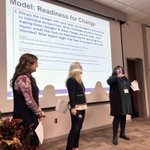
DPI roleplaying the challenges of the LETRS PLC process. Teachers need a safe space to process the knowledge. @NCCATNews @KBendheim @MDerfel @kepratt9600 #nccatllc22

If you want to be taken seriously as an I.C. then be consistent! @NCCATNews #nccatllc22


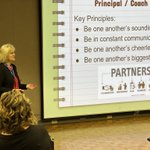
Who should be coached? Anyone who voluntarily seeks a coach. #CoachingCulture Thank you @sltteachercoach @NCCATNews #NCCAT22CLC

We are so excited to welcome ESL teachers to a week of collaboration and learning on our beautiful Ocracoke campus! @KellyCreed10 @NCCATNews

A4) Frog Example Final: As more information is learned from reading text, watching videos, etc., add words to the “alpha-box”. The students can use the information from the “alpha-box” to “quick write” an informational paragraph about frogs. #Together4ELs
3
A4) Frog Example Cont’d: Read aloud more info. about frogs and have them add to their diagram. Encourage the addition of descriptive words as well. A great next step is to create an “alpha-box” with squares on a piece of paper for each letter. You can clump XYZ. #Together4ELs
3
A4) Frog Example: Let’s start with a “cloze” picture of a science or SS topic such as a frog. Give the students a labeled diagram of a frog but leave several of the labels blank. Show the completed frog diagram on a screen and ask the students to fill in the rest #Together4ELs
4
A3) Use pre-writing scaffolds through simple models based on mentor texts. When offering suggestions, pls focus on one skill at a time. Create opportunities for collaborative writing so MLs can see it from a child’s point of view and not just the teacher modeling. #Together4ELs
4
A3) Our ML students may lack writing experience but they have real-life experiences and it is great for them to write about their world before they are expected to write about a new subject. Do not overcorrect. Celebrate small victories. #Together4ELs
4
A2) It is fun to have students dress up as “rock stars” to celebrate their rock star reading status! I used to have a reading celebration when we finished a class novel as a read-aloud. Students can make a “book jacket” with a summary and illustrations. #Together4ELs
1
5
A1) One instructional activity is “example/non-example.” When teaching the word frigid the teacher tells the students to respond with “brrrr” if the place might be described as frigid. If not, don’t say anything. Antarctica / Florida / Canada in January / Mexico.
#Together4ELs
4
A1) MLs need robust instructional activities that provide focused and extended language input that prompts output with opportunities for discussion. A few of the activities include word sorts (especially during a small group setting), word mapping, & vocab games. #Together4ELs
4
Hello, colleagues! I am Gin Hodge, @NCCATNews Early Grades Literacy Specialist, joining you this evening from gorgeous Ocracoke Island! #Together4ELs
1
8