

🇫🇷 in 🇨🇦 | UEFA B 🏴 - UEFA C 🇮🇪 | OPL Coach Educator | Sport Psychology 👨🎓 | National B Concacaf 🕵️ Video Analyst @pacificfccpl
Toronto, Canada
Joined July 2012
- Tweets69.4K
- Following1.8K
- Followers9.3K
- Likes74.3K




Pinned Tweet
My Game Model Presentation to the Coaches yesterday
youtu.be/aMSbdu3x50Y?si=EUKV…

Le balón d’or ca devrait être entre Kane et Raphina pour moi
Yamal c’est quand son dernier gros match? Pas juste marquer un but ou geste technique


Rod Wilhelm retweeted

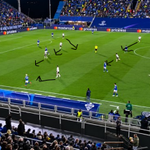
In a game full of thousands of data points, starting with one could be key to finding creative talent.
As Arsène Wenger put it, players who rotate quickly & change direction are the most successful in the modern game.
Introducing Gradient’s receiving on the turn metrics. 👇

Harry Kane est descendu en tant que defenseur central facon quaterback
What a player #kane
Rod Wilhelm retweeted

“I want to win, don’t get me wrong. Don’t get that twisted at all. I want to freaking win, but not at the expense of us skipping steps in the process.”
Mike Brown captures a challenge that athletes and coaches face every day: wanting a result so badly that you become impatient with the actions required to achieve it.
That impatience can change how you compete. You start forcing opportunities. You abandon your responsibilities. You stop communicating because you’re frustrated. Your attention becomes occupied by how things should be going, and you lose connection with what the game needs from you.
In my performance system, I use the term ‘intent’ often. I describe a ‘high intent’ as approaching your performance purposefully, positively, and proactively. That includes having the discipline to keep executing important actions when they haven’t yet produced the outcome you want.
For a basketball player, that might mean sprinting back on defence after another missed shot. Moving decisively off the ball when you haven’t received a pass for several possessions. Communicating with teammates when you’re disappointed with your own performance.
These actions give your desire to win somewhere useful to go.
One technique I use to help players do this is a Match Script (or Game Script): three specific actions that direct their attention and effort during competition. A basketball player might choose: “Scan before receiving. Sprint back on defence. Communicate early.”
The player mentally rehearses these actions before competing and uses them as reminders during the game, especially when frustration or pressure pulls their attention towards the score.
The script can’t guarantee a win, but it can help a player stay connected to the behaviours that give their team a better chance.
Brown’s message also matters for coaches. If we ask players to trust the process, we have to keep recognising and reinforcing its important steps—even when the scoreboard hasn’t rewarded them yet.
Want to win, sure - and bring that ambition every day. But keep asking: what does the game need from me now.
**************************************
My new book, Compete, teaches ambitious competitors to execute actions with a high intent irrespective of the score
🧠 What if mistakes are opportunities to learn?
In the latest episode of Beyond the Touchline, we explore neuroplasticity, growth mindset, and what neuroscience can teach us about coaching.
⚽ Don’t just correct the mistake. Help the player learn from it.
🎧 Listen now!
open.spotify.com/episode/1va…
Rod Wilhelm retweeted

Un capitaine ne se définit pas seulement par ce qu'il fait sur le terrain, mais par ce qu'il accepte de faire quand personne ne l'y oblige.
Aucune tâche n'est en dessous de lui. Si la star ou le capitaine s'en charge, personne ne peut se dire que c'est un truc pour les jeunes ou le staff.
Son autorité vient du respect et non du statut, ce qui la rend plus solide.
Et puis enfin ce geste c’est aussi une question de crédibilité : quand il exigera un effort ou une remise en question en match, il aura déjà montré qu'il s'applique les mêmes exigences au quotidien et ça changé énormément de chose.
Le brassard ne fait pas le leader. Dans une étude sur 398 joueurs et coaches, les attentes portaient surtout sur les qualités motivationnelles et sociales, alors que la sélection des capitaines repose souvent sur l'expérience ou le niveau technique. D'autres travaux montrent que la seule caractéristique sur laquelle les capitaines devancent les leaders informels, c'est l'ancienneté. Ce qui compte, c'est donc le comportement quotidien, pas le statut. C'est exactement ce que Raphinha montre avec ce geste.
(Cotterill & Fransen (2016), sur le leadership des athlètes)

New Podcast Episode - The Brain behind the game 🧠⚽️
open.spotify.com/episode/55R…
What if mistakes aren't the enemy of progress, but an essential part of it?
In Episode 2 of Beyond the Touchline, we explore the fascinating connection between neuroplasticity, doubt, and learning. Inspired by the 2011 study Mind Your Errors by Jason Moser and colleagues, we look at how our mindset influences the way we recognise mistakes and respond to challenges.
From the football pitch to everyday life, we explore why fear of failure can hold us back, how the right environment can encourage growth, and why coaches should focus on helping players learn rather than simply eliminating mistakes.
Because development isn't about getting everything right. It's about understanding what went wrong, adapting, and having the courage to try again.
🎧 The big question: Are we creating an environment where people are afraid to make mistakes, or one where they can learn from them?
Rod Wilhelm retweeted
New Podcast Episode
12 minutes focused on Neuroplasticity
open.spotify.com/episode/5md…

New Podcast Episode
12 minutes focused on Neuroplasticity
open.spotify.com/episode/5md…