

The Bible-Teaching Ministry of Dr. Josh Moody @drjoshmoody
Joined September 2016
- Tweets4.5K
- Following491
- Followers725
- Likes3.6K




Sometimes the most meaningful thing we can do for someone who is suffering is simply be there.
When Job's friends first arrived, they sat with him for seven days and seven nights without speaking. They mourned with him. Their presence was their ministry.
But when they began offering explanations for his suffering, they made a painful situation worse.
In today's devotional, Job describes his friends as “undependable as intermittent streams” (Job 6:15).
We should be careful not to blame those who are suffering. Instead, we are called to be faithful friends, offering compassion rather than judgment.
Listen well. Show compassion. Be present. And when the opportunity comes, point others to the loving care of Jesus Christ.
What does being a faithful friend to someone who is hurting look like?
Read today's devotional, Job 6: A Friend in Need Is a Friend Indeed, on the God Centered Life app.
#GodCenteredLife #BookOfJob #ChristianFriendship #ChristianEncouragement


What happens to our faith when life doesn't make sense?
The Book of Job confronts one of life's most difficult questions: Why does God allow suffering?
Job was a righteous man who experienced unimaginable loss. Yet in the midst of his suffering, he continued to worship God, not simply for what God had given him, but because of who God is.
“The Lord gave and the Lord has taken away; may the name of the Lord be praised.” (Job 1:21)
On Sunday, we began a journey through Job, exploring suffering, God's sovereignty, and the hope we have in Jesus Christ.
Join us each day for a 3–5 minute daily reset with God through the God Centered Life Daily Devotional.
What truth about God's character helps strengthen your faith during difficult seasons?
---
#GodCenteredLife #BookOfJob #ChristianFaith #DailyDevotional


Do you know someone who is questioning or walking away from the Christian faith?
Maybe it’s a friend. Maybe it’s someone in your small group. Maybe it’s someone in your own family.
At this year’s The Word Conference, we’ll open the Bible together and consider why some are holding onto the Christian faith while others are rejecting it, all with a focus on the glory of Christ.
You’ll also have the opportunity to gather with others who share a commitment to God’s Word.
Come, bring someone with you, and join us at The Word Conference 2026.
Register at bit.ly/4whWOBW
#TheWordConference #GodCenteredLife #ChristianFaith #GodsWord
Is the Christian faith still credible today?
For college students and young adults, that question could not be more important.
At this year’s The Word Conference, we’re tackling the issue of deconstruction head-on, looking to the authority of God’s Word and the power of His Spirit as we consider why some are abandoning the faith and why we can have confidence in Jesus.
College students and young adults, come with your questions, bring your friends or small group, and join us at The Word Conference 2026. Register at bit.ly/4whWOBW
#TheWordConference #GodCenteredLife #ChristianFaith #GodsWord
Exercise faith. Not merely as a confession of doctrine, but as a commitment of your life to the person of Jesus.
Real faith is sweet to the taste, honey in the mouth, and living in the soul.
#Faith #JesusChrist #ChristianLife #GodCenteredLife
Why are some leaving the faith, while others, particularly young people, are finding renewed faith in Jesus?
At this year’s The Word Conference, we’ll turn to the Bible and listen to what God is saying through His Word about the prominent issue of deconstruction.
Come ready to hear from God’s Word, grow in your faith, and consider these important questions together.
Women, bring a friend or your small group and join us at The Word Conference 2026. Register at bit.ly/4h6mZGa
#TheWordConference #GodCenteredLife #BiblicalFaith #GodsWord
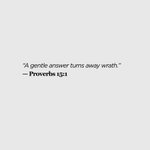
Sometimes one sentence from God’s Word is enough to make us stop and examine the direction we are going.
A gentle answer.
A heart at peace.
The counsel of others.
An answer carefully weighed before it is spoken.
Proverbs brings wisdom remarkably close to everyday life.
But reading wisdom is only the beginning. The question is whether we will believe it and practice it.
Which of these four verses do you most need to remember today? And why?
Tell us in the comments. Your reflection may be exactly what someone else in our community needs to read today.
Continue your journey this week through Proverbs with the God Centered Life Daily Devotional—a 3–5 minute daily reset with God, available by email and in the God Centered Life app.
#devotional #community #godcenteredlife


Why are some people leaving the faith, while others are finding renewed trust in Jesus?
At this year’s The Word Conference, we’ll look at the growing conversation around deconstruction and ask what God’s Word has to say about it.
For men especially, this matters. The way we lead our lives, our families, and our work begins with our own commitment to Scripture and to Christ.
Join us as we consider how to remain faithful, lead by example, and build our lives on the truth of God’s Word. Register at bit.ly/4h6mZGa
#TheWordConference #GodCenteredLife #BiblicalFaith #GodsWord
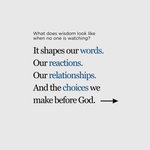
Wisdom often reveals itself in ordinary moments.
How we respond when someone frustrates us.
Whether we listen before speaking.
How we handle praise.
Whether we remain teachable.
And what we do when no one else seems to be watching.
This week in Proverbs, we’ll look at patience, self-control, foolishness, friendship, humility, and what it means to live coram Deo, in the presence of God.
Take 3–5 minutes each day for a daily reset with God through the God Centered Life Daily Devotional.
What area of your life most needs God’s wisdom this week?
#devotional #lifecenteredongod #biblereading


We’re grateful for the partners helping make the 2026 Word Conference possible.
Thank you to National Christian Foundation, LifeWise, C.S. Lewis Institute, Christians Against Poverty, Stars Family Services, and Northpine Creative for their generous support of this year’s conference.
Join us October 12 as we gather around God’s Word and consider its truth for our lives today. Register here: bit.ly/4h6mZGa
#TheWordConference #GodCenteredLife #GodsWord

Join Dr. Josh Moody and Dr. Jonathan Griffiths at the 2026 Word Conference.
In this current age—when truth, faith, and identity are increasingly questioned—the 2026 Word Conference will equip you to respond with biblical boldness, unwavering faithfulness, and greater confidence in the life-changing power of the Gospel.
Register today at bit.ly/4whWOBW
#faith #truth #bible #godcenteredlife
We often think wisdom means having the right answer.
Proverbs gives us a much fuller picture.
Wisdom listens. It receives instruction. It values faithfulness over riches. It thinks carefully about the path ahead. And, most importantly, it grows out of the fear of the Lord.
This week, we move into the “Thirty Sayings of the Wise,” practical instruction intended not simply to inform us, but to shape the way we live. The purpose of this wisdom is ultimately that our trust may be in the Lord.
Join us for a 3–5 minute daily reset with God through the God Centered Life Daily Devotional.
Where do you most want God to make you wiser this week?
#wisdom #proverbs #godcenteredlife #devotional


Proverbs has a way of putting its finger on the places where wisdom is hardest to practice.
Listen before speaking.
Learn before rushing ahead.
Be slow to anger.
Simple? Perhaps.
Easy? Not always.
But biblical wisdom is meant to move from the page into the way we actually live.
Which one do you need most today: listening, patience, or slowing down?
A few minutes in God’s Word can redirect an entire day.
#devotionals #godcenteredlife #biblereading #proverbs


Proverbs brings wisdom out of the abstract and into ordinary life. It speaks to our conversations, our work, our relationships, our ambitions, our anger, our plans, and even the people we choose to listen to.
This week, we’ll continue through Proverbs together and ask a simple question: What would it look like to live wisely before God today?
Take 3–5 minutes each day for a daily reset with God through the God Centered Life Daily Devotional.
And as we begin the week, we’d love to hear from you:
Where do you most need God’s wisdom right now?
Share your answer below and join the global community reading God's Word together.
#devotionals #godcenteredlife


It is about saving by serving. The cross does not merely represent our faith; it remakes us in its image.
#Church #TheCross #ChristianService #Gospel #GodCenteredLife
Jesus shapes His church not around preference, but proclamation; not around division, but the gospel; not around mastery, but mercy. What do you want from church?
#Church #Gospel #Mercy #ChristianFaith #GodCenteredLife
Wisdom is not merely knowing the right answer. Biblical wisdom shapes how we speak, work, plan, respond to correction, treat our neighbors, and walk before God.
That’s where Proverbs is taking us this week.
And these short passages have a remarkable way of exposing questions worth asking of ourselves: Where am I being quick-tempered? What do my words produce in others? Am I willing to be corrected? Are my plans really submitted to God?
Join the God Centered Life community as we spend 3–5 minutes each day in God’s Word.
Where in your life do you most need God’s wisdom right now?
Join us for this week's reading through the Daily Devotional by email, website or in the God Centered Life app.
---
#devotional #godcenteredlife


Tune in today as Dr. Josh Moody joins two radio conversations to discuss his new book, Unframed: Conversations That Take the Gospel Out of the Box.
👉 4:00–4:55 p.m. CT — In the Market with Janet Parshall on Moody Radio (bit.ly/4zjjvbG )
👉 5:00–5:30 p.m. CT — The Bill Arnold Show on Faith Radio (bit.ly/4qhQIQA)

More “wise advice”—pithy and to the point!
“The Lord detests dishonest scales, but accurate weights find favor with him” (11:1).
When weighing of goods or food was done with physical weights, it was possible to use a variation in the weights or the scales to gain a subtle profit for the seller. Such underhanded, under-the-table, unnoticed-to-people cheating is still noticed by God. And he detests it. Therefore, be straightforward with your business deals!
“When pride comes, then comes disgrace, but with humility comes wisdom” (11:2).
Our culture tends to think of “pride” as a good thing. We encourage people to have high self-esteem, for instance, and tell people they should be proud about who they are. Often when we say things like that, we mean something different by “pride” than the Bible does. We might mean “confidence,” for instance. But at other times we mean something very similar to what the Bible means by pride. Surprisingly, pride does not lead to victory; it leads to disgrace. A puffed-up person will in the end “believe his own press” and will make some awful mistake as a consequence. But humility—in the biblical sense of humility, meaning not thinking of yourself as greater than you are, but rather spending your time thinking about God or other people—comes from wisdom. It goes unsaid in this proverb, but this kind of humility is a sure foundation for a life of credibility and genuine confidence.
“The integrity of the upright guides them, but the unfaithful are destroyed by their duplicity” (11:3).
When you have “integrity”—you mean what you say and you say what you mean—then such straightforwardness acts as a compass in difficult situations. It is never wrong to do the right thing, as the saying goes. But by contrast, if someone has “duplicity”—that is, they are part one thing and part another thing, part good and part not-so-good—then that will be a problem in the end. The conflict internally will create conflicts externally, and that will lead to destruction finally.
“Wealth is worthless in the day of wrath, but righteousness delivers from death” (11:4).
Oh, how needed is this proverb! Our culture seeks money above all things. But how useless money is in the day of wrath! Only Christ’s righteousness can deliver us then.
“The righteousness of the blameless makes their paths straight, but the wicked are brought down by their own wickedness” (11:5).
Again, we hear of the simplicity that comes with being righteous: your paths are straight. You do what is right according to the Bible, and you trust God with the results. It does not make every decision easy, but you can trust the sovereign God with decisions made prayerfully and that are submitting to God’s Word. By contrast, the wicked are actually dragged down by their own wickedness. Sin has pleasure initially—otherwise, we would not sin—but after the temporary pleasure comes bitterness and woe. It is this that brings us down, unless we turn to Christ in repentance and faith, and then he will lift us up!
“The righteousness of the upright delivers them, but the unfaithful are trapped by evil desires” (11:6).
A similar contrast here. The unfaithful are trapped by their evil desires: evil desires trap you in the end if they are not repented of. Read Romans chapter 1 for Paul’s teaching on how wrong worship leads to foolish desires and that leads to a trap.
“Hopes placed in mortals die with them; all the promise of their power comes to nothing” (11:7).
What a good antidote to the fear of man. As you get older, this truth becomes more apparent: the very great, apparently so, soon enough die, and then most of them are soon enough forgotten. Do not put your hope in people.
“The righteous person is rescued from trouble, and it falls on the wicked instead” (11:8).
If you trust in Christ, and you follow him with integrity (not perfection, for none of us is perfect), if we love God, then there is this great promise: all things work together for the good of those that love God!
“With their mouths the godless destroy their neighbors, but through knowledge the righteous escape” (11:9).
There is this constant connection, in Proverbs, between disposition and communication. Out of the heart the mouth speaks, as Jesus put it. And godless people speak unhealthy words that damages those around them. What then to do? Have a character, a disposition, be a person of righteousness, that means you can see through the lies and escape.
“When the righteous prosper, the city rejoices; when the wicked perish, there are shouts of joy” (11:10).
We are told by our culture that too much righteousness, too much commitment to morality and faith, damages communities, divides people, and is in general a negative. Far from it, says Proverbs. Actually, when the righteous prosper, the city rejoices. Christians are salt and light; they benefit the societies in which they are placed. And it is even further true that when wickedness meets its appropriate justice, there is rejoicing as well. Evil behavior infects societies like cancer, and when it is removed, the body politic is able to regain its health.
“Through the blessing of the upright a city is exalted, but by the mouth of the wicked it is destroyed” (11:11).
The same truth of verse 10 bleeds over into the speech of the upright, and that of the wicked: upright speech lifts up a city; wicked speech destroys a city. Today we see this so often. Ideas generate speech, and speech generates action. When ideas are “off,” then the speech is “off” and that creates action that is damaging. By contrast, when the word is right, it generates more and more health, gradually over time.
“Whoever derides their neighbor has no sense, but the one who has understanding holds their tongue” (11:12).
It is so easy, isn’t it, to speak detrimentally about those close to us, whether on our street or at work or people we know or our colleagues and friends. But when that feeling comes from within to offensively criticize, bite your tongue, hold your tongue. No good will come of derision!
“A gossip betrays a confidence, but a trustworthy person keeps a secret” (11:13).
This is one of those Proverbs that is self-explanatory or even redundant. Obviously, a gossip betrays a confidence, and the reverse is true of a trustworthy person. Why is it expressed? Because it is easy to be won over by people who tell us other people’s confidences thinking that we are then in their privileged inner circle. But if someone is telling us other people’s confidences, we can be sure that they will be telling other people our confidences. Don’t trust a gossip with your confidences, but a trustworthy person, someone who is trustworthy with other people’s information, is likely to be trustworthy with yours too. And ultimately the one who can be trusted above all, fully and completely, is Christ whose life is a testimony to trustworthiness and who kept all the promises of God when he saved his people.
“For lack of guidance a nation falls, but victory is won through many advisors” (11:14).
Why is it that a nation, once prosperous, seems to fall down? Often it is because of foolish decisions that are made, and they come out of bad advice, or at times no advice at all. If you are facing a troubling or complicated situation, be careful to get advice, and indeed “many advisors.”
“Whoever puts up security for a stranger will surely suffer, but whoever refuses to shake hands in pledge is safe” (11:15).
We are called to be generous as Christians, but we are not called to be naïve or foolish. Throwing money at someone you don’t know, in this sense of guaranteeing their performance of being a “security” for their work, is not wise. Refuse to shake hands in that kind of foolish pledge.
With all these proverbs, at the back of them is the Wisdom which is fulfilled in Christ. A good study would be to read each of these proverbs and trace them in the life of Christ. Therefore, be wise—which is to say, be Christlike!
---
#godcenteredlife #proverbs
Each of these proverbs is like a Tardis: small on the outside but massive on the inside. We cannot do justice to them in totality but can only comment briefly on each in turn:
“Whoever heeds discipline shows the way to life, but whoever ignores correction leads others astray” (10:17).
Note then the contrast in this proverb. Discipline—and its opposite, ignoring correction—does not only have effects on our own lives, but also operates as an example to others. A disciplined person draws other people along a similar path, whereas someone who is not disciplined leads others astray. Humans have a tendency to mimic those around them, and while we can resist the siren cries of ill-discipline, it can have this impact: making us follow along a path that goes astray.
“Whoever conceals hatred with lying lips and spreads slander is a fool” (10:18).
This proverb does not mince words! When you conceal your animosity in the presence of the person to whom you feel enmity, and then behind his back slander him, you are the fool. We may think that slandering others shows our wisdom and their foolishness, but really the reverse is true. Take comfort then if you have been slandered. The one who slandered you is the fool!
“Sin is not ended by multiplying words, but the prudent hold their tongues” (10:19).
Sometimes we think that people can be corrected simply by persuasion. It is not so. There are those who will not be persuaded, however eloquent the teacher. On these occasions it is prudent to hold your tongue. Jesus put it differently: don’t throw your pearls before swine.
“The tongue of the righteous is choice silver, but the heart of the wicked is of little value” (10:20).
A righteous person has words that are precious silver. By contrast even the wicked person’s heart—their thinking and feeling and desires—is of little value. Listen then to the righteous!
“The lips of the righteous nourish many, but fools die for lack of sense” (10:21).
More on words: the righteous speak and feed many people. Again, listen to the words of the righteous. By contrast, fools die for lack of sense. The surest path to defeat and death is to avoid the path of God’s wisdom.
“The blessing of the Lord brings wealth, without painful toil for it” (10:22).
Here is an interesting proverb! When God blesses with financial prosperity, it comes with an extra blessing: no anxious, painful toil. By contrast, it is implied that it is possible to become wealthy but have with it the curse of painful toil: anxiety, stress, difficulty, and disaster.
“A fool finds pleasure in wicked schemes, but a person of understanding delights in wisdom” (10:23).
One of the characteristics of a foolish person is what they delight in, what gives them pleasure and satisfaction. A foolish person finds delight in plans, schemes, and strategies that are aimed at evil or wicked ends. By contrast a person of understanding delights in wisdom. One way then to tell whether someone is a fool or not is by what they take pleasure in.
“What the wicked dread will overtake them; what the righteous desire will be granted” (10:24).
By turns encouraging and devastating, this proverb warns that the mortal fear of the wicked will in the end reach them. It takes considerable courage to even read the deathbed experiences of those who have turned their back upon God. By contrast, while it may at times seem very delayed, what the righteous desire will in the end be granted, to some extent in this life and then finally forever in the world to come.
“When the storm has swept by, the wicked are gone, but the righteous stand firm for ever” (10:25).
Storms are bound to come in our lives. All we can do is be prepared for them: the storm of sickness, the storm of relational friction, the storm of disappointment, the storm of joblessness. And the way to be prepared for them is by developing a Christlike character. The righteous stand firm forever!
“As vinegar to the teeth and smoke to the eyes, so are sluggards to those who send them” (10:26).
There is little more frustrating than sending a message or delegating a task to someone who can’t be bothered to take the action required to get the job done. If you want to be well employed all your life, learn to work hard!
“The fear of the Lord adds length to life, but the years of the wicked are cut short” (10:27).
There certainly are people who feared God who did not live a long life, but generally, and in most cases, fearing God will add years to your life.
“The prospect of the righteous is joy, but the hopes of the wicked come to nothing” (10:28).
Again, look at the different life patterns of the one who follows God versus the one who does not. Joy for the righteous! Disillusion and disappointment, nothing and nihilism are the end of the wicked.
“The way of the Lord is a refuge for the blameless, but it is the ruin of those who do evil” (10:29).
For those who trust in God and follow God with integrity of heart—blameless by real faith—God is a refuge. But for those who reject God, then their way only comes to ruin.
“The righteous will never be uprooted, but the wicked will not remain in the land” (10:30).
How glorious is this thought! The righteous will never be uprooted. Trust God, follow him, and you can be sure that there is an eternity of security for you! And again, however much the wicked seem to be doing well at the moment, they will not remain in the land.
“From the mouth of the righteous comes the fruit of wisdom, but a perverse tongue will be silenced” (10:31).
See the effect of wisdom upon the speech: the fruit of wisdom from the righteous speech, but a tongue that is perverse will be silenced.
“The lips of the righteous know what finds favor, but the mouth of the wicked only what is perverse” (10:32).
And again, the righteous’ speech is marked and characterized by its fruit. This time, it is able to speak in a way that finds favor, whereas those who reject God only speak in a way that is perverse. There is a connection between character and speech, between speech and fruitfulness of life.
Once again, the overall lesson of the chapter is to seek wisdom!
