

Govern For California is a political philanthropy that works to counter special interest influence over California governments. Led by @DavidGCrane
California, USA
Joined November 2019
- Tweets575
- Following263
- Followers1.2K
- Likes53




GFC has joined with @CACommonCause, @LWVC and other good government organizations in signing a letter of opposition to any effort to undo CA’s Independent Redistricting Commission, which @CAgovernor has threatened in response to gerrymandering efforts in Texas. Needless to say, two wrongs don’t make a right.

GFC Statement On CA’s Enacted 2025-26 Budget
The 2025-26 budget Governor Newsom signed into law last Friday takes a terrible toll on the future by issuing debt and draining reserves to close deficits caused by overspending. Selfish budgets that steal from the future seem to be one thing DEM governments in Sacramento and GOP governments in Washington, D.C. have in common. Neither is an example of the budgetary leadership our state and nation need and deserve.
2
4
418
Full statement:
governforcalifornia.org/news…
1
2
288
So long as transit boards are in the pocket of government unions, there will be no end to the rising costs for worse service

Opinion: Stop this train. Scott Wiener’s public transit bailout should be halted in its tracks sfstandard.com/opinion/2025/…

In 2019, @SFBART served 128 million boardings with 3,985 employees on whom BART spent $557 million.
In 2024, BART served 55 million boardings with 4,292 employees on whom BART spent $734 million.
I.e., between 2019 and 2024, BART’s boardings fell 57 percent yet staffing grew and annual payments to employees rose an astounding 32 percent. That’s a big problem because payments to employees now amount to $171,000 per employee, up from $140,000 in 2019, and constitute 54 percent of BART’s net operating expenses.
2
1
66
"In reality, good state governance is about much more than homes, energy, cures, and construction. Unless California Democrats also deliver quality education, orderly streets, and economic mobility, our state will not offer a credible example of good governance."
sfstandard.com/opinion/2025/…

1
2
127
Katie Porter entered the 2026 race for governor this week and has asked to meet with GFC, which we will do. Among the questions we will have for her and other candidates for governor are the following: 🧵

Last June, Governor Newsom signed a state budget requiring $4.3 billion in annual efficiencies from State departments, CSU and UC. But in January, Newsom reported that the departments under his control and funded by the General Fund expect to achieve just one quarter of the savings expected from them:

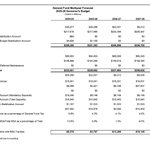
ALT Savings in Governor's 2025-26 Budget Lower Than Assumed in Enacted 2024-25 Budget
1
1
139
That puts more pressure on CSU and UC, both of which are funded by the General Fund but neither of which have the influence over Newsom that unions representing public employees in State departments do. That’s because CA Democrats like Newsom fear nothing more than attracting the ire of public employee unions, which are politically very active and seek to maximize the staffing, salaries and benefits that make up so much of the cost of those departments. Newsom always does their bidding, which is why staffing and salaries have increased so much under him, California schools were shut longer than any other state, and you’d be hard pressed to find a single instance in which he criticized their performance. His fear of disappointing them has had harsh consequences for students, residents and taxpayers.
1
95
All too often, political donors enable poor governance by not engaging in due diligence. Eg, in 2022 an entertainment industry executive (cal-access.sos.ca.gov/Campai…) spent $1.85 million to help Karen Bass defeat Rick Caruso in the contest for mayor of Los Angeles. Do you think he exercised due diligence before making that choice? That doesn’t seem likely. Mayors run executive branches of local governments, the principal responsibility of which is to deliver high quality public services. Before she became mayor, Ms. Bass had no experience as an executive. That’s not always fatal but it should raise a red flag and encourage a thorough evaluation if for no other reason than the consequences will fall on millions of people.
Even more millions are affected by decisions donors make about elections for statewide offices. That’s why GFC’s top priority is to help elect a competent governor who will govern in the public interest. He or she will inherit a state that has suffered a steep decline in competence since the current governor took office. The election takes place in 21 months, many candidates have announced, more will do so, and there is plenty of time for due diligence. The consequences for 40 million residents, including more than five million public school students, will be enormous. We hope you will wait for our recommendation.
California won't see serious improvement in its governance until it has both a change agent as governor and a Legislature that supports that governor’s agenda
I don't know but I do know that @govern4ca will be there for a reform candidate who can win and also for legislators who support that candidate's reform agenda.
1
3
321
In November 2022, a former public employee union leader filed a complaint with @CA_FPPC alleging that GFC violated state campaign finance laws. Earlier this week, the FPPC closed the matter "because the allegations have been disproven."

In case you missed it...the FPPC announced yesterday that it would investigate Govern for California for campaign finance violations... 👀 subscriber.politicopro.com/a…

2
6
308
We’re happy the matter is closed, though not that we were dragged through the mud and had to spend time, energy and money defending against a politically-inspired action. But we are aware that this is the sort of thing that happens to people who challenge the status quo in Sacramento.
governforcalifornia.org/news…
Believe it or not, California's top income tax rate is scheduled to decrease by three percentage points after 2030 upon the expiration of a temporary tax increase, which started as a seven-year increase passed by voters in 2012 via a ballot measure entitled "Temporary Taxes to Fund Education" and was extended to 2030 by a subsequent ballot measure.
Both measures were backed by public sector unions whose members garner the lion’s share of school and other spending funded by income taxes. The measures have extracted billions more from taxpayers but you wouldn't know it from student performance or parental satisfaction. Still, you can be sure public sector unions are already gearing up to extend, if not lift, the higher income tax rate beyond 2030. Aiding and abetting their effort is Governor Newsom’s dangerous budget proposal to drain money from the Rainy Day Fund. Earlier this week we issued a statement (governforcalifornia.org/news…) to legislators explaining that danger and encouraging them to replenish the Rainy Day Fund, but we’re not optimistic they will challenge the governor. This is another reason why CA must elect a reform-oriented governor in 2026.
1
3
161
Last year, Governor @GavinNewsom and the California Legislature took nearly $5 billion from the Rainy Day Fund to cover excessive spending.🧵

Governor @GavinNewsom's proposed budget includes a paragraph entitled “GOVERNMENT EFFICIENCY AND COST SAVING MEASURES” but the measures mentioned there are a tiny fraction of the inefficiencies and costs added under Newsom. 🧵
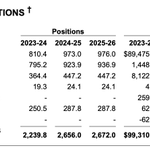
Eg, in the year Newsom took over from Jerry Brown, the Executive Branch hosted 211,000 jobs on whom the state spent $19.5 billion in salaries:
ebudget.ca.gov/budget/2025-2…

ALT Schedule 4, Positions and Salary Cost Estimates at 2018 Budget Act (Excludes Staff Benefits, Dollars in Thousands)
1
20
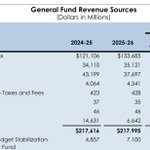
Last Monday Governor @GavinNewsom issued a press release previewing a "balanced" budget for 2025-26 so imagine our surprise when his proposed budget released today disclosed that balance was achieved by transferring $7.1 billion from the Rainy Day Fund. In your household do you consider your budget balanced if you dip into savings to cover a deficit? We don’t. In fact, when the Monday press release extolled that "state revenues are up by $16.5 billion," we expected the proposed budget would not only not draw from the Rainy Day Fund but also would pay back $4.9 billion taken from the Rainy Day Fund last year. It’s misleading to characterize such a budget as "balanced" and worrisome that Newsom keeps taking money from the Rainy Day Fund when the economy and stock market are vibrant and reserves might be needed more than ever. We’re still reading through the document and will have more to say but this is not a good start.
That’s why you must repeal the Social Security “Fairness” Act just passed by Congress that when signed by Biden will add $200 billion to federal debt in order to boost pensions for retired public employees. @DOGE @VivekGRamaswamy @JTLonsdale

A No Excuses Agenda For California
Presidents have little influence over the quality of most services provided by California’s governments. For example, public school kids in California have long been poorly served regardless of who has sat in the Oval Office and it’s not presidents who drain funds from UC and CSU to overcompensate prison staff. But that won’t stop Governor Newsom and some other state lawmakers from employing Donald Trump’s election as a distraction from their failures to provide services.
Don’t let them get away with it. When they point to Trump, you should point to the 29 legal codes (leginfo.legislature.ca.gov/f…) over which they have authority and demand they do their jobs. To start, they should reverse last year’s dangerous depletion of financial reserves and reject Newsom’s crony-capitalist proposal to boost tax credits for motion picture production. Spending more on corporate welfare while depleting reserves is reason enough to reject the idea but if that doesn’t convince you then consider the fact that the motion picture industry resides in one of 90 categories (apps.bea.gov/itable/?ReqID=7…) of industry, contributes <1.5% to state GDP and employs <0.5% of the state’s workers. Newsom’s proposal is pure politics and if he gets his way, keep an eye out for donations from Hollywood for his presidential campaign.
We are happy with election results in California, primarily because of the passage by a large margin of Proposition 36 led by San Jose Mayor Matt Mahan, the success of our GOP slate that pragmatic Democratic legislators quietly hope will give them more leverage, and the progress of political philanthropies we support that focus on K-12, UC, and local governance in San Francisco, the East Bay and Los Angeles.

California is ready to fight.
I just called an emergency special session to help bolster our legal resources and protect our state against any unlawful actions by the incoming Trump Administration.
Whether it be our fundamental civil rights, reproductive freedom, or climate action -- we refuse to turn back the clock and allow our values and laws to be attacked.
nytimes.com/2024/11/07/us/ne…

2
1
507
A Wealth Tax In California?
by @DavidGCrane
Often I’m asked whether California could levy a wealth tax on individuals. My answer is that, absent persistent political pressure by taxpayer advocates, the political door in California is always open to all forms of tax increases, including a wealth tax. When the questioner follows up by asking whether such a tax would be constitutional, I respond that I don’t know but I wouldn’t count on courts to stop it, and that was before a US Supreme Court decision earlier this week that seems to leave the legal door open to a wealth tax.
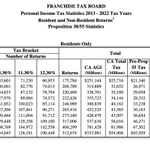
Almost as often I’m asked if a ballot measure could protect taxpayers. My answer is "No." Even when tax limitation measures become law (eg, Proposition 13 in 1978), lawmakers always find new paths to taxation (California has consistently boosted income tax rates since property taxes were limited by Proposition 13), state courts in California dependent on the governor and legislature for their budgets are not immune to political pressure (last week the California Supreme Court removed a tax limitation measure from the ballot after vigorous opposition by the governor and legislative leaders), and no ballot measure could protect against every form of taxation (even if enacted into law that tax limitation measure could not prevent another tax increase like the 2012 measure that lifted the top individual tax rate nearly 30 percent).
That’s why GFC chooses to place persistent political pressure on elected officials to restrain spending, especially on the public sector unions that collect the lion’s share of state, local, school and agency spending. Absent spending restraint, there will always be pressure for more revenue. Our task in that regard became more difficult under Governor Newsom, who has been the friendliest governor towards public sector unions since Gray Davis, which is why we are turning more attention to the 2026 race to take his place. But spending restraint alone isn’t enough to prevent tax increases. That's because there will always be special interests with access to the ballot. That’s what happened in 2022 when Lyft proposed a tax increase by ballot measure against which GFC led the successful opposition. We expect others to try, maybe even with the help of some elected officials. Be prepared.
3
336
Income Taxation In California
Second quarter income tax estimates are due Monday, though the amount required in California is more than a quarter’s worth of estimated tax. That’s because during a past budget crisis the state imposed a requirement that taxpayers pay more than a quarter’s worth of estimated taxes for each of the first two quarters of the year. That budget crisis went away, but not the imposition on taxpayers. That’s because once something in government is set in stone, it stays in stone unless chiseled away by political forces more powerful than those that benefit from the status quo.
The same principle explains why governments often perpetuate inefficiencies that could never endure in a competitive marketplace. Eg, California provides anachronistic health insurance subsidies to retired employees that drain billions every year from the budget. That’s because Governor Newsom and legislative leaders are too afraid to ask public sector unions to chisel away at that stone. Politically it’s easier for them to address a deficit by cutting programs, borrowing money and raiding reserves. A different principle — mutual back scratching — explains why California also pays wildly-above-other-states salaries to Corrections employees. That’s because governors like Newsom and Gray Davis curried the favor of Corrections unions in pursuit of contributions towards elections, ballot measures and, in Newsom’s case, national ads to boost his presidential prospects.
The consequences of these practices ultimately fall on taxpayers, especially on the small number of high-income taxpayers who provide the lion’s share of the state’s tax revenue. To add insult to their injury, two years ago the Governor and Legislature issued a tax refund — though not to the taxpayers who provide most of the tax revenue — with funds that could sorely be used now (latimes.com/california/story…). With governments, the only forces that matter are *political*. Individual income taxpayers will always be on the menu in California, and for protection they must marshal persistent political forces powerful enough to keep a seat at the table. Your support of GFC is helpful towards that end, as is the support of other political organizations focused on fiscal matters.
1
266
Our Fiscal Fight
by @DavidGCrane
Earlier this week a reporter asked me to comment about a bond under discussion in the Legislature. I responded that the costs of past obligations already crowd out spending on current programs — in 2023-24 the state spent $6.7 billion on past bonds and $16.2 billion on past employees — so any time the Legislature wishes to add more deferred obligations it should make sure the money is truly needed and well spent.
As that spending implies, the state’s obligations to retired employees — $365 billion — dwarf its $70 billion in obligations to bondholders. To add insult to injury, $270 billion in pension obligations were created under false pretenses (governforcalifornia.org/news…) and $95 billion in insurance subsidies are not necessary in a world of Medicare, Obamacare and successor-employer healthcare, which is one reason neighboring states provide a tiny fraction (governforcalifornia715476687…) of California’s subsidies to their retired employees. California’s past promises to public employees are consuming its future, and not so slowly.
Of a related nature, recently some GFC supporters questioned our continuing pressure on Governor Newsom and the Legislature to refrain from drawing anything from the Rainy Day Fund (RDF) after Newsom, in response to GFC’s earlier petitions, already reduced the draw he proposed in January by 70 percent. They thought we should declare victory. But the deficit is the result of excessive spending, the reduced draw Newsom proposes is still 1/7th of a RDF that’s already too small for the amounts needed in a recession, and the amount of the draw could easily be covered by reducing the $4.5b per year the state continues to waste on insurance subsidies for retired employees. We cannot afford to reduce the pressure.
3
295