



How to farm the potential MDG airdrop efficiently?
The team hasn't officially confirmed an airdrop, but there are a few things worth paying attention to.
They have a points and tiers system, have hinted at the importance of NFT tiers, and have referenced the Anichess collection more than once.
Nothing is guaranteed, but it's worth doing the math. 10 seasons in total.
No confirmed timeline yet, but if one season lasts a month, that would mean 300+ days of farming.
Season 1 hasn't started yet.
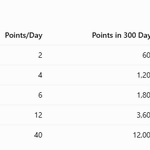
If 10 seasons = 300 days, here's the math:
Common – $40/2 points per day – 0.050 points/day per 1$
Uncommon – $45/4 – 0.089
Rare – $65/6 – 0.092
Epic – $130/12 – 0.092
Legendary – $500/40 – 0.080
*the prices listed are based on offers, not the floor price, so you’ll still need to manage to snag them*
Rare and Epic offer the best points-to-price ratio, while Uncommon has a lower entry cost.
300 day targets using Uncommon NFTs:
Bronze – 1 NFT/$45
Silver – 1/$45
Gold – 1/$45
Platinum – 2/$90
Emerald – 4/$180
Diamond – 10/$450
Master – 30/$1,350
Grandmaster – 100/$4,500
Challenger – Top 50
Everything above is speculative. No confirmed airdrop, timeline or reward criteria.
Do your own research (DYOR). OG Anichess.
@MindGames_AI @jesusislord @AnichessGame

Honestly, ignoring open-weight models right now is just shooting yourself in the foot.
Just heard the IBM call – their CEO nailed it. Open models cost around 10-25% of frontier ones while giving you ~90% of the horsepower.
That’s a crazy trade-off.
Epoch AI’s Oct 16 data points to the exact same thing: the open cyber frontier is only 6-7 months behind closed tech (GLM 5.3 at 160 vs Opus 5.5/GPT 6 Astra at 171). Tiny gap, massive price difference.
Here’s the catch though: cool, you’ve got the model.
Where do you actually run it when you need to scale?
Most of us don't have a spare GPU cluster lying around, cloud pricing is a black box, and you never really know if you’re getting the exact compute you paid for.
That’s why what @flop_labs is doing caught my eye:
• Agents throw in inference requests
• GPU hosts provide the muscle, verified via Proof of Useful Inference
• Settlement happens in FLOP for actual, proven work
As open models keep getting sharper and cheaper, reliable compute is going to be the real bottleneck.
Flop is making a smart bet here by solving verification and payout in one go.
What’s your take on this? @CryptoHayes


IBM's CEO on the 2026Q3 call: open-weight models now cost "anywhere from 25% to 10% of the token cost of the frontier models" and are "now 90% as effective".
Epoch AI, 16 October: the open cyber frontier sits "roughly where the closed frontier stood 6–7 months ago". GLM-5.3 scores 160 against 171 for Opus 5.5 and GPT-6 Astra.
A tenth of the price for last spring's model. The discount is the lag, and the lag is shrinking. Open weights run on anyone's card. What's missing is a price for the hour on whoever's card it is.
Flop is building that missing piece.
Your strategy is only an edge if nobody else can see it.
On public chains every entry, size and exit is readable.
That’s not trading – that’s broadcasting your playbook.
Public chains. Private states.
Keep the next move to yourself. @FlutonIO

pov: you got your retro-points from the TxFlow
Rewards for Season 0 will be distributed by October 27 – are you ready?
Early supporters will always come out on top.
@TxFlow_L1 @kaisrr3a @donkTX

If you still think privacy is unnecessary in crypto, just look at the top 9 coin on CryptoRank.
Q4 – and all of 2027 is going to be the dawn of confidential payments.
Fluton isn’t on mainnet yet, but the aura is already there.
@FlutonIO @fhenix


Axis airdrop — gem or scam?
I don’t get why people are complaining about tiny allocations for Discord roles and points.
x role: 38 tokens
y role: 321 tokens
z role: 1,700 tokens
1 point: ~0.45–0.5 tokens
If you can’t analyze a project yourself and just follow shill influencers — that’s on you.
Axis was showing red flags back in the summer:
- roles given to people posting the wrong project logo (see screenshot)
- CM ignoring feedback and criticism
- copy-paste ads across every community
- random AI girl prioritized over the actual mascot
And I haven’t even mentioned the fact that CM running role giveaways while repeatedly saying “community first”
Go through your timeline again and unfollow everyone who shilled Axis to you.
@axisrobotics @0xsexybanana @plpiaoliang

What to do in crypto right now on a small bankroll?
If you’ve got an extra $35–40 lying around, you can try flipping the floor on the MindGames (MDG) collection on Robinhood.
Over the last few days the floor has been swinging around ±20% — on that size that’s roughly $10 either way.
This only applies to commons. I wouldn’t touch the higher rarities yet — smarter to wait for a market pullback, BTC toward 70k, and the panic dumping that usually follows.
DYOR - opensea.io/collection/mindsd…
@jesusislord @MindGames_AI


Is Arthur Hayes’ new project money laundering or actual mechanics?
AI agents can already trade, write code and make decisions. But they still need someone to pay for their compute.
That’s the part @flop_labs wants to fix.
An agent requests inference, pays in FLOP, a miner runs it on their GPU, and the network checks whether the work was actually done. If everything checks out, the miner gets paid.
But here’s the obvious question: why not just use USDC?
Agents can already pay for services with stablecoins. No new token needed.
Flop’s argument is that payments alone aren’t enough. The network also needs a way to verify compute, reward honest miners and penalize cheating. FLOP is designed to tie all of that together through staking, rewards and slashing.
That’s a more interesting proposition than just launching another AI token.
Still, there’s a difference between a mechanism described in a whitepaper and one that works reliably in practice. Flop’s own docs mark parts of its verification system as incomplete, and the testnet is targeted for Q4 2026.
So I wouldn’t call it proven yet.
The real question is whether decentralized compute verification is worth an entirely new chain and token — or whether USDC and existing GPU marketplaces can do the job well enough.
That’s what I’d be watching.
@CryptoHayes @flop_labs

Which NFTs on @RobinhoodCrypto are worth paying attention to
@MindGames_AI and @vibevibefun — experienced teams with a strong focus on community.
You already missed the @MindGames_AI mint, but the secondary looks solid.
Floor is holding around 0.02eth against a 0.0125eth mint price, while rares have moved up noticeably:
- Rare: 0.0125 → 0.03
- Epic: 0.035 → 0.08
- Legendary: 0.11 → 1
The NFT gives platform benefits, but even just holding looks interesting given the team’s background.
True community always wins — just ask the Anichess OGs.
@vibevibefun — mint hasn’t happened yet, and there’s still time to farm WL.
The NFT is interesting because 95% of all NFT trading fees go toward buying tokenized AI stocks and get distributed to holders.
The team also has solid experience and successful cases behind them.
@jesusislord @meta_alchemist


Is 0 gas on TxFlow real or just marketing?
Gas, or more precisely trading gas, is essentially a tool used as a constant tax on every action with the order book.
This raises a fair question: what do validators get then, and how does the network protect itself from spam if gas = 0?
Here’s the catch: you can’t just make gas zero, but you can bring it close to zero.
The team at TxFlow built the following mechanism: placing, cancelling, and modifying orders on the platform does not require paying gas. Fees are charged only when an order is filled, and also when withdrawing funds.
This approach is especially important for active traders and market makers.
Constant quote updates stop being a source of extra costs and technical limitations, while spam protection is maintained through several mechanisms: signature verification, nonce, rate-limits, and the requirement of real collateral behind every order.
As a result, the network gets a more efficient blockspace pricing model — the user pays for the outcome, not for every attempt to interact with the order book.
@TxFlow_L1 @matthubuilds @Harry_TxFlow

Most chains only execute when someone submits a transaction.
@RialoHQ adds Reactive Transactions — native conditional execution built into the protocol.
You define a predicate (time-based, value-based, or data-driven).
Validators evaluate it at the end of every block.
When the condition becomes true, the transaction executes automatically.
- No keepers.
- No bots.
- No external cron jobs.
Liquidations, recurring payments, oracle triggered actions, and long running workflows can all live fully onchain and run deterministically across the validator set.
This turns the blockchain from a passive state machine into an event driven system.


Right now, most blockchains need someone to manually start transactions.
Rialo is creating a network that can automatically respond to real-world events.
What they've got so far includes:
* Smart contracts that can make direct HTTPS calls.
* The ability to run transactions based on outside events.
* Built-in privacy features.
* A focus on real-world information, APIs, and setting up specific conditions.
They're currently running a "Points" program on their playground site, and they've already given out points for past activity.
The main goal is shifting towards building the necessary systems for Real-World Assets (RWAs) and for big institutions to use.
They're not aiming to be just another basic blockchain (L1), but a network that can check conditions right when a transaction happens.
They haven't launched their main network yet, but the path they're taking is pretty clear.

Don’t just ask for WL, first understand what you’re actually getting into
@papertrade_xyz is a new synthetic perp protocol on Hyperliquid by @izebel_eth and @blurr
Launch: October 10
What makes it interesting:
• LP starts at zero
• solana:4SNHBM2axbPCNXHrPPNLtdCRmnQVkq9cfFTyrJpJpump is minted only from trader losses
• Early flow gets the best rate (100 solana:4SNHBM2axbPCNXHrPPNLtdCRmnQVkq9cfFTyrJpJpump per $1 of loss while LP < $2M)
• 0 slippage, 0 funding, up to 1000x
You can’t buy the token.
It only gets minted when someone loses money.
This is where @paperdao_xyz comes in.
Catching that early edge alone is hard — you need size, speed, and the willingness to be active from the first blocks.
PaperDAO pools capital into one treasury, trades on behalf of everyone, and later distributes solana:4SNHBM2axbPCNXHrPPNLtdCRmnQVkq9cfFTyrJpJpump + PnL through the $PULP token.
You don’t trade yourself.
You just take a share of the collective account.
The raise is happening on daos.world.
PaperDAO is an independent community treasury and is not affiliated with the Papertrade team.
Understand the mechanics first.
Then decide if you actually want in.


Learn more about PaperDAO here: paperdao.xyz
Learn more about Papertrade here: papertrade.xyz
Follow Papertrade team: xitter.cf/izebel_eth and xitter.cf/blurr
Follow DaosWorld: xitter.cf/daosdotworld

ATTENTION ATTENTION ATTENTION ‼️‼️‼️
@earnos_io have new good contest 🙃


That feeling when you get something you love with money you earned. 🫶
We want to see your #eromoments! Share a photo of something you purchased with your ero earnings and include your ero username for a chance to win a cash bonus.
Each week, we're giving away:
💸 1 × $100 bonus
💸 5 × $20 bonuses
💸 5 × $10 bonuses
We'll pick winners every week for the next four weeks. Every week you enter is another chance to win.*
Post with #eromoments and your ero username. You could be next!
*One eligible entry per user per weekly drawing.


