
56% of Americans feel they're falling behind on retirement savings.
Should you max out your 401(k)?
Here's the deal 🧵👇

1
67
First, some key facts:
2024 401(k) contribution limit: $23,000
Catch-up contribution (age 50+): $7,500
Total max for 50+: $30,500
Reality check: Most Americans can't afford to max out.
1
6
The median U.S. salary is $40,480.
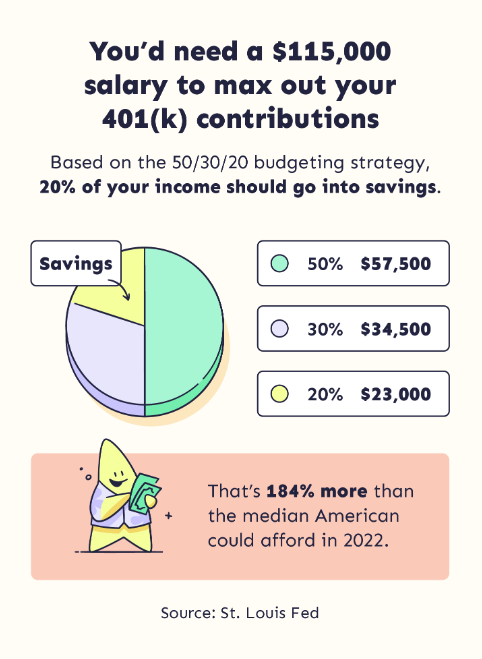
Using the 50/30/20 budget rule, you'd need at least $115,000/year to max out your 401(k).
Don't worry if you can't hit the max. There are still great ways to save for retirement!
1
10
Benefits of maxing out your 401(k):
- Faster account growth
- Maximize employer match
- Reduce taxable income
Ideal for:
- High earners
- Late starters
- Those without significant debt
1
5
Before maxing out, ensure you can still:
- Maintain an emergency fund
- Pay off debt
- Save for short-term goals
Remember: Current financial stability is crucial!
1
10
4 strategies for smart 401(k) contributions:
1. Prioritize non-retirement finances
2. Work with your current budget
3. Max out employer match (if possible)
4. Consider other tax-advantaged accounts
Let's break these down:
1
4
1. Prioritize non-retirement finances:
- Emergency fund (3-6 months of expenses)
- Debt reduction
- Short-term goals (home, wedding, family)
Balance retirement savings with more immediate needs.
1
9
3. Max out employer match:
This is often the sweet spot if you can't max out completely.
It's FREE money! Don't leave it on the table if you can afford the contributions.

Aug 16, 2024 · 12:00 PM UTC
1
3
4. Consider other tax-advantaged accounts:
- Traditional IRA
- Roth IRA
- Roth 401(k)
Mix and match to optimize your tax strategy and diversify investments.
1
4
What if you over-contribute?
Contact your plan administrator to withdraw excess funds.
You may face taxes on earnings and possible penalties.
Avoid leaving excess contributions in the account to prevent double taxation.
1
5
The bottom line:
Don't stress about maxing out your 401(k). Focus on:
1. Contributing what you can afford
2. Maximizing employer match (if possible)
3. Balancing retirement savings with other financial goals
4. Diversifying with other tax-advantaged accounts
1
4
Remember: Your financial journey is unique. There's no one-size-fits-all solution.
Consider working with a financial advisor to create a personalized retirement strategy that fits your goals and circumstances.
For more financial tips, follow @hegs
1
28