

Running AI agents on multiple Raspberry Pis for local workflows & automation. CS @ IU Intl | Founder
Taipei, Taiwan
Joined March 2025
- Tweets1.8K
- Following4.4K
- Followers534
- Likes4.2K





wtf I've been using /swarm in Antigravity agy-cli wrong this whole time
run /swarm board and you actually get to watch the little bot swarm cook 🧑🍳

29
0xWulf retweeted

Resetting Gemini quota for all Antigravity users for Thanksgiving!
We’re very thankful for all of our users ❤️
We’re growing very quickly and are working tirelessly to make sure you all have a great experience!
Now that @Antigravity keeps getting better and better, what's the actual point of Google AI Studio beyond generating API keys?
At what point do you guys decide to merge the two products?

1
58
0xWulf retweeted
We've increased the cache hit rate for Neon in Antigravity again by another 4.5%. This means you can complete 28% more tasks within quota.
In the last 5 days, we've effectively increased Neon usage on the subscription by close to 75% through caching and harness improvements!
Dear @GoogleAI and @antigravity at this point can you just drop the third-party quota in the Google AI Pro Plan for Claude Opus 5.5 completely?
I'd much rather have more Gemini 4 Neon quota. Thank you!

70
Don't give me gravy with my turkey.
This Thanksgiving, I am firmly on Team Anti-Gravy-ty! @antigravity

41

I started with one Grok Bot on Sunday.
Somehow I now ended up with a 9-bot wolf pack plus a middle-management layer.
At what point does one have too many 🤖?

17
Own your mistakes and go to therapy. Few tech CEOs admit that in public.
Respect to Jensen Huang for doing it.

29

0xWulf retweeted

MCP Apps are now supported in Google Antigravity. Generate interactive charts, sandboxes, release boards & custom file viewers right into your workspace.

You know your Antigravity coding session was too long when you end your conversations with
"...and nothing else was touched."
35
I used Gemini 4 Neon as a Linux sysadmin cleaner, and it worked better than I expected.
The key is a two-phase workflow: it audits first and deletes nothing until I approve.
I just ran it on 3 Linux hosts (2x Raspberry Pi 5 and 1 workstation):
• 78 GiB (~83.8 GB) of disk space reclaimed
• ~1.9M inodes freed
• Zero broken services, and no secrets, volumes or kernels touched
Phase 1 is strictly read-only. The model inspects each item, checks for open file handles with lsof +L1 and sorts everything into Safe or Review. Then it waits for an explicit YES (or a list of item numbers) before it runs anything.
Here's the exact prompt I used 👇

3
3
88
Act as a senior Linux systems engineer on this host.
Goal: Audit and safely clean up unused artifacts, caches, trash, and orphaned files to reclaim disk space without breaking running services or touching sensitive data.
Execution Rules (Non-Negotiable):
- Phase 1 (Read-Only Audit): Do NOT delete, purge, or modify anything yet. Inspect the system first and present a categorized cleanup plan with exact absolute paths and reclaimable sizes.
- Phase 2 (Execute on Approval): Wait for my explicit "YES" (or specific item numbers) before running any destructive command.
- Stay strictly on this local host. Do not SSH elsewhere, do not restart services, and do not modify configs or crontabs.
- Use absolute paths for all commands.
Scope to Inspect:
1. Baseline disk & inode usage (/usr/bin/df -hT, /usr/bin/df -ih).
2. Package manager orphans & cache (apt autoremove --dry-run, /var/cache/apt/archives, snap/flatpak unused revisions if present).
3. Systemd journal size (/usr/bin/journalctl --disk-usage) and oversized/rotated logs in /var/log and ~/logs.
4. User trash (~/.local/share/Trash) and safe-to-rebuild caches (~/.cache, ~/.npm, ~/.pnpm-store, /tmp).
5. Docker/Podman reclaimable space (docker system df, dangling images, build cache — NEVER prune named volumes or active containers).
6. Stale remnant artifacts (*.tmp, *.old, old *.bak files) and deleted files still held open by processes (lsof +L1).
Protected Zones (DO NOT TOUCH):
- Secrets & auth: ~/.ssh, ~/.gnupg, *.env, keys, certs, rclone/docker configs.
- Operational data: ~/bin, ~/projects, Obsidian vaults, active backups.
- System-critical: /etc/nginx, live systemd units, currently running + latest installed kernels.
Output Format for Phase 1:
- Current disk usage baseline.
- Grouped table of cleanup candidates (Category | Path/Target | Reclaimable Size | Risk Level: Safe / Review).
- Exact commands you plan to run in Phase 2.
- After Phase 2 (once approved), report exact commands run and before/after df -hT output.
1
25


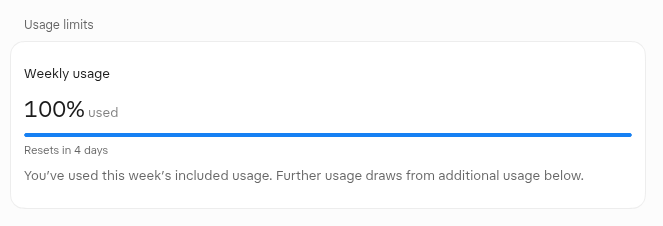
Number 1 most important Grok Bot skill rn:
Triggering a Usage Review:
"What's using the most, and how could my Bots and routines use less?"

26


here goes another of my weekend opsec startup plans straight into ===> /dev/null 🗑️😭


We’re introducing Shirudo, an open-source Linux runtime allowing agents to defend systems without downtime. It lets agents write dynamic eBPF controls to shield systems from exploits, giving defenders more time to test and roll out patches. Built by @cisco together with OpenAI.
Shirudo is a first step toward self-defending infrastructure that can adapt to new threats while keeping services running. Our goal is for defenders to work with AI agents to find affected systems, test and share shields, and deploy them without disrupting workloads.
openai.com/index/introducing…

16